If you’re stocking a 40-gallon aquarium and want reliable, low-maintenance filtration, a sponge filter is a strong choice. Sponge filters provide both mechanical and biological filtration while delivering gentle aeration that’s ideal for fry, shrimp, and small fish. This guide highlights five compatible 40-gallon sponge filter options, outlining who each product is best for and why it was selected. You’ll find practical, comparison-friendly details to help you choose the right filter for your setup and inhabitants.
Product Snapshot: Top 5 40-Gallon Sponge Filters

| Product | Best For | Why It Stands Out |
|---|---|---|
| ALEGI Aquarium Bio Sponge Filter Kit | Breeding and fry tanks, beginners | Easy top setup, includes check-valve-enhanced air hose for backflow prevention |
| DVHEY 2 Pack 60-70 Gal Sponge Filter | Larger setups with multiple tanks | Dual filtration with ceramic media and quiet bubble diffuser |
| Aquatop Internal Sponge Filter | 4–40 gallon flexible, air pump or powerhead use | Versatile with both air pumps and powerheads, mechanical + biological filtration |
| hygger Double Sponge Filter (S) | Small to mid-size tanks, upgrade potential | Expanded filtration area with replaceable sponges and ceramics |
| Pawfly Large Aquarium Bio Sponge Filter | 50-gallon setups, fry and shrimp care | Compact footprint with strong mechanical/biological filtration |
ALEGI Aquarium Bio Sponge Filter Kit for 40-80 Gallon Breeding Fry
ALEGI’s Bio Sponge Filter Kit provides mechanical and biological filtration suitable for 40 to 80-gallon tanks. It is easy to set up and clean: simply install an airline into the unit and turn on the air pump, then rinse the sponge in tank water. Best for hobbyists seeking a straightforward, low-maintenance option, including those keeping fry or shrimp. A potential limitation is the need for a compatible air pump and hose for full operation.
DVHEY 2 Pack 60-70 Gal Sponge Filter

DVHEY offers a dual-filtration sponge filter designed for 60 to 70-gallon tanks. It combines a high-density microporous sponge with ceramic media and a bubble diffuser to deliver quiet operation and improved water quality. Best for larger 40-gallon-plus setups where stronger filtration and aeration are needed. A limitation is that performance depends on a suitable air pump and proper installation of the diffuser.
Aquatop Internal Sponge Filter for 40 Gallons
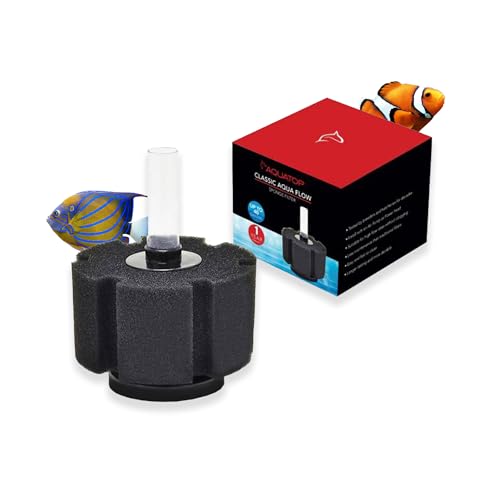
Aquatop’s CAF-40 sponge filter is designed for tanks up to 40 gallons and can operate with air pumps or powerheads. It provides both mechanical and biological filtration, supporting a cleaner water column in smaller to mid-sized tanks. Best for aquarists who want filtration flexibility and a compact footprint. Note that exact performance depends on the aeration setup and media choice.
hygger Double Sponge Filter (S)

The hygger Double Sponge Filter emphasizes expanded filtration area with vertical stripe design and replaceable sponges. It includes bioceramic media and is suitable for 10–40 gallon or up to larger setups with proper sizing. Best for hobbyists seeking strong biological filtration and a modular media approach. Limitation: Not all configurations include an air pump; ensure you have a compatible pump and hose.
Pawfly Large Aquarium Bio Sponge Filter

Pawfly’s large sponge filter is designed for tanks up to 50 gallons. It offers strong mechanical and biological filtration while staying gentle enough not to suck in fish. Best for breeders and fry tanks requiring reliable filtration with a compact footprint. A caution is to ensure your air pump and hose capacity match the filter size to avoid reduced performance.
Buying Guide for 40-Gallon Sponge Filters
- What filtration Type Do You Need? Choose a sponge filter that delivers both mechanical and biological filtration to support beneficial bacteria and clear water in a 40-gallon setup.
- Do You Use an Air Pump or Powerhead? Some filters work with air pumps, others with powerheads. Confirm compatibility with your existing equipment.
- Tank Inhabitants and Fry Safety: Softer sponge materials reduce the risk of fish siphoning; select a model sized for your tank to avoid excessive current for delicate inhabitants.
- Maintenance Frequency: Sponges should be rinsed in tank water (not tap water) every 2–4 weeks in many setups. Check media replacement options for long-term performance.
- Media Configuration: Look for filters with replaceable sponges and optional ceramic or bioceramic media to extend biological filtration capacity.
- Noise and Space: If you keep a quiet tank or have limited space, consider models with quiet bubble diffusion and compact form factors.
Frequently Asked Questions
- Are sponge filters suitable for all fish? Sponge filters are ideal for fry, shrimp, and small fish; larger, fast-swimming species may benefit from additional circulation or alternative filtration.
- Do sponge filters require an air pump? Most sponge filters operate with an air pump to drive water through the sponge; verify the included components for each model.
- Can I use sponge filters with saltwater tanks? Yes, many sponge filters work in both freshwater and saltwater, but confirm media materials and corrosion resistance for saltwater use.
- How often should I replace sponge media? Sponges can be rinsed and reused; replace sponge media when it becomes worn or excessively clogged, typically every several months depending on bioload.
- Can sponge filters handle larger bioloads? For higher bioloads, consider models with multiple sponges, additional ceramic media, or pairing with other filtration types to maintain water quality.
- Is a backflow check valve necessary? If using an external air hose, a check valve helps prevent backflow during outages, protecting the aquarium and pump.