Looking for reliable float switches to manage aquarium water levels and auto top-off (ATO) systems? This guide highlights five commonly used float switches that are well-suited for home aquariums, sumps, and related setups. Each pick includes who it’s best for, why it’s selected, and a practical caveat. The buyer profiles covered include hobbyists seeking simple DIY upgrades, small-to-medium aquariums, and systems that require sturdy, corrosion-resistant components.
Summary of selected products
| Product | Best For | Why Selected | Potential Limitation |
|---|---|---|---|
| Liyafy 5 Pcs Right Angle White Plastic PP Float Switch | DIY hobbyists and multi-switch setups | Value pack with multiple switches; compact white/yellow design | Low current ratings; careful wiring recommended |
| Piutouyar 2 Pack PP Plastic Float Switch | Budget projects and backup switches | Two-pack, durable PP construction, magnetic switch | Moderate current handling; verify compatibility with pumps |
| Walfront Float Switch Liquid Controller | Vertical, high-sensitivity level sensing | Wide temperature tolerance and precise liquid level control | Plastic construction may limit long-term durability in some setups |
| AquaticLife Float Valve Kit | RO/DI systems and auto-fill for tanks | Automatic fill capability and compatibility with RO systems | Primarily designed for inflow control in larger systems |
| MARSTEK Float Switch With 10ft Cable | Submersible, sump, and pump applications | IP68 waterproof, flexible 10 ft cable, robust design | May be overkill for very small tanks |
Liyafy Right Angle Float Switch Kit

Features: Package includes 5 water level sensors; color white and yellow; model DP3500; max contact rating 10W; max switching current 0.5A; max breakdown voltage 220V DC; max carry current 1.0A; max contact resistance 100mΩ.
Best for: Hobbyists who want a cost-effective, multipack solution for several monitoring points in a larger sump or multi-tank setup. The five-pack provides flexibility for staggered shutoffs and backups. Choose this if you need several switches in one purchase and are comfortable with low-current control circuits.
Caution: The switches are rated for low current; avoid connecting high-powered pumps without an appropriate relay or driver circuit.
Piutouyar 2 Pack PP Float Switch
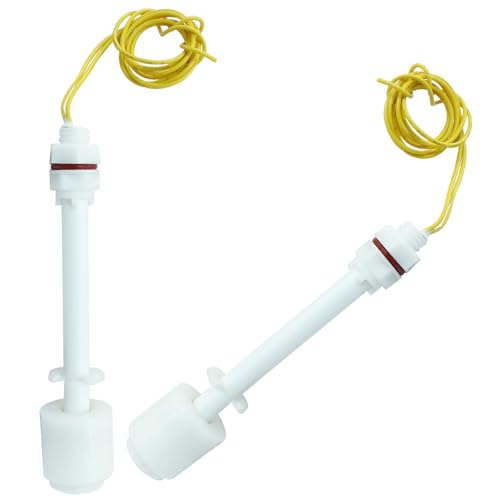
Features: 2-pack PP float switch with float ball and body designed for longevity; includes magnetic spring switch and float mechanism for accurate liquid level detection.
Best for: Users seeking a simple, budget-friendly pair of sensors for small to medium tanks or for creating a basic ATO system. Better for low to moderate flow setups where precise switching is sufficient.
Limitation: PP plastics are robust, but check chemical exposure and compatibility with aggressive chemicals if used outside aquarium water in other applications.
Walfront Vertical Float Switch

Features: Sturdy plastic construction with leak-proof, corrosion-resistant float; operates across -10℃ to 80℃; high-sensitivity float mechanism and magnetic sensor for quick response.
Best for: Aquarists needing reliable vertical mounting for sump applications or pump control where temperature conditions vary. This model provides robust performance in moderate environments.
Limitation: Plastic components may wear with extended use in harsh environments; periodic inspection is advised.
AquaticLife Float Valve Kit

Features: Auto-shutoff float valve kit for RO and RO/DI units; suitable for filling tanks, containers, and aquariums; ¼” fittings for standard RO tubing connections.
Best for: Larger aquariums and systems that require automated water replenishment from RO/DI sources. It helps reduce manual top-offs and water waste.
Limitation: Primarily designed for auto-filling rather than fine-tuned level control; consider integration with a separate switch if precise shutoff at multiple levels is needed.
MARSTEK Float Switch With 10ft Cable

Features: Float switch with a 10-foot cable; IP68 waterproof; UL-certified SJEOW cable; max pump run current 16A; designed for sump pumps, water tanks, sewage pools, and more.
Best for: Systems requiring robust, submersible operation with a long cable run. Ideal for larger sumps and challenging environments where water exposure is frequent and prolonged.
Limitation: The extended cable length may necessitate longer containment or routing in tight spaces; plan wiring path accordingly.
SENSTREE Adjustable Mounting Clip For Float Sensor

Features: Bracket-only listing; transparent PC material; includes two small movable brackets; mounting slots fit 10.13mm and 16.13mm; suitable for tanks up to 5/8″ thick walls.
Best for: Installers who need a sturdy mounting solution to position float sensors or valves within a tank or sump. Helpful for adjusting alignment and fit in tight spaces.
Limitation: Bracket is listed separately from the float valve; ensure compatibility with your chosen sensor’s dimensions and mounting style.
Buying Guide: Float Switches For Aquariums And Sumps
- What type of liquid level control do you need? Floating switches come in horizontal, vertical, and angled designs. Vertical switches work well in sumps, while angled types fit tight spaces.
- How much current will your device draw? Most aquarium float switches are designed for low current control signals. Use a relay or solid-state switch for high-current devices like pumps.
- Material compatibility and environment: Choose plastic or corrosion-resistant switches for saltwater setups or high-humidity rooms. IP ratings indicate water exposure tolerance.
- Wiring and installation: Check cable length, mounting options, and the need for mounting brackets. Longer cables provide flexibility but may require additional protection.
- Maintenance and longevity: Look for switches with robust seals and simple replacement parts. Regular inspection helps prevent unexpected tank issues.
- System integration: If you already use RO/DI systems or auto-fill configurations, select components designed to integrate with those setups.
Frequently Asked Questions
- Q: Are float switches suitable for saltwater aquariums? A: Yes, many float switches are designed to resist corrosion and operate in saltwater, but check material specs and IP ratings for marine use.
- Q: Can I use any float switch with an aquarium pump? A: Typically yes for low-current control. For high-current pumps, use a relay or controller with appropriate ratings.
- Q: How do I determine the right mounting position? A: Place the switch where it reliably detects water level without obstructing pumps or filtration components. Ensure it won’t contact moving parts.
- Q: Do float switches require professional installation? A: Basic setups can be DIY with proper wiring and safety precautions. Complex RO/DI or multi-tank systems may benefit from professional help.
- Q: What maintenance is recommended? A: Periodically inspect for signs of wear, corrosion, or mineral buildup; clean the float and housing if needed.
- Q: Are there safety concerns with electrical components near water? A: Use waterproof housings, GFCI outlets, and proper cable management to minimize risk.