Bottom line up front: these five products are core tools for maintaining stable salinity, clean water, and healthy marine life. The refractometer helps measure salinity precisely; the top-off system keeps salinity and water level steady; the hydrometer provides a quick salinity check; the reverse osmosis filtration unit delivers low-TDS water for mixes and top-offs; and sea salt blends create the right aquarium environment. This guide targets hobbyists new to saltwater and seasoned aquarists alike, showing who each product is best for and why.
| Product | Best For | Why Included |
|---|---|---|
| Agriculture Solutions Salinity Refractometer | Precise salinity checks | Two scales, automatic temperature compensation, quick readings |
| Useek Auto Top Off | Automated water level and salinity stability | Real-time protection, compact design, prevents overfill and dry run |
| Coralife Deep Six Hydrometer | Simple salinity monitoring | Easy-to-read scale, accurate gravity measurement |
| Aquatic Life RO Buddie 4-Stage | Clean, low-TDS water | RO/DI filtration for drinkable-quality water for mixes and top-offs |
| Instant Ocean Sea Salt 50 Gallons | Marine salt mix | Fast-dissolving formula, supports pH stability and trace elements |
Agriculture Solutions Salinity Refractometer

The Agriculture Solutions refractometer provides precise salinity readings for seawater and marine fishkeeping aquariums. It measures salinity on two scales—Specific Gravity (D 20/20) and parts per thousand (ppt)—and includes automatic temperature compensation to minimize temperature-related errors. Best for hobbyists who want a quick, reliable check before mixing saltwater or topping off a reef tank. A potential limitation is the need for periodic calibration to maintain accuracy over time.
Useek Auto Top Off for Saltwater Aquarium

The Useek Auto Top Off (ATO) system maintains stable salinity and water level by automatically adding water as evaporation occurs. It is ideal for reef tanks and other saltwater setups where salinity fluctuations can stress livestock. The compact 0.7-inch diameter design fits neatly in rimmed or rimless tanks. Real-time protection features include visual alerts and pump stoppage if refilling takes too long, guarding against overfilling and dry running. A downside is that installation requires airline tubing and a compatible reservoir.
Coralife Deep Six Hydrometer

The Coralife Deep Six Hydrometer provides a simple, easy way to track salinity or specific gravity. Its easy-to-read scale helps you monitor aquarium water consistency over time. Best for beginners and casual hobbyists who want a quick reference without extra equipment. A note: hydrometers can be less precise than digital refractometers, so consider cross-checking with a refractometer for critical measurements.
Aquatic Life RO Buddie 4-Stage
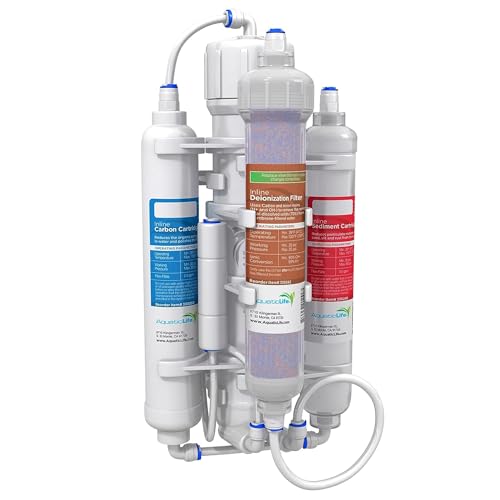
The Aquatic Life RO Buddie 4-Stage system delivers up to 50 gallons per day of low-TDS water, ideal for marine mixes, top-offs, and reef tanks. It combines sediment and carbon filtration before the RO membrane to reduce particulates and chemicals that can affect water quality. Choose this if you want consistent, reliable water for salt blends and replacement water. Limitation: 50 GPD may be slow for very large setups or rapid water changes.
Instant Ocean Sea Salt 50 Gallons
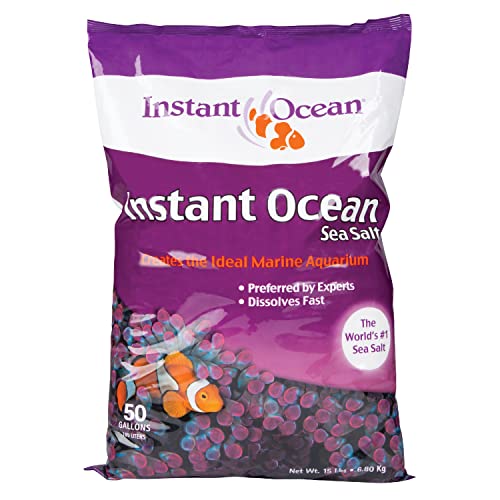
Instant Ocean Sea Salt is formulated specifically for marine aquariums, providing major, minor, and trace elements necessary for healthy fish and invertebrates. It dissolves quickly for fast preparation of saltwater mixes and helps achieve a stable pH when used per directions. Best for reef and fish-only saltwater tanks that need reliable, ready-to-use saltwater. One consideration is to ensure thorough mixing to prevent localized salinity pockets in larger volumes.
Buying Guide
What should I consider when choosing saltwater equipment?
Range of use: Decide whether you need precision instruments (refractometer) or quick checks (hydrometer) for daily monitoring. For tanks with sensitive corals, precise salinity control matters more.
Automation needs: If you want a low-maintenance setup, prioritize a reliable Auto Top Off system that guards salinity and water level. Consider reservoir space and tubings required for installation.
Water quality: A low-TDS RO/DI system ensures cleaner makeup water, reducing the burden on future salt mixes and improving stability in reef tanks.
How to use these tools effectively?
- Measure salinity regularly with a refractometer; calibrate according to manufacturer instructions for best accuracy.
- Test salinity after water changes and after mixing new saltwater to confirm target levels.
- Top off carefully with RO/DI water to avoid sudden salinity swings; monitor alkalinity and pH as part of routine checks.
Maintenance tips
- Clean refractometer prisms and calibration standards periodically to maintain accuracy.
- Change RO filters per the manufacturer’s schedule and replace DI resin as needed to sustain low TDS.
- Rinse and store salt mixes properly to prevent clumping or contamination.
FAQ
- What salinity is ideal for most reef tanks?
Most reef tanks target a salinity around 1.025 to 1.026 specific gravity, but always verify species-specific needs.
- Is a refractometer necessary if I have a digital salinity meter?
Refractometers are highly regarded for precision and are widely used alongside digital readers to confirm readings.
- Can I mix Instant Ocean with RO water for my reef tank?
Yes, but ensure accurate salinity and pH after mixing; use calcium and alkalinity supplementation as needed for corals.
- How often should I replace RO filters?
Follow the manufacturer’s guidance, typically every 6–12 months for consumer units, depending on usage and water quality.
- What are common signs of salinity instability in a saltwater tank?
Rainy behavior in coral, ich in fish, slowed growth, and stress indicators are common signs of instability.
- Should I use a hydrometer or refractometer for new hobbyists?
A refractometer is generally preferred for accuracy, while a hydrometer offers a quick, low-cost option for beginners.