Undergravel filters offer a classic, low-maintenance approach to biological filtration for freshwater and saltwater tanks. This guide highlights five reliable options, suited for a range of tank sizes and setups. The best picks are chosen for ease of installation, aeration, and effective filtration. The buyers most likely to benefit are hobbyists seeking a traditional undergravel system, those building a DIY setup, and keepers aiming for steady water clarity with minimal equipment. A quick summary table helps you compare top choices at a glance.
| Product | Tank Size Compatibility | Notes |
|---|---|---|
| Penn-Plax Undergravel Aquarium Filter for 10 Gallon Tanks | 10 gallons | Two plates; air-driven; simple maintenance |
| Penn-Plax Undergravel Aquarium Filter for 20 (Long) | 20–29 gallons | Two plates; air-driven; suitable for larger midsize tanks |
| Sieral Undergravel Aquarium Filter for 40–55 Gallon Tanks | 40–55 gallons | More plates and adjustable tubes; flexible sizing |
| BaoZqua Undergravel Filter System for 20 Gallon Fish Tank | 20 gallons | Comprehensive kit; modular plates and lift tubes |
| TEHAUX 20pcs Aquarium Undergravel Plates | DIY/varies | Flat plates for custom setups; cutting-friendly |
Penn-Plax Undergravel Aquarium Filter for 10 Gallon Tanks

The 10-gallon Penn-Plax undergravel system uses an air-driven filtration approach. It relies on an air pump (not included) to move water through gravel and filter plates, enhancing both filtration and aeration. Best for small freshwater setups where a tidy interior and straightforward maintenance are priorities. The design emphasizes biological, chemical, and physical filtration via gravel-wedged flow and activated carbon cartridges. Caution: requires an external air pump, which adds to setup considerations for beginners.
Who it’s best for: aquarists with small tanks, budget-conscious beginners, and those who want a simple, low-part filtration solution that doubles as aeration.
Penn-Plax Undergravel Aquarium Filter for 20 (Long) Tanks

This undergravel system is designed for larger freshwater setups, specifically 20 to 29 gallon tanks. It uses two large plates to cover the bottom, paired with air-driven filtration that provides robust circulation and aeration. The dual-plate design helps distribute flow evenly across a wider substrate, supporting biological filtration and cleaner water. Best for mid-sized community tanks. Caution: larger plate area requires careful substrate management to avoid dead zones.
Who it’s best for: hobbyists upgrading from a 10-gallon setup, or keepers adding a traditional undergravel system to mid-sized tanks seeking enhanced water clarity.
Sieral Undergravel Aquarium Filter for 40–55 Gallon Tanks

This kit offers a comprehensive filtration package for larger systems. It includes 16 filter plates, 4 lift tubes, 4 air tubes, and a 4 x 4-inch activated carbon filter cotton, with adjustable uplift tubes to fit deeper tanks. The materials emphasize durability (PVC plates) and modularity, allowing flexible configurations for varied aquascapes. Best for established, larger community tanks that require scalable filtration. Caution: assembly complexity increases with size; follow the included adaptability guidelines to avoid improper flow.
Who it’s best for: fishkeepers with 40–55 gallon tanks who want multiple plates and adjustable components to tailor filtration to their aquarium layout.
BaoZqua Undergravel Filter System for 20 Gallon Tank
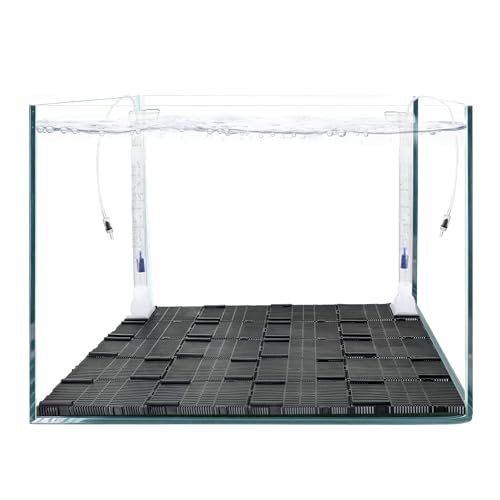
This BaoZqua kit is a complete undergravel filtration solution for a 20-gallon tank. It includes 20 interlocking filter plates and 2 adjustable lift tubes, with extra air stones and tubing. Air-driven flow pulls water through the substrate, promoting nitrifying bacteria growth and a steady biological cycle. Best for aquarists who want a full, plug-and-play kit with room for media customization. Caution: air pump not included, so setup requires sourcing compatible equipment separately.
TEHAUX 20pcs Aquarium Undergravel Plates

TEHAUX offers a DIY-friendly option with 20 undergravel plates designed for modular installations. The design emphasizes a practical bottom filter with a cut-to-fit capability, and a bottom filter material partition enabling media separation for optimized flow. Best for hobbyists building custom aquascapes or upgrading existing gravel setups. Caution: requires cutting and precise assembly to ensure even filtration and avoid gaps that could hinder flow.
Penn-Plax Replacement Media (2 Pack)

Replacement media cartridges are designed for Multi-Pore and Undergravel “E” filters, to be cycled every few weeks for best performance. They provide chemical filtration by absorbing ammonia and other chemicals, helping maintain water clarity. Best for ongoing maintenance in compatible Penn-Plax systems. Caution: designed as media for specific filter models—check compatibility before use.
Penn-Plax Undergravel 15–20 High Tank Filter

Designed for taller or higher-volume tanks in the 15–20 gallon high category, this undergravel option emphasizes simple maintenance with an air-driven system. It provides robust filtration across a slightly deeper substrate, helping maintain water quality in taller aquariums. Best for aquariums where vertical space is available and users want effective bottom filtration. Caution: heavier substrate piles may require monitoring for clogs and flow consistency.
Buying Guide: Key Considerations For Undergravel Filters
What size tank do you own? Undergravel systems come in plate configurations matched to specific tank ranges. Choose a kit designed for your gallon size, or plan to cut and adapt plates for custom fits in non-standard tanks.
Do you want aeration along with filtration? Many systems are air-driven, which both filtrate and aerate. If you don’t want to manage an air pump separately, seek all-in-one kits that include air stones and tubing or clearly note that the pump is not included.
What media will you use? Some kits include activated carbon or media sponges, while others are designed for your own media choices. Consider your water chemistry and odor control requirements when selecting media.
How important is DIY flexibility? If you crave a tailored setup, options like TEHAUX plates enable cutting and combination of media for exact flow paths; however, they require more hands-on assembly and ongoing maintenance to prevent dead zones.
Maintenance cadence matters. For optimum performance, plan for regular cartridge or media changes as recommended by the brand, and monitor substrate to prevent compaction that can reduce flow.
FAQ
- What is an undergravel filter? It uses plates under the substrate to pull water through gravel, filtering via bacteria and carbon media, with optional aeration from an air pump.
- Are undergravel filters good for planted tanks? They can be compatible if substrate depth and flow are managed to avoid root disruption; some setups require adjustments to avoid interfering with plant roots.
- Do I need an air pump with all undergravel filters? Not always, but many popular models rely on air-driven flow. If the kit specifies air-driven operation, you’ll need a compatible pump and stones.
- How often should I replace media in undergravel systems? Replacement intervals vary by media type; many cartridges are replaced every 2–4 weeks or per manufacturer guidelines to maintain filtration efficiency.
- Can I customize undergravel systems for large tanks? Yes, larger tanks often use multiple plates and adjustable lift tubes to match depth and flow; ensure even distribution to prevent dead zones.
- Are undergravel filters suitable for saltwater tanks? They can be used in saltwater environments, but verify compatibility with substrate, media, and tank species; ensure regular monitoring of the biological cycle.