Looking for a reliable sponge filter for a 30 gallon tank? This guide highlights five top options that balance mechanical and biological filtration with ease of use. Each pick suits common setups—from shrimp and fry habitats to community tanks—providing calm operation and simple maintenance. Ideal buyers include novice aquarists building a small-bore filtration system, breeders needing gentle water flow, and hobbyists seeking quiet performance without complex equipment.
Summary table of chosen products
| Product | Brand | Best For | Notes |
|---|---|---|---|
| DVHEY 2Pcs Aquarium Sponge Filter | DVHEY | Small breeding/40-50 gallon setups | Dual filtration, quiet operation |
| AQUANEAT Aquarium Bio Sponge Filter | AQUANEAT | New setups up to 60 gallons | Biological + mechanical filtration, easy to install |
| Pawfly Aquarium Bio Sponge Filter | Pawfly | 30 gallon breeders and shrimp tanks | Compact, easy to clean |
| AQQA Aquarium Filter Sponge Filter | AQQA | Mid-size to large tanks (20-110 gal) | Replaceable media, quiet operation |
| ALEGI Aquarium Bio Sponge Filter Kit | ALEGI | 30-60 gallon tanks | Easy setup with check valve for safety |
DVHEY 2Pcs Aquarium Sponge Filter

The DVHEY sponge filter combines a sponge chamber with ceramic media for dual filtration in one unit. Best for 30 to 50 gallon tanks that house small fish, shrimp, or fry. The high-density sponge supports beneficial bacteria while the ceramic media adds load-bearing surface for biofiltration. The included air diffusion creates microbubbles, promoting gentle water movement and reducing noise. Choose this if you want a compact, low-maintenance setup that performs mechanical and biological filtration quietly. Caution: verify your air pump capacity to ensure adequate flow for larger tanks.
AQUANEAT Aquarium Bio Sponge Filter

The AQUANEAT bio sponge filter provides both mechanical and biological filtration, with an air-infused chamber that creates minute bubbles to increase dissolved oxygen. It’s suitable for larger 30–60 gallon tanks and is well-suited for shrimp and fry setups due to its soft sponge material that won’t injure small aquatic residents. Best for hobbyists who want straightforward assembly and easy sponge maintenance. Limitation: requires an air pump (not included) to function properly.
Pawfly Aquarium Bio Sponge Filter

The Pawfly sponge filter is designed for tanks up to 30 gallons, featuring a compact 2.7″ diameter by 6.3″ height form factor. It delivers mechanical and biological filtration and traps debris without drawing in small fry. Best for breeders and shrimp tanks needing a compact solution with simple maintenance. Choose this if you want a plug‑and‑play option with clear cleaning intervals. Caution: avoid attempting to power wash with tap water as it can harm beneficial bacteria.
AQQA Aquarium Filter Sponge Filter
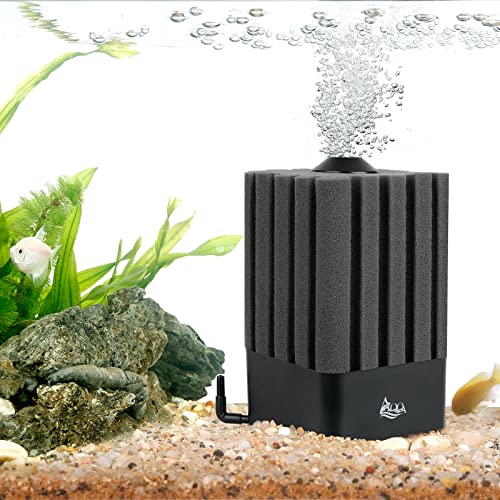
The AQQA filter is an ultra-quiet, air-powered unit suitable for mid to large tanks, including 20–110 gallons. It uses a dual filtration approach with a sponge and bio ceramic media. Replaceable sponges and washable ceramic balls extend service life. Best for aquarists who value longevity and modular media options. Note: requires an air pump and tubing (not included). If you need extra media choices, this model supports swapping in other media types.
ALEGI Aquarium Bio Sponge Filter Kit

The ALEGI sponge filter kit targets 30–60 gallon tanks, offering an easy top setup and cleaning process. It uses an airline-powered design with a check valve to prevent backflow during power outages. Best for beginners seeking a reliable filtration solution with straightforward maintenance. Limitation: performance depends on a properly sized air pump; ensure your pump matches tank volume for optimal flow.
Buying Guide: Key Purchase Considerations
- Tank size compatibility: Most sponge filters list a range; for a 30 gallon tank, choose models that explicitly cover 30–60 gallons for headroom.
- Filtration type: Mechanical plus biological filtration is standard; consider ceramic bio media for stronger bacterial colonization.
- Power source: Air-powered vs. electric power (no air pump required in some models). Ensure you have an appropriate pump or can use a compatible air pump.
- Maintenance: Look for replaceable sponges and easy-to-clean components. Avoid designs that require complete disassembly for routine cleaning.
- Noise and flow: Quiet operation is common with sponge filters; check whether the unit’s design creates noticeable vibrations or bubbles in your setup.
- Compatibility with tank inhabitants: For shrimp and fry, select models with gentle flow and soft filtration media to avoid harm.
FAQ
- What size tank is best for sponge filters?
Answer: Sponge filters work well in small to mid-size tanks, typically 20–60 gallons, with 30 gallons being a common target for these options. - Do sponge filters require an air pump?
Answer: Many models are air-powered and require an air pump; some may include integrated motors, but most need an air pump and appropriate tubing. - Are sponge filters safe for shrimp and fry?
Answer: Yes, especially those with soft sponge media and gentle water flow designed to minimize fry suction and stress on shrimp. - How often should I clean sponge filters?
Answer: Clean sponges every 2–4 weeks in tank water to preserve beneficial bacteria; avoid using tap water for routine cleaning. - Can I use different media with these filters?
Answer: Many models support replacement or addition of bio media, such as ceramic balls, to tailor biological filtration to your bio-load.