If you own a saltwater aquarium, you need reliable, easy-to-use test kits to keep water parameters stable and your livestock healthy. This guide highlights top-rated, science-backed test kits ideal for saltwater setups, plus a buying guide to help you choose. The selections emphasize accuracy, parameter coverage, and user-friendliness for hobbyists and reef-keepers alike.
The following products are among the best options for monitoring saltwater tanks. The list focuses on kits that clearly measure key variables like pH, ammonia, nitrite, nitrate, calcium, alkalinity, and other critical factors. The buyer can expect straightforward results, clear comparison points, and practical limitations to consider before purchase.
| Product | Main Focus | Best For |
|---|---|---|
| API Saltwater Master Test Kit 550-Test | 4 vital parameters in saltwater tanks | New and seasoned hobbyists needing core parameter tracking |
| Salifert Master Reef Testing Combo Kit | Calcium, carbonate, nitrate, phosphate, pH, alkalinity, magnesium | Advanced reef tanks requiring precise multi-parameter monitoring |
| Red Sea Marine Care Test Kit | Nitrate, nitrite, ammonia, pH, alkalinity | Marine aquariums needing a trusted care routine |
| Pawfly 5 in 1 Master Test Kit | pH, nitrite, nitrate, ammonia, phosphate | All-round freshwater and saltwater tanks, budget-conscious buyers |
| API Reef Master Test Kit | Calcium, carbonate hardness, phosphate, nitrate | Reef systems focusing on calcium balance and reef vitality |
API Saltwater Master Test Kit 550-Test
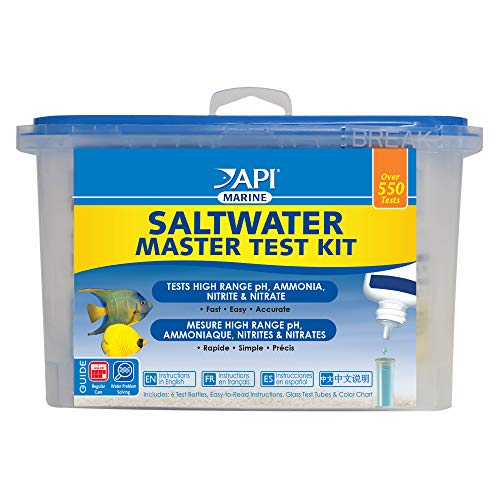
This kit focuses on four core saltwater parameters—high-range pH, ammonia, nitrite, and nitrate—through six bottles of testing solutions, one color card, and four test tubes with caps. It is best for beginners and intermediate hobbyists who want reliable, single-box coverage for ongoing water quality checks. A clear advantage is its ability to detect invisible problems that can stress or harm fish and lead to losses if left unchecked. A notable limitation is that it emphasizes four primary parameters, so reefkeepers needing calcium and alkalinity tracking alone may require an additional kit.
Best for: Beginners and general saltwater keepers who want a solid, all-in-one toolkit to monitor the most common, harmful water issues.
11 in 1 – Aquarium Test Strips | 950 Tests

These test strips measure 11 parameters in one strip, including ammonia, pH, nitrate, nitrite, total alkalinity, carbonate, hardness, chlorine, copper, iron, and temperature. The strips are paired with color charts for quick, at-a-glance results. This kit suits hobbyists who want a wide parameter snapshot without juggling multiple bottles. It’s particularly attractive for freshwater-to-saltwater transplants and reef-impacted systems. A drawback is that strips can be less precise than liquid tests for very tight parameter control, especially in stable, high-demand reef tanks.
Best for: Aquarists who want broad, quick-scan water testing without purchasing multiple separate tests.
DROPLYTIX Digital Aquarium Water Test Kit

This 10-in-1, app-enabled kit uses digital test strips to deliver lab-grade results via a smartphone app. It covers ammonia, nitrate, nitrite, pH, hardness (GH/KH), chlorine, and more. It supports all aquarium types—freshwater, saltwater, reef, and even turtle or betta setups—making it versatile for mixed-portfolio tanks or future reef ambitions. The key advantage is real-time digital results and easy tracking; a potential limitation is reliance on app connectivity and digital interpretation, which may require occasional calibration checks.
Best for: Tech-friendly hobbyists who prefer digital readouts and app-based record-keeping for ongoing maintenance.
Salifert Master Reef Testing Combo Kit

This comprehensive reef-focused kit includes calcium, nitrate, phosphate, pH, alkalinity, and magnesium tests. It’s designed for reef tanks where precise balance across multiple core parameters is critical to coral growth and livestock health. The kit is best for advanced hobbyists and reef keepers who require accurate, lab-grade chemistry for stable reef environments. A limitation is the potential cost and the volume of tests, which may be more than casual aquarists need.
Best for: Reef hobbyists who demand precise, reliable results for calcium, alkalinity, and trace nutrient management.
Pawfly 5 in 1 Master Test Kit

Offering a 5-parameter package—pH, nitrite, nitrate, ammonia, and phosphate—this kit is designed for both freshwater and saltwater tanks. It uses color-matching charts for quick interpretation and emphasizes enhanced accuracy through liquid reagents rather than strips. The kit is attractive for hobbyists seeking a balance of cost, scope, and more precise color interpretation. A limitation is that it does not include calcium or alkalinity, which reef tanks in particular often require.
Best for: Aquarists who want a compact, 5-parameter solution with improved accuracy over strips, suitable for mixed tanks.
API Reef Master Test Kit
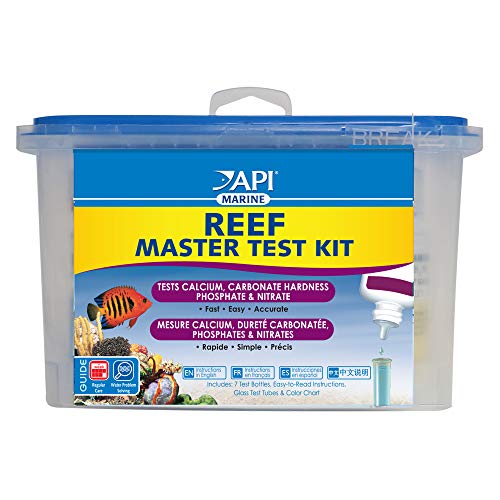
This reef-focused kit targets calcium, carbonate hardness, phosphate, and nitrate, with color cards and multiple test tubes for ongoing reef maintenance. It’s tailored to reef aquariums where calcium balance and alkalinity are essential for coral vitality and skeletal growth. The kit is best for reef enthusiasts seeking to keep reef chemistry within optimal ranges. A potential limitation is that it concentrates on reef-centric parameters, which might necessitate additional tests for sulfate, magnesium, or trace elements in some setups.
Best for: Reefkeepers who need consistent monitoring of calcium, alkalinity, and related nutrients to sustain coral health.
Buying Guide: How To Choose The Right Saltwater Test Kit
What parameters matter most depends on your tank type—fish-only, mixed, or reef. Beginners should prioritize accuracy for ammonia, nitrite, nitrate, and pH, while reef hobbyists often require calcium, alkalinity, magnesium, and phosphates. Consider the following questions when selecting a kit:
- What tank type do you manage? Reef tanks require calcium and alkalinity tracking; freshwater-saltwater mixes may need broader parameter coverage.
- Do you prefer liquid reagent tests or strips? Liquid tests tend to be more precise; strips offer speed and convenience but can be less accurate at low or high extremes.
- How often will you test? High-frequency testing justifies a kit with more tests per bottle and clear color charts or digital readouts.
- Is digital reading important to you? App-enabled kits reduce guesswork but depend on device compatibility and updates.
- What is your budget? Comprehensive reef kits tend to be pricier; balanced kits cover core parameters well for most tanks.
Key Considerations By Scenario
- New saltwater aquarium: Start with a kit that tracks ammonia, nitrite, nitrate, and pH regularly to avoid new-tank crashes.
- Reef tank: Prioritize calcium, alkalinity, magnesium, nitrate, and phosphate for reef health and coral growth.
- Budget-conscious setup: A broad 11-in-1 strip kit can provide a broad snapshot, with the understanding it may trade some precision for convenience.
- Digital monitoring: App-enabled solutions offer trend tracking and reminders but require a connected device.
FAQs
- What is the most important parameter to test in a saltwater tank? Ammonia is critical in new tanks; for established systems, nitrate and phosphate influence algae growth, while reef tanks emphasize calcium and alkalinity.
- Are test strips reliable for reef tanks? Strips are convenient, but liquid tests or digital kits typically provide more precise readings, especially for calcium and alkalinity.
- How often should I test a new saltwater tank? Test daily for the first two weeks, then reduce frequency to 1-2 times per week as the system stabilizes.
- Can I mix test kit brands? Yes, but ensure you’re measuring the same parameters consistently to avoid conflicting results.
- Should I test for trace elements? Some reef setups benefit from monitoring trace elements, but core parameters (calcium, alkalinity, magnesium) usually take priority.
- How do I interpret test results accurately? Use the color charts or digital readouts exactly as directed, and perform tests at the same time of day when tracking trends.
For best results, align your kit choice with your tank goals: routine maintenance for fish-only systems, robust parameter coverage for mixed tanks, or precise chemical balance for reef systems. Regular testing, paired with stable water changes and proper husbandry, helps maintain a healthy, thriving aquarium.