Answering the need for reliable, fish-safe tubing for aeration and filtration, these 3/16″ standard airline hoses are ideal for most freshwater and saltwater setups. This guide compares five top options, focusing on flexibility, durability, and ease of use. Best for beginners seeking a dependable starter kit, or hobbyists upgrading an existing system who want minimal kink-resistance and clean aesthetics. Below, you’ll find a quick product comparison, a buying guide, and answers to common questions to help you choose with confidence.
Summary at a glance (selected products):
- Penn-Plax Aqua-Life Standard Airline Tubing — 8 ft: Flexible, clear silicone, low-profile look; best for unobtrusive setups and quick routing.
- AQUANEAT Aquarium Tubing — 8 Feet: Thickened, wear-resistant, kink-resistant material; good for long-term use in varied environments.
- Pawfly Aquarium Tubing — 50 Feet: Long, versatile supply with included accessories; best for larger or multiple-tank systems.
- JIH Aquarium 50 Feet Standard Tubing: Black color blends with hydroponics or terrariums; durable and easy to hide.
- Penn-Plax Deluxe Airline Tubing — 8 Feet: Durable silicone, flexible, fish-safe; ideal as a reliable spare or replacement.
Penn-Plax Aqua-Life Standard Airline Tubing — 8 ft

Best for: Hobbyists needing a clear, low-profile line that blends with water and remains flexible in tight spaces. This 3/16″ tubing is designed for connecting pumps to air stones, under-gravel filters, and ornaments, making it suitable for routine maintenance and new setups alike. The soft, transparent material reduces visual clutter in the tank and facilitates quick routing around corners.
Why selected: Its flexible clear design and reliable airflow support routine aeration tasks without crimping. The material resists cracking and hardening, helping maintain long-term usability in both freshwater and saltwater environments.
Caution: Some users may prefer thicker-walled tubing in high-flow installations to minimize potential slight flex under strong pump output.
AQUANEAT Aquarium Tubing — 8 Feet

Best for: Aquarists seeking wear-resistant, kink-resistant tubing that remains pliable over time. The material is described as fish-safe, thickened, and designed to resist cracking, making it well-suited for ongoing aeration tasks in mixed tanks or hydroponic setups.
Why selected: The combination of softness, durability, and long-term flexibility supports dependable airflow with minimal maintenance in varied tank environments.
Caution: As with any tubing, ensure the connections are secure to prevent leaks during high-flow periods.
Pawfly Aquarium Tubing — 50 Feet
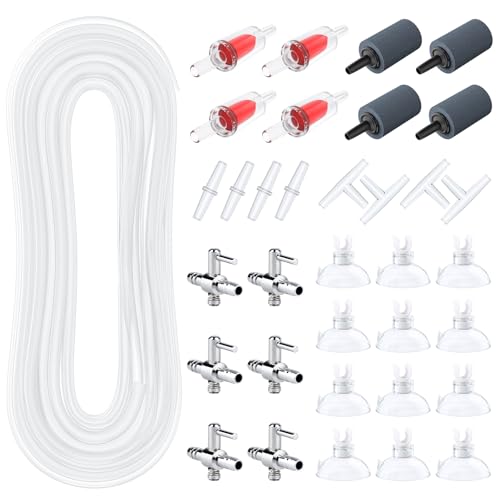
Best for: Larger setups or multiple tanks where a long, single spool of tubing reduces the number of connections. Includes 50 feet of standard 3/16″ tubing and a kit with four air stones, making it a practical all-in-one choice for bigger installations.
Why selected: The tubing is described as flexible and kink-resistant, with thickened design for rough handling. It supports a wide range of aeration configurations, from small aquariums to ponds or terrariums.
Caution: The included accessories are helpful, but ensure compatibility with your pump’s outlet size and any required adapters for your exact setup.
JIH Aquarium 50 Feet Black Airline Tubing

Best for: Aquarists who prefer a discreet option that blends with black lighting or hydroponic systems. The tubing fits all 3/16 standard outlets including pumps, filters, and stones, and its flexible, durable construction supports long-term use.
Why selected: The black color helps conceal tubing inside complex aquascapes, reducing visual distraction while maintaining reliable airflow.
Caution: The black color may show chalky film over time if exposed to certain water conditions; regular cleaning can help maintain clarity.
Penn-Plax Deluxe Airline Tubing — 8 Feet

Best for: Aquarists needing a durable silicone line that stays flexible and resists cracking or kinking. The light-green hue helps it disappear visually in water, which is advantageous in delicate aquascapes.
Why selected: Made from silicone, this tubing emphasizes safety for freshwater and saltwater tanks and offers reliable performance where a consistent airflow is essential for devices like air stones and under-gravel filters.
Caution: Silicone tubing can be slightly pricier than basic PVC options; weigh the longevity benefits against cost for your setup.
Buying Guide: Key Considerations For Choosing Plastic Tubing For Fish Tanks
- Size and compatibility: Standard 3/16″ inner diameter (ID) is common for many air pumps and accessories. Check your pump’s outlet and the fittings on air stones, valves, and filters.
- Material and safety: Look for fish-safe materials. Silicone tends to be more durable and flexible; PVC is typically cheaper but can kink or crack over time.
- Flexibility vs. durability: Softer tubes are easier to route around corners but may be more prone to kinking under high flow. Thicker walls resist wear but may be stiffer.
- Clarity and aesthetics: Clear hoses blend into water and are less obtrusive; colored hoses (like black or green) can hide tubing in certain aquascapes.
- Length considerations: Longer runs reduce the number of fittings but can introduce more potential leak points and greater resistance to airflow.
- Maintenance needs: Some materials resist cracking and hardening better over time; consider whether you prefer easier cleaning or fewer replacements.
- Applications: For ponds, terrariums, or hydroponics use, ensure the tubing is compatible with non-aquatic environments and can endure broader temperature ranges.
Frequently Asked Questions
- What size airline tubing should I use for most fish tanks? Most standard setups use 3/16″ inner diameter tubing. Verify your pump outlet and fittings for compatibility.
- Is silicone tubing better than PVC for aquariums? Silicone tends to offer better flexibility and durability, with a lower risk of cracking or hardening over time, but it can be more expensive.
- Can I use aquarium tubing for hydroponics? Yes, many 3/16″ tubes are suitable for hydroponics, but check chemical compatibility and temperature tolerance for your specific system.
- Will long tubing reduce airflow to my air stones? Longer runs can introduce some resistance; choose tubing with thicker walls if high flow is needed, and minimize unnecessary length where possible.
- How do I prevent tubing from kinking? Use tubing that is kink-resistant, route along straight paths, and use clamps or clips to keep it in place during maintenance.
- How often should I replace aquarium tubing? Replace if you notice cracks, hardening, or persistent kink points, which can restrict airflow and harbor buildup.