Maintaining optimal water quality is essential for the health of freshwater fish and the longevity of your tank ecosystem. A reliable test kit helps you monitor pH, ammonia, nitrite, nitrate, hardness, and other vital parameters, enabling proactive adjustments before problems arise. This guide reviews five highly regarded test kits, highlighting what makes each one a practical choice for hobbyists—from beginners to seasoned aquarists. Use the buying guide at the end to compare options and decide which kit fits your setup and routine.
Summary of Selected Products
| Product | Brand | Key Focus |
|---|---|---|
| API Freshwater Master Test Kit 800-Test | API | Comprehensive master kit for five core parameters |
| 11 in 1 – Aquarium Test Strips | SJ WAVE | 11 parameters with quick strip testing |
| AAwipes 8-in-1 Aquarium Test Kit | AAwipes | Eight-in-one strips for fast results |
| API GH & KH Test Kit | API | GH and KH measurement for water hardness |
| Pawfly 5 in 1 Master Test Kit | Pawfly | Five essential parameters in one kit |
Each product below is evaluated for accuracy, ease of use, and suitability for common freshwater setups. Images and product links point to Amazon listings for quick reference.
API Freshwater Master Test Kit 800-Test

The API Freshwater Master Test Kit is designed to monitor five vital water parameters in freshwater aquariums. It includes one master kit with seven testing solution bottles, a color card, and tubes with caps. This kit helps detect and prevent invisible water problems that can stress fish or cause losses. It provides reliable testing for pH, high-range pH, ammonia, nitrite, and nitrate, making it a popular choice for routine maintenance and new tank setups alike.
11 in 1 Aquarium Test Strips

These 11-in-1 test strips offer a broad snapshot of water quality, including ammonia, pH, iron, chlorine, total hardness (GH), carbonate, nitrate, nitrite, total alkalinity, copper, and temperature. The strips are noted for easy-to-read color charts and quick, at-home testing without trips to a store. They are suitable for both freshwater and saltwater setups, and they streamline monitoring across multiple parameters, helping you stay ahead of potential issues.
AAwipes 8-in-1 Aquarium Test Kit
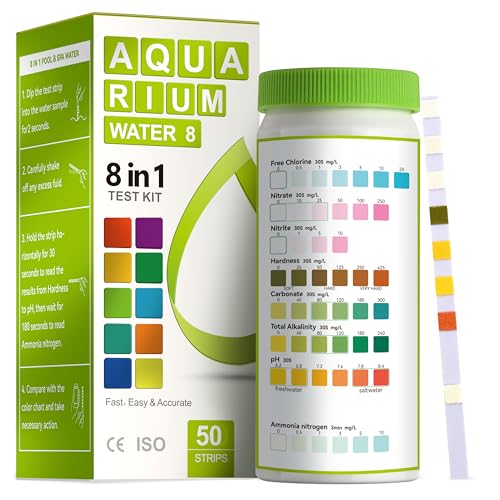
The AAwipes 8-in-1 kit provides fast, professional-grade testing with eight parameters: Free Chlorine, Nitrate, Nitrite, Hardness, Carbonate, Total Alkalinity, pH, and Ammonia nitrogen. It uses liquid reagents and color charts for clear results and is marketed as suitable for both freshwater and ponds. The kit emphasizes quick testing, with a simple three-step process designed to minimize guesswork and keep your tank running smoothly.
API GH & KH Test Kit

The API GH & KH Test Kit focuses on total hardness (GH) and carbonate hardness (KH), two key indicators of water quality for both plant health and fish well-being. The kit includes two testing bottles and two tubes with caps, offering a straightforward approach to tracking these parameters. Accurate GH and KH readings help you judge your buffering capacity and adjust mineral balance to prevent pH swings that stress aquatic organisms.
Pawfly 5 in 1 Master Test Kit

The Pawfly 5-in-1 Master Test Kit monitors pH, nitrite, nitrate, ammonia, and phosphate. It is designed to work for both freshwater and saltwater tanks, featuring precise color-matching charts for quick interpretation. The kit emphasizes simplicity and accuracy, providing a compact option for hobbyists who want to regularly test core parameters without handling multiple separate tests.
Buying Guide: Key Purchase Considerations
- Parameter coverage: Decide which tests are most important for your tank. Master kits cover several core parameters, while 5-in-1 kits focus on essentials but may require supplementary tests for a full profile.
- Test method: Liquid reagents often offer higher accuracy than strips, but strips are faster and less messy. Choose based on your tolerance for handling chemicals and reading color charts.
- Frequency of testing: New tanks and changing environments may require more frequent tests (weekly or biweekly). For established tanks, monthly checks might suffice unless issues arise.
- Tank type and inhabitants: Some parameters matter more in planted tanks, while others are critical for high-bioload systems. Ensure the kit aligns with your tank’s needs.
- Ease of interpretation: Color charts should be clear and easy to read under typical lighting. Some kits include digital readers or online resources to assist.
- Value and replacement supplies: Consider the number of tests per kit and the cost of replacement reagents or strips. A kit with abundant replacement options can reduce long-term costs.
- Brand reliability: Reputable brands with long-standing products tend to offer more consistent results and better customer support.
How to Use a Freshwater Test Kit Effectively
Consistent sampling is key. Collect water from the central part of the tank, away from filters or inflowing outlets. Follow the kit’s instructions for timing on color development and comparison. Record results to track trends over time, and adjust water changes, filtration, or dosing accordingly. For planted tanks, monitor KH and GH alongside pH to anticipate buffering needs as CO2 levels change.
Which Kit Is Right For You?
For beginners or hobbyists who want a broad, all-in-one testing approach, the API Freshwater Master Test Kit offers comprehensive coverage with a trusted brand. If you prefer quick checks with many parameters at once, the SJ WAVE 11-in-1 strips provide convenience for regular monitoring. For those seeking a balance of accuracy and speed, the AAwipes 8-in-1 and Pawfly 5-in-1 kits deliver robust testing with clear guidance. To specifically track water hardness and buffering capacity, the API GH & KH Kit provides focused insights.