Choosing the right ammonium chloride product can simplify fishless cycling and help establish a healthy nitrogen cycle in freshwater and saltwater setups. This guide highlights five strong options, compares their dosing, and covers practical buying considerations. All selections are suitable for aquarium hobbyists aiming to responsibly kickstart beneficial bacteria growth and maintain stable ammonia levels during cycling.
Summary Table
| Product | Brand | Approx. Treats | Form/Size | Notes |
|---|---|---|---|---|
| Ammonium Chloride Solution – 4 oz | DrTim’s Aquatics | Covers up to 200 gallons | Liquid, 4 oz | Fishless cycling support; 40 mg/ml TAN |
| Ammonium Chloride – 500 g | Fritz Aquatics | Very large systems | Powder, 500 g | Precise ammonia source; no livestock |
| Ammonium Chloride Solution – 8 oz | DrTim’s Aquatics | Covers up to 400 gallons | Liquid, 8 oz | Same dosing guidance; larger volume |
| Ammonium Chloride – 4 oz | Gingerbread Pet Supply | Typical small to medium tanks | Liquid, 4 oz | Precise 10 drops per gallon dosing |
| Ammonium Chloride – 1 lb | Alpha Chemicals | Bulk option for multiple cycles | Powder, 1 lb | General use; labeling varies |
DrTim’s Aquatics Ammonium Chloride Solution – 4 oz
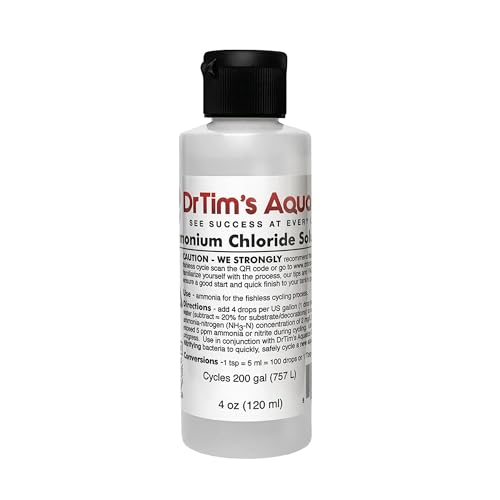
DrTim’s Aquatics provides a fishless cycling solution designed to simulate fish waste and accelerate the nitrogen cycle in freshwater, reef, and marine tanks. The product delivers a measured dose of 40 mg/ml TAN and recommends adding 4 drops per gallon to activate cycling. It covers up to 200 gallons, making it suitable for both small and larger setups. This option is commonly used with substrate, live decor, and turtle habitats where a controlled ammonia source is needed during cycling.
Fritz Pro Aquatics Ammonium Chloride – 500 g

This product serves as a reliable ammonia source for fishless cycling, enabling beneficial bacteria such as FritzZyme or TurboStart to establish a nitrogen cycle without livestock in the tank. It is highly concentrated, and the recommended dosing is 4.5 g per 100 gallons to achieve roughly 4 ppm ammonia. It should be used only in systems without fish or other livestock, emphasizing its role in starting nitrification rather than ongoing maintenance.
DrTim’s Aquatics Ammonium Chloride Solution – 8 oz

This larger-volume DrTim’s product follows the same fishless cycling support model as the 4 oz version, providing an 8-ounce bottle that covers up to 400 gallons. The dosing guidance remains 4 drops per gallon, delivering 40 mg/ml TAN. The extended volume suits bigger tanks or setups undergoing frequent cycling or multiple tanks in a hobbyist system.
Gingerbread Pet Supply Ammonium Chloride – 4 oz
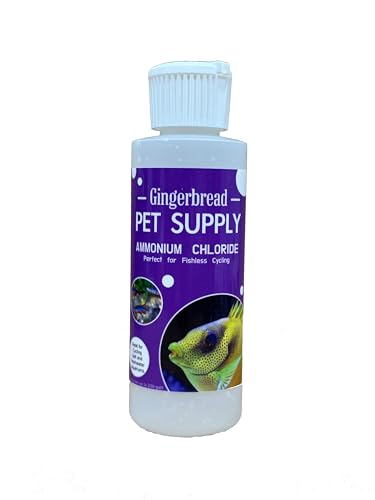
Gingerbread Pet Supply offers a 4 oz ammonium chloride product designed for aquarium cycling. It emphasizes precise dosing at 10 drops (about 0.5 ml) per gallon to achieve a stable ammonia level around 2 ppm, supporting a steady start to the nitrogen cycle. The product is marketed as USA-made, aligning with standards many hobbyists expect for reliability during cycling phases.
Ammonium Chloride, High Purity, 1 lb

ChemCenter’s high-purity ammonium chloride is offered in a bulk 1-pound package. This option is suitable for users who perform frequent cycles, need repeated ammonia sources for multiple tanks, or require a stock supply for experimental setups. Note that product labeling or packaging may vary, so readers should verify current specs before purchase.
DrTim’s Aquatics Ammonium Chloride Solution Bundle for Cycle Start (2 oz + 4 oz)

This bundled option combines a 2-ounce ammonium chloride solution with a 4-ounce “One and Only” cycle start-up product. It is designed for a guided fishless cycle in saltwater or reef tanks, with notes indicating that cycling may take 7–30 days and that an ammonia and nitrite test kit is essential. The bundle approach helps hobbyists manage the transition from ammonia to nitrite to nitrate in a structured way.
Buying Guide: Key Purchase Considerations And Comparisons
- Purpose and cycling method: Most ammonium chloride products support fishless cycling by providing an ammonia source. Confirm whether you need a liquid solution for precise dosing or a powdered option for bulk use in larger systems.
- Concentration and dosing: Look for products that specify TAN (Total Ammonia Nitrogen) concentration and recommended dosing per gallon. This helps you achieve a predictable ammonia level (commonly around 2 ppm during cycling) without overloading beneficial bacteria.
- Tank size and volume: Larger tanks benefit from higher-volume bottles (e.g., 8 oz or 1 lb powder) to minimize frequent replenishments. Smaller setups can often rely on 4 oz bottles with straightforward dosing.
- Livestock considerations: Some products are explicitly for fishless cycling and should not be used in tanks with fish or invertebrates. Always follow labeling instructions to avoid adverse effects on residents.
- Form and handling: Liquids are typically easier to dose drop-by-drop, while powders may require precise measurement with a scale. Verify your comfort with the dosing method before purchase.
- Quality and origin: Reputable brands (DrTim’s, Fritz Aquatics, Gingerbread, Alpha Chemicals) often provide clearer dosing guidelines and safety notes. Bulk options can be cost-efficient for multiple tanks or ongoing cycles.
- Complementary tools: For effective cycling, pair ammonium chloride products with reliable test kits (ammonia, nitrite, nitrate) and possibly starter bacteria products if your cycle strategy includes inoculation.
- Packaging variations: Some items may have packaging or labeling updates. Check current product pages for the latest instructions and safety notes.
In practice, selecting the right ammonium chloride source depends on your tank size, cycling approach, and whether you prefer liquid dosing or bulk powder. Reading label specifics and following dosing guidance helps ensure a safe and successful nitrogen cycle for both freshwater and saltwater systems.