For aquarists seeking reliable water quality insights, the right fish tank water tester kit helps prevent hidden problems and supports a healthy environment for your fish. This guide highlights five leading options, explaining who each kit is best for, and why they stand out. Ideal buyers include beginner hobbyists needing simple strips, experienced keepers requiring broader parameter panels, and those monitoring ponds or mixed habitats. Use the comparison table to quickly assess which kit fits your setup and routine.
| Product | Key Parameters | Best For |
|---|---|---|
| AAwipes 8-in-1 Aquarium Test Kit | pH, Free Chlorine, Nitrate, Nitrite, Alkalinity, Hardness, Carbonate, Ammonia nitrogen | New hobbyists and small freshwater tanks seeking a broad 8-parameter check |
| 11 in 1 – Aquarium Test Strips (SJ WAVE) | 11 parameters including ammonia, pH, iron, chlorine, GH, carbonate, nitrite, nitrate, alkalinity, copper, temperature | Comprehensive home testing for mixed freshwater/saltwater setups |
| API Freshwater Master Test Kit | pH, high range pH, ammonia, nitrite, nitrate | Structured, dependable monitoring of core freshwater metrics |
| Pawfly 5 in 1 Master Test Kit | pH, nitrite, nitrate, ammonia, phosphate | All-in-one for multiple params with simple color matching |
| DaToo 8 in 1 Test Kit | pH, ammonia, total alkalinity, carbonate, hardness, free chlorine, nitrate, nitrite, plus temperature | Broad panel with temperature for steady, mixed tanks |
AAwipes 8-in-1 Aquarium Test Kit

The kit offers 8 parameters: Free Chlorine, Nitrate, Nitrite, Hardness, Carbonate, Total Alkalinity, pH, and Ammonia nitrogen. It uses high-quality fiber paper and color-accurate readouts designed for quick interpretation. Best for freshwater tanks and ponds where multiple metrics are needed to maintain stability. A potential limitation is reading accuracy if color charts are not compared under proper lighting, so use a consistent light source when reading results.
11 in 1 – Aquarium Test Strips

This kit tests 11 parameters, including ammonia, pH, iron, chlorine, total hardness (GH), carbonate hardness, nitrate, nitrite, total alkalinity, copper, and temperature. It suits buyers who want a single kit for both freshwater and saltwater setups and prefer color-chart interpretation at home. The main caution is that strips can be less precise for borderline readings; confirm critical results with a second method if needed.
API Freshwater Master Test Kit

This kit focuses on five vital freshwater parameters: pH, high range pH, ammonia, nitrite, and nitrate. It comes with multiple bottles of testing solutions and accessories designed for a structured testing routine. It’s best for aquarists who want a proven, widely supported method and plan regular, scheduled testing. A limitation is that it covers fewer parameters than some all-encompassing strips, so it may not capture every fluctuation in complex systems.
Pawfly 5 in 1 Master Test Kit

Tests pH, nitrite, nitrate, ammonia, and phosphate with color-matching charts for easy interpretation. It supports freshwater and saltwater tanks and emphasizes high-accuracy results using professional liquid reagents. Best for users who want an economical, 5-parameter kit with quick, actionable results. A potential drawback is a fewer in-tank parameter count than larger kits, which could miss less common issues.
DaToo 8 in 1 Aquarium Test Kit
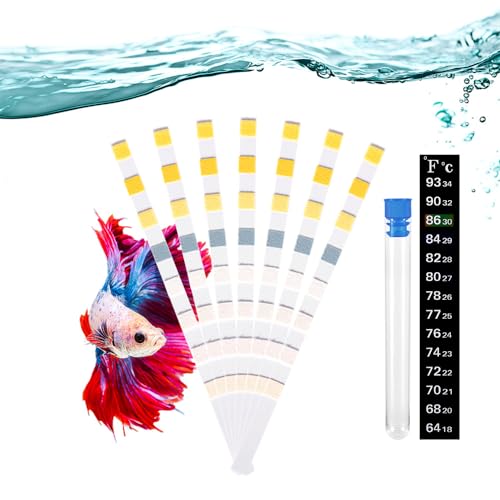
DaToo offers 8+1 parameters including pH, ammonia, total alkalinity, carbonate, hardness, free chlorine, nitrate, nitrite, and an extra thermometer. It aims to provide a broad overview for both freshwater and mixed tanks with an emphasis on sensitivity. Choose this if you want temperature data alongside the core water quality metrics. The extra thermometer adds value but may not be needed for every setup, so assess your monitoring needs before adding it.
Buying Guide
- Number of parameters: Decide whether you need 5, 8, or 11 metrics. More parameters enable broader monitoring but require more interpretation time.
- Environment: Freshwater vs. saltwater needs vary. Some kits excel in freshwater, others cover both. Confirm compatibility with your tank type.
- Reading method: Strips offer quick results but may trade accuracy for convenience; liquid tests or color charts can provide more precise readings.
- Maintenance: Consider how often you test and how easy it is to store and handle reagents or strips.
- Accuracy and speed: Look for clear color charts and straightforward read times. Kits claiming high accuracy should provide a reliable color-matching process.
FAQ
- What is a fish tank water tester kit used for?
It helps monitor water quality by measuring parameters such as pH, ammonia, nitrates, nitrites, and hardness to maintain a healthy aquarium environment.
- Are strips or liquid tests better for beginners?
Strips are typically quicker and easier for beginners. Liquid tests may offer higher precision and are preferred by some experienced hobbyists.
- How often should I test my aquarium water?
For most setups, test at least twice a week and after major changes or additions to the tank.
- Can I use one kit for both freshwater and saltwater tanks?
Some kits are versatile for both types; verify the product description to ensure it covers your specific needs.
- What should I do if readings are outside the recommended range?
Follow the kit’s action chart or consult reliable aquarium guidance to adjust water parameters and protect your fish.
- Do these kits require special storage?
Store strips and reagents as instructed by the manufacturer, typically in a cool, dry place away from direct sunlight.