If you’re keeping saltwater or reef systems, a reliable aquarium chiller or cooling fan helps maintain stable temperatures and protects sensitive species. The top picks below are chosen for different setups: compact axolotl or coral tanks, mid-sized saltwater displays, and larger SPS reefs. This guide highlights who each cooler is best for, plus practical notes to help you choose the right model for your tank.
- AQUASMITH Aquarium Chiller Fan — Best for compact to medium saltwater or mixed tanks with a need for precise temp control.
- PAIZOO Aquarium Chiller Fan — Best budget-friendly option with adjustable modes for flexible cooling.
- Poafamx 1/3 HP Aquarium Chiller — Best for larger 40–80 gallon freshwater or saltwater tanks needing robust cooling.
- Togsher 1/3 HP Aquarium Chiller — Best for versatile setups up to 79 gallons with energy-saving operation.
- hygger Aquarium Chillers Fan (1-Fan Head) — Best for spaces needing quiet, multi-speed cooling across seasons.
AQUASMITH Aquarium Chiller Fan

Best for: Small to medium saltwater or freshwater tanks that require precise temperature control. This model uses evaporative cooling with a temperature probe and LED display for set vs. real-time temps. It delivers a 3°F–7°F cooling range and supports a 59°F–93°F adjustable range, making it suitable for diverse livestock and plant needs. The dual fan design and 30° angle help concentrate cooling on the water surface for rapid effect.
Why selected: It combines true temperature control with relatively quiet operation and a compact footprint. The adjustable airflow and independent controller simplify monitoring in reef or axolotl setups where stable temperatures are critical.
Caution: The unit relies on evaporative cooling, so performance may vary with humidity and ambient conditions. Maximum cooling is not as extensive as a dedicated chiller in very hot climates.
PAIZOO Aquarium Chiller Fan

Best for: Hobbyists on a budget who still want multiple speed options for axolotl, coral, or mixed tanks. It features dual turbo fans and a durable ABS build with a copper motor and quiet bearings. Three speed modes let you tailor cooling to daily conditions or rapid temperature drops.
Why selected: The model offers practical cooling without the cost of larger chillers, making it appealing for smaller to mid-sized setups where occasional heat spikes occur. The three-speed control helps manage noise and energy use.
Caution: While cost-effective, this option may not cool as aggressively as higher-capacity units in extreme heat or in tanks that contain highly sensitive species requiring tight control.
Poafamx 1/3 HP Aquarium Chiller
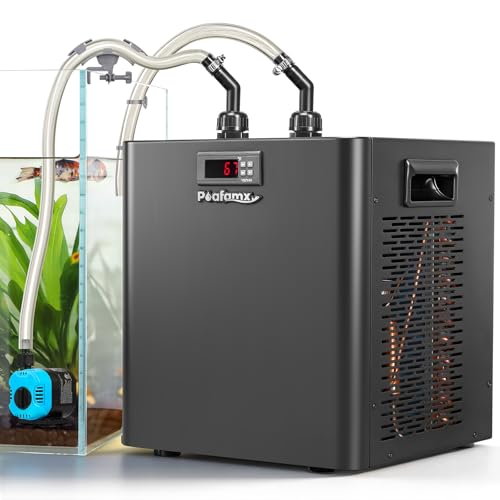
Best for: Larger tanks in the 40–80 gallon range needing stable cooling across saltwater or freshwater setups. This chiller maintains 65–80°F with a compressor capable of pulling water temperatures down by as much as 10°C below room temperature.
Why selected: High-capacity cooling is ideal for reef systems or axolotls in warmer homes. The unit’s robust compressor and titanium evaporator resist corrosion, supporting reliability in mixed environments.
Caution: Greater size and power mean higher energy use; ensure adequate space for airflow and consider ambient room temperature when planning placement.
Togsher 1/3 HP Aquarium Chiller

Best for: Professionals or serious hobbyists with larger tanks up to 79 gallons who need reliable, broad-range cooling. The unit targets both freshwater and saltwater systems, including reef tanks and axolotl setups.
Why selected: It combines efficient cooling with energy-saving features and flexible temperature control in a versatile packaging. The unit’s design supports longer operation with stable performance across ambient temperatures from 41°F to 86°F.
Caution: This model may be overkill for small or lightly heated tanks; ensure you truly need 79-gallon compatibility before purchase.
hygger Aquarium Chillers Fan (3-Fan Head)

Best for: Coral tanks and planted displays that need dependable, low-noise cooling. With a 3-head design and adjustable wind speeds, it offers multi-directional airflow to evenly distribute cooling across the water surface.
Why selected: Its five wind-speed levels provide flexibility for year-round use, including seasons when ambient temperatures fluctuate. The ABS shell and copper motor emphasize durability and quieter operation.
Caution: A multi-head design may require more clearance around the tank; verify space before mounting or placement to optimize airflow.
hygger Aquarium Chillers Fan (1-Fan Head)

Best for: Smaller spaces or single-tank setups needing quiet cooling with fewer moving parts. A single-head design prioritizes compactness and straightforward operation.
Why selected: The model preserves temperature stability with a compact footprint, making it suitable for den or bedroom tanks where space is at a premium or where you want to minimize noise.
Caution: It may deliver less airflow for larger tanks; pairing with small to mid-size displays yields the best results.
Dreamtrue Aquarium Chiller (79 Gal)

Best for: Large tanks up to 79 gallons needing reliable cooling for freshwater or saltwater environments, including axolotls and jellyfish. It includes water pump components to facilitate cooling water circulation.
Why selected: This option provides robust cooling capacity with an integrated ecosystem approach, useful for hobbyists managing stability in more demanding displays.
Caution: The setup is larger and may require additional space and airflow; confirm compatibility with your cabinet or stand before buying.
Buying Guide: Key Considerations For Choosing a Saltwater Tank Cooler
Size and tank type: Match cooler capacity to your tank volume and water salinity. Larger tanks benefit from higher HP units, while small tanks can rely on compact fans or smaller chillers.
Cooling method: Evaporative fans are quieter and cheaper but depend on room humidity. Water chillers with compressors deliver stronger cooling but use more energy and space.
Temperature range: Check adjustable setpoints and the ability to hold target temperatures under peak summer heat. For sensitive species, tighter control is preferable.
Noise and placement: Consider the ambient noise level and where the unit will reside. Higher-end models minimize sound via brushless motors or optimized airflow.
Energy efficiency: Look for energy-efficient compressors and refrigerants with low environmental impact. R290 refrigerant and efficient motors contribute to lower long-term costs.
Maintenance needs: Titanium evaporators resist corrosion in saltwater; ensure easy access for cleaning and routine checks on seals and fans.
Corrosion resistance: Saltwater environments demand corrosion-resistant metals and coatings; prioritize units designed for marine use to extend service life.
FAQ
- Which cooler is best for a small axolotl tank? A compact fan-style cooler like the AQUASMITH or PAIZOO with adjustable speeds works well for shallow, small tanks requiring moderate cooling and simple temperature monitoring.
- Do I need a full compressor chiller for reef tanks? For many reef setups, a dedicated compressor chiller (1/3 HP or larger) provides consistent cooling, especially in hot climates or during peak summer months.
- Can cooling fans replace a chiller? Fans lower water temperature by evaporative cooling but are less effective in high humidity or when ambient temperatures are very high; a chiller is more reliable in those cases.
- How important is temperature stability? Many reef and coral species tolerate tiny fluctuations; however, prolonged swings can stress fish and corals, making precise control valuable.
- What maintenance is required? Regular cleaning of fan blades, vents, and condensate areas helps preserve airflow and efficiency; inspect seals and connections for leaks in saltwater setups.
- Should I place the cooler outside the cabinet? If space allows, external placement reduces heat buildup inside cabinets and improves airflow for equipment like pumps and lights.