Answering the question “how to test nitrate in a fish tank” begins with choosing a reliable test kit. This guide focuses on nitrate testing tools that help prevent water problems and fish stress. It highlights practical options for beginners and experienced hobbyists alike, with clear reasons to pick each product. The top picks include kits and strips that cover nitrate alongside other key parameters for freshwater and saltwater setups. A concise buyer’s table follows, outlining who each product is best for and why.
| Product | Best For | Why It Stands Out |
|---|---|---|
| API NITRATE 90-Test Freshwater and Saltwater Aquarium Water Test Kit | New and seasoned hobbyists needing precise nitrate readings | Dedicated nitrate testing with 0-160 ppm range and two testing solutions for accuracy |
| API FRESHWATER MASTER TEST KIT 800-Test | Comprehensive monitoring of five vital parameters including nitrate | All-in-one kit for routine water quality checks in freshwater tanks |
| AAwipes 8-in-1 Aquarium Test Kit (K02-50) | Multi-parameter monitoring for quick checks | Nitrate plus other essentials in one 50-strip set |
| DIPSTIK 7-Way Aquarium Test Strips | Simple, fast nitrate and general water quality checks | 7-parameter strips with color chart for quick readings |
| 11 in 1 Aquarium Test Strips (SJ WAVE) | Home testing for comprehensive parameter overview | 11 parameters with easy color charts and broad applicability |
API NITRATE 90-Test Freshwater and Saltwater Kit
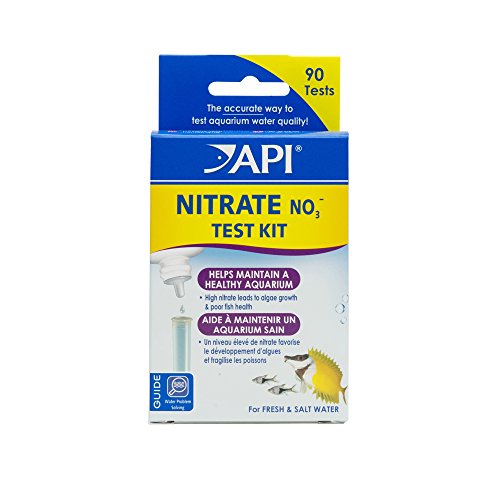
The API NITRATE 90-Test is a dedicated nitrate test kit designed for both freshwater and saltwater aquariums. It helps monitor and adjust nitrate levels to prevent invisible water problems that can harm fish. This kit is best for hobbyists who want a focused nitrate reading with a straightforward testing process. It detects nitrate levels from 0 to 160 ppm, allowing users to respond before ammonia and nitrite spikes occur. A potential limitation is that it tests only nitrate in each use, so users may need a separate kit for other parameters.
API Freshwater Master Test Kit 800 Tests

The API Freshwater Master Test Kit provides testing for five essential water parameters, including nitrate. This kit is well suited for buyers who want a robust, all-in-one solution for ongoing freshwater tank care. It includes multiple test bottles, a color card, and tubes to support frequent testing. The advantage is comprehensive coverage; the drawback is a larger kit footprint and more components to handle between tests.
AAwipes 8-in-1 Aquarium Test Kit

This 8-in-1 kit provides nitrate testing among eight parameters, making it ideal for hobbyists who want broad, quick checks in one package. It’s designed for both freshwater and ponds, with color-accurate strips and fast results. Choose this if you want a single kit that covers nitrate along with multiple other water quality indicators. A potential limitation is that strip-based results may be slightly less precise than liquid tests in some conditions.
DIPSTIK 7-Way Aquarium Test Strips

DIPSTIK 7-Way Test Strips provide a practical option for nitrate alongside other critical parameters such as nitrite, chlorine, hardness, alkalinity, carbonate, and pH. They are best for hobbyists seeking a fast, affordable nitrate check integrated with several others. Use them as a quick screening tool, but consider liquid tests if you need highly precise nitrate measurements for sensitive species.
7 Way Aquarium Test Strips (HOVIRAN)

The HOVIRAN 7-Way Strips test seven parameters, including nitrate, to offer a broad snapshot of water quality. Best for budget-conscious buyers who want a straightforward, multi-parameter option. A limitation is that color interpretation can vary under different lighting conditions; double-check with a consistent light source for accuracy.
SJ WAVE 11 in 1 Aquarium Test Strips

SJ WAVE’s 11-in-1 strips cover a wide range of parameters, including nitrate, for a comprehensive home test. Best for hobbyists who want a single strip for frequent broad testing in both freshwater and saltwater. The main caution is that more parameters can complicate the interpretation if colors are close on the chart; take time to compare against the provided guide.
Buying Guide: Nitrate Testing Essentials
How do you choose the right nitrate test for your tank?
- Test type: Liquid tests tend to be more precise for nitrate; strips offer quick results and convenience but may be less exact in some conditions.
- Scope: If you need only nitrate, a dedicated nitrate kit is simplest. If you want to monitor multiple parameters, an 8-in-1 or 11-in-1 kit saves time.
- Tank type: Freshwater and saltwater kits may differ in calibration. Ensure the kit supports your tank environment.
- Frequency: For new tanks, test more frequently (2-3 times per week) and taper as stability improves.
- Storage and handling: Keep test reagents sealed and away from heat or light to preserve accuracy.
Practical Comparison Tips
- Use the same kit consistently to track trends over time rather than relying on single readings.
- Record nitrate levels alongside water changes to interpret how adjustments affect the tank.
- Combine nitrate testing with ammonia and nitrite checks for a complete picture of water quality.
FAQ
- What nitrate level is optimal for most aquariums? Most hobbyists aim to keep nitrates under 20-40 ppm for stable conditions, though some community tanks tolerate higher levels safely.
- How often should I test for nitrate? Start with twice a week during a new setup or during filter changes, then reduce to weekly or biweekly as stability improves.
- Are test strips reliable for nitrate? Strips are convenient and fast but may be less precise than liquid tests; verify with a liquid test if nitrate guidance is uncertain.
- Can I rely on a single parameter test? For best results, test multiple parameters (nitrate, ammonia, nitrite, pH, etc.) to understand water quality comprehensively.
- Should I test nitrate in both freshwater and saltwater tanks the same way? Calibration and recommended ranges can differ; follow the kit’s instructions for your specific tank type.
- What should I do if nitrate is high? Increase water changes, reduce feeding, and ensure the filter is functioning correctly to remove nitrate effectively.