Finding the right filter options to treat tap water for an aquarium is essential for fish health and plant growth. This guide highlights five practical products that address chlorine, chloramines, sediments, and overall water quality. It’s best for new aquarium owners who want reliable, ready-to-use filtration and conditioning solutions, as well as hobbyists seeking straightforward upgrades to tap-water care. The table below summarizes each option to help compare key benefits at a glance.
| Product | |||
|---|---|---|---|
| Aquatic Life Twist-In 4-Stage RO/DI | RO/DI Filtration System | Sensitive species; planted tanks | Very pure water with 4 stages including DI resin |
| Aquatic Life RO Buddie 4-Stage | RO/DI Filtration System | Balanced filtration for general aquariums | Removes chlorine, odors; high filtration efficiency |
| Aquatic Life RO Buddie 3-Stage | RO Filtration System | Quick, reliable RO filtration | Removes debris and up to 98% of TDS |
| API Tap Water Conditioner 16-Ounce | Water conditioner | New fish setups; quick tap-water safety | Neutralizes chlorine and chloramines for safe water |
| API Water Softener Pillow | Canister filter filtration pouch | Hard water in established tanks | Softens hard water and lowers general hardness |
Aquatic Life Twist-In 4-Stage RO/DI Aquarium Water Filter System
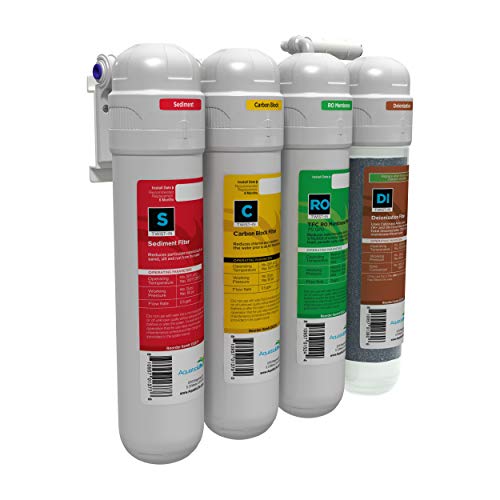
- Features: Sediment, Carbon, RO Membrane, and DI Resin stages; up to 75 GPD; removes chlorine, dirt, and reduces TDS for pure water.
- Best for: Aquarists needing high-purity water for sensitive tanks and planted setups.
- Better for: Long-term reliability in home aquariums; supports coral and reef systems with cleaner water.
- Caution: Note that chloramines are not removed by this system; consider adding a chloramine-specific stage if needed.
Aquatic Life RO Buddie 4-Stage Aquarium Water Filter System
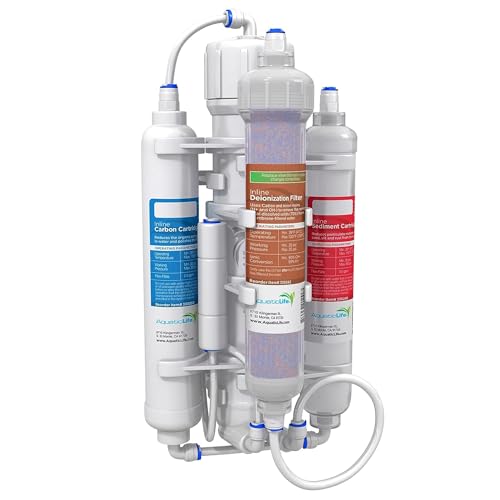
- Features: Four stages include sediment, carbon, RO membrane, and DI resin; produces up to 50 GPD of purified water; removes chlorine and odors.
- Best for: Hobbyists needing reliable, compact RO/DI filtration for standard tanks and water features.
- Better for: Homes with moderate water demands and sensitive livestock.
- Caution: Chloramines removal is not explicitly included in all stages; verify configuration for your water supply.
Aquatic Life RO Buddie 3-Stage Aquarium Water Filter System

- Features: Three-stage RO filtration; removes debris, improves water clarity; up to 50 GPD; sediment filter captures dirt and silt.
- Best for: Quick, efficient water purification in standard tanks or small installations.
- Better for: People who want a simple RO solution without extra DI stages.
- Caution: Does not remove chloramines in all conditions; pairing with a chloramine conditioner may be needed for municipal supplies.
API Tap Water Conditioner 16-Ounce Bottle

- Features: Neutralizes chlorine, chloramines, and other chemicals; makes tap water safer for fish; helps prevent gill and tissue irritation.
- Best for: New aquariums and frequent water changes when tap water quality is variable.
- Better for: Quick conditioning without needing an entire filtration overhaul.
- Caution: Does not remove dissolved solids; pairing with RO/DI filtration is necessary for very pure water.
API Water Softener Pillow Aquarium Canister Filter Filtration Pouch
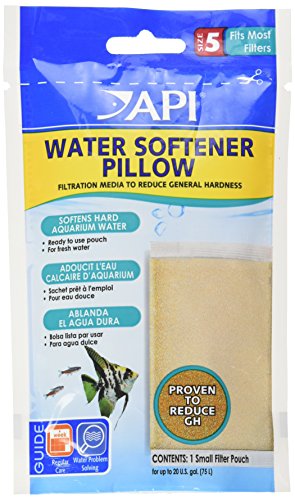
- Features: Softens hard water, reduces general hardness by lowering calcium and magnesium.
- Best for: Established tanks with hard water issues needing softer conditions for certain species.
- Better for: Hobbyists managing community tanks with mixed hardness requirements.
- Caution: This is a filtration pouch and not a full water replacement system; may need to be used in conjunction with other filtration methods.
Buying Guide
What should guide your choice when filtering tap water for an aquarium? Consider water source, tank size, and livestock. RO/DI systems excel with hard or chemically complex tap water and sensitive species. If your tank is smaller or you don’t need ultra-pure water, a trusted conditioner or a filtration pouch can be enough. For mixed-use setups with plants and fish, using a combination—RO/DI for bulk water and conditioner for quick adjustments—can be effective.
Key questions to decide your setup:
- Do you need to remove chloramines, not just chlorine? Some RO/DI systems pair with specific conditioners to cover both.
- What is your tank size and daily water-change rate? Pick a system with at least your expected GPD needs.
- Is your water hardness an issue for inhabitants? Consider products like the water softener pillow to adjust general hardness.
- Do you require convenient, plug-and-play filtration? Compact RO Buddie units offer straightforward installation and maintenance.
FAQ
- What is the difference between RO and DI filtration?
RO removes most dissolved solids, while DI polishes the water to very low TDS levels for sensitive species. - Can I use conditioner alone for hard water?
Conditioners neutralize chlorine and chloramines, but they do not reduce dissolved solids or general hardness. - Is a 4-stage RO/DI system worth it for a 20-gallon tank?
Yes, if you keep sensitive fish or high-tech plants; it provides consistently pure water for stability. - What should I do if my tap water has chloramines?
Use a conditioner that neutralizes chloramines or pair RO filtration with a chloramine-safe stage. - Are RO systems easy to maintain?
Most are straightforward; follow manufacturer guidelines for filter changes and membrane maintenance.