Answering the question: what’s the best live rock choice for a saltwater or reef tank? This guide highlights five solid rock options that support healthy biological balance, natural aesthetics, and flexible aquascaping. Each product suits different needs—from bulk base rock to intricate arches and frag-friendly bases. Read on to find which option is best for your tank size, bioload, and coral goals. A quick summary table below compares core points for fast reference.
Summary Table Of Selected Products
| Product | Best For | Key Benefit | Limitations |
|---|---|---|---|
| CaribSea LifeRock Base Rock – 40 lbs | Asthetic base and easy aquascapes | Realistic foundation with easy shaping | Heavy; needs planning for placement |
| CaribSea Dreamscapes Kit – 15-25 Gallon | Creative layouts and caves | Highly porous; excellent filtration support | Smaller kit; may require more pieces for large tanks |
| CaribSea LifeRock Arches for Aquariums | Natural arches and caves | Four 12″ rocks designed for arches | Limited shapes; specific layout needs |
| CaribSea LifeRock Dreamscapes Kit – 5-15 Gallon | Compact tanks and creative aquascapes | Lifelike formations; porous for biology | Smaller footprint; may require additional pieces |
| CaribSea Life Rock Frag Zone – 2.25 lb | Frag growout and coral attachment | Frag mounts blend into reef; aragonite-based | Small and best for frag setups |
CaribSea LifeRock Frag Zone – 2.25 lb

The Frag Zone provides natural-looking frag mounts that blend with the reef, offering a mature aesthetic while supporting coral attachment. Best for hobbyists focusing on frag growout and SPS, LPS, or soft corals needing a stable base. Selection note: aragonite-based composition supports reef health and natural biofilm development. Caution: frag mounts require careful arrangement to avoid encroaching on other corals as growth progresses.
YZHZOM Dry Base Rock for Aquarium White Coral Ornament

Dry base rock is a budget-friendly option that ships as inert rock not yet cultured with hitchhikers. Best for aquarists who want to customize their own curing process and avoid pest hitchhikers. This option is ideal for larger, mixed-shape arrangements due to its 7 lb quantity. A key benefit is porous structure that fosters beneficial bacteria for biological filtration. Limitation: requires curing prior to introduction to a display tank and routine maintenance to ensure stability.
CaribSea LifeRock Dreamscapes Kit – 15-25 Gallon
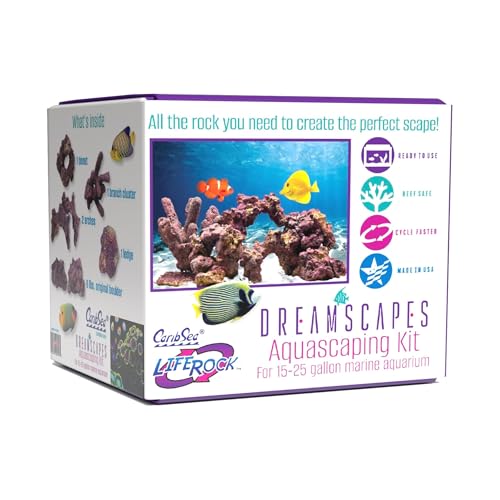
Realistic, natural-looking formations make this kit ideal for aquascaping in 15-25 gallon tanks. The highly porous rocks support biological balance and natural filtration. Best for hobbyists seeking creative layouts with accessible caves, arches, and tunnels. Choose this if you want a ready-to-arrange setup that emphasizes aesthetics and functional porosity. Caution: may require additional pieces for larger or more elaborate designs.
CaribSea LifeRock Dreamscapes Kit – 5-15 Gallon

Designed for smaller tanks, this kit offers realistic rock formations with a porous structure that aids filtration. Best for nano or small reef setups that require creative design without overwhelming space. It supports easy stacking for arches and caves while maintaining a natural look. Limitation: may require additional pieces for larger aquariums or very high bioloads.
Carib Sea Life Rock Base Rock – 40 lbs

Base rock provides a natural foundation for large tanks, enabling easy construction of varied aquascapes in reef or marine environments. Best for hobbyists needing substantial structure and stability, with quick assembly in mind. The rock’s aragonite texture supports coral attachment and natural filtration. Caution: heavy rock requires careful handling during tank setup and repositioning as you mature your aquascape.
Buying Guide
What should I consider when choosing saltwater live rock?
Tank size, bioload, and coral goals determine the best rock type. Base rocks offer bulk and stability, while Dreamscapes kits provide ready-to-arrange formations. Frag zones and arches support coral attachment and aesthetic focal points. Porosity affects natural filtration and biological balance; higher porosity generally aids beneficial bacteria growth.
Porosity, texture, and placement
Porous aragonite rocks promote water flow and microhabitats for beneficial organisms. A rough, textured surface helps coral frags anchor securely. For display tanks, choose a mix of large foundation rocks and smaller decorative pieces to create caves, arches, and ledges without overcrowding the flow.
Frag compatibility and growth considerations
Frag-zone rocks provide structured mounts for coral fragments, reducing competition for attachment sites. When planning frag growth, ensure mounts align with lighting zones and water flow. Reserve space for expansion as corals encrust and grow across rock surfaces.
Maintenance and curing considerations
Dry-base rocks require curing before introduction to prevent ammonia spikes. Live rock typically comes ready for display but may harbor hitchhikers; rinse and inspect before placement. Regular maintenance involves checking flow, pruning overgrowth, and ensuring stability of rock formations to prevent shifts.
Tank compatibility and aesthetics
Aragonite-based rocks match natural reef environments and support pH stability. Visual variety—from arches to caves—helps create microhabitats for fish and invertebrates. Balance form and function by planning sightlines and ensuring ample hiding places without obstructing filtration.
FAQ
- Which rock is best for a new reef setup? A combination of base rock for structure and Dreamscapes or arches for aesthetic and hiding spots is common. It establishes a sturdy foundation while enabling creative layouts.
- Do dry rocks require curing? Yes, dry rocks should be cured to reduce phosphate and ammonia spikes when first placed in a tank.
- Can frag zones support heavy coral growth? Frag zones provide attachment points, but ensure placement considers water flow and lighting to maximize growth.
- Is porosity important for reef tanks? Yes. Higher porosity supports beneficial bacteria and natural filtration, contributing to stable water parameters.
- What about giant tanks? For large tanks, use substantial base rock for stability and supplement with arches or Dreamscapes pieces to enhance structure and visual interest.