For planted aquariums, maintaining the right CO₂ level is crucial for lush plant growth and healthy fish. This guide highlights top CO₂ drop checker kits that help hobbyists monitor dissolved CO₂ quickly and accurately. Each option below is designed for ease of use, clear color readings, and reliable performance in home aquariums. Whether you’re a beginner or an experienced aquarist, these indicators offer a practical way to keep CO₂ balanced without guesswork.
The following summary table provides a quick comparison of the selected products. It includes brand, kit contents, and notable features to help you decide which CO₂ indicator fits your tank setup.
| Product | Brand | Kit Contents | Notable Feature |
|---|---|---|---|
| Pawfly Glass CO2 Drop Checker | Pawfly | Glass drop checker, reagent solution, 2 suction cups | Colorimetric readings: Green/Light Green for optimal CO₂ |
| FZONE Aquatic CO2 Glass Drop Checker | FZONE | Drop checker, 4dKH solution (included), suction cup | Blue/Green/Yellow scale; quick setup |
| NilocG Aquatics Glass CO2 Drop Checker | NilocG Aquatics | Drop checker, suction cup, 60ml 4dKH/PH reagent | Clear readings with easy-to-interpret colors |
| Clscea CO2 Indicator Solution Drop Checker | Clscea | 2×30ml indicator solutions, 60ml total | Long storage and reliable color change |
| Pawfly Acrylic CO2 Drop Checker | Pawfly | Acrylic drop checker, reagent solution, suction cups | Durable acrylic body with clear readings |
Pawfly Glass CO2 Drop Checker

The Pawfly kit provides a complete CO₂ monitoring solution for planted tanks. It includes curved glass tubing, a reagent bottle, and two suction cups to secure the unit to the tank wall. After adding 20 drops of reagent, readings appear in roughly two hours. Interpreting the color change is straightforward: Green or Light Green indicates balanced CO₂, Yellow signals excess CO₂, and Blue indicates insufficient CO₂. This allows hobbyists to adjust CO₂ dosing with confidence rather than guesswork.
With its simple operation and home-focused design, this drop checker suits standard aquariums from small community tanks to mid-sized planted displays. The color-coded results reduce the need for additional testing tools and align well with typical CO₂ dosing strategies used by aquarists of varying experience levels.
FZONE Aquatic CO2 Glass Drop Checker

The FZONE CO2 drop checker emphasizes accuracy through a dedicated 4dKH solution. The kit is quick to set up: fill the device with the provided solution, attach it to the glass, and return about an hour later for the CO₂ reading. Its color scale—Blue for needs more CO₂, Green for sufficient CO₂, and Yellow for too much CO₂—provides an intuitive way to manage carbon levels. This model is particularly suitable for users who want a dependable indicator with a minimal wait time between setup and reading.
Compared to basic versions, FZONE’s included 4dKH solution is designed to offer stable, repeatable readings, which can benefit tanks with fluctuating CO₂ dosing. While it delivers fast feedback, users should still monitor tank conditions and plant response to fine-tune dosing for long-term plant health.
NilocG Aquatics Glass CO2 Drop Checker

NilocG Aquatics offers a complete monitoring kit with a high-quality glass drop checker, a suction cup, and a 60ml bottle of 4dKH/PH reagent solution. The design prioritizes durability and reliability, with a straightforward use process: fill with the indicator solution, attach to the tank, and observe color changes after about two hours. The color guide—green/light green for optimal CO₂, yellow for too high, blue for too low—helps aquarists maintain a balanced carbon environment for plants and aquatic life.
This kit is especially appealing to hobbyists seeking a durable, all-in-one selection from a reputable plant-focused brand. The 60ml solution helps reduce the frequency of purchases, making it cost-effective for steady monitoring in moderately planted tanks.
Clscea CO2 Indicator Solution Drop Checker

This Clscea option focuses on a colorimetric approach with a 60ml total reagent capacity (two 30ml bottles). The kit emphasizes long-term storage and reliability, making it suitable for hobbyists who prefer to stock up on indicator solutions for multiple dosing cycles. Its straightforward use mirrors other standard drop checkers: fill halfway with the provided reagent solution, attach to the tank, and read the color change after approximately two hours. The color shift is designed to clearly indicate whether CO₂ is within the target range, too high, or too low.
Clscea emphasizes quality packaging and long shelf life, addressing concerns about reagent stability in home environments. For users managing large or heavily planted tanks, this kit provides a dependable supply of indicator solution to support ongoing CO₂ monitoring.
Clscea Aquarium CO2 Acrylic Drop Checker
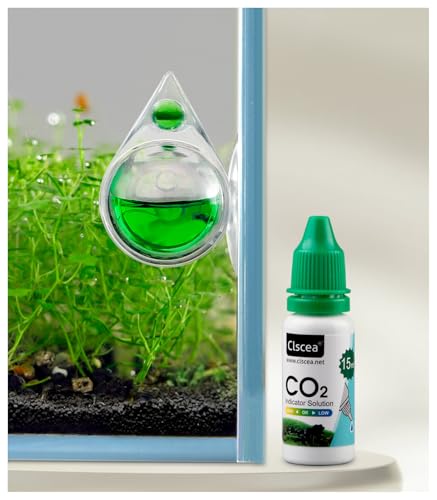
Clscea’s acrylic drop checker provides a durable alternative to glass with a transparent, break-resistant body. It includes a detachable design and a built-in colorimetric module, making CO₂ monitoring both convenient and resilient to accidental bumps. The acrylic material combines visibility with enhanced durability, which is beneficial for community tanks or setups with limited space where a breakable component would be a risk. The kit is designed to yield clear color readings when used with the included indicator solution and suction cup.
The drop checker’s design supports easy maintenance, including straightforward solution replacement and cleaning. For aquarists seeking a robust, long-lasting CO₂ monitor option, this acrylic version offers similar color-based readings to glass models while reducing fragility concerns in busy aquarium environments.
Pawfly Acrylic CO2 Drop Checker

Pawfly’s acrylic drop checker combines a tear-shaped acrylic container with a complete CO₂ monitoring kit, including suction cups and a bottle of reagent solution. The setup is simple: add 15 drops to the reagent, seal, and mount the unit vertically on the tank wall with the pointed end facing upward. The manufacturer suggests replacing reagent monthly for optimal accuracy, aligning with common practice in CO₂ management to maintain consistent readings. The acrylic design adds durability for tanks where accidental bumps are more likely, while preserving clear color readings for the CO₂ level.
Overall, the Pawfly acrylic model provides a robust option for serious planted tanks where durability and consistent color readings are important. It complements standard glass drop checkers by offering a resilient alternative without sacrificing readability or ease of use.
Buying Guide: Key Considerations For Choosing A CO2 Drop Checker
When selecting a CO2 drop checker, consider tank size, plant density, and how you prefer to interpret readings. The following factors help compare options and determine which kit matches your setup:
- Indicator accuracy and solution quality: Look for kits that include a stable KH/4dKH solution and clear color transitions. Consistency across readings reduces dosing guesswork.
- Reading speed and ease: Some models require about an hour, others up to two hours. Faster readings are helpful for steady dosing in dynamic tanks, but all should provide distinct color cues.
- Durability and material: Glass drop checkers are common and precise, while acrylic variants offer shatter resistance in busy aquariums. Choose based on tank placement and handling.
- Kit contents: A full kit with reagent solution, suction cup, and clear instructions saves time and reduces additional purchases.
- Tank size and plant load: Larger or heavily planted tanks may benefit from multiple drop checkers to monitor different areas of the aquarium.
- Maintenance frequency: Some recommendations suggest monthly reagent replacement for accuracy; consider storage life and easy replenishment when selecting a kit.
- Color interpretation: Ensure the color scale is intuitive (e.g., Green = balanced, Yellow = too much, Blue = too little) to minimize interpretation errors.
- Price and value: Compare kit contents and reagent quantity to assess long-term value, especially for frequent CO₂ dosing adjustments.
In practice, combine drop checkers with a reliable CO₂ dosing plan and regular plant health observations. Cross-check readings with plant growth, algal presence, and fish behavior to optimize the CO₂ balance over time. The best choice balances durability, reading clarity, and kit completeness for your specific planted aquarium setup.