Answering the question “which glass aquarium silicone is best for fish-safe, durable seals?” this guide highlights five reliable options. These silicone sealants are designed for underwater use, bonding glass without harming aquatic life, and resisting temperature and UV exposure. The selections cover both freshwater and saltwater setups, with emphasis on strong adhesion, quick curing, and minimal odor or toxicity. Ideal buyers include hobbyists repairing leaks, DIY aquarium builders, and professionals seeking dependable, long-lasting seals for glass aquariums.
Buying at a glance: the table below summarizes the five products featured, including intended use, cure characteristics, and notable strengths. Use this as a quick reference to compare access, handling, and compatibility with glass-only bonding work.
| Product | Best For | Key Benefit | Limitations |
|---|---|---|---|
| SELSIL Aquarium Silicone Clear Sealant | Freshwater & Saltwater Wells | 100% silicone, ozone-resistant, transparent | Can be harder to squeeze in tight gaps |
| 1 Pack Aquarium Silicone Clear Sealant (LISRUX) | Quick repairs | Fast cure, non-toxic, broad temperature range | 48-hour full cure recommended |
| Black Aquarium Silicone Sealant (Gordon Glass Co.) | Aesthetic, vertical surfaces | Non-slump, reliable on glass | Black color limits appearance in clear seams |
| ASI Clear Aquarium Silicone Sealant | Vertical seams | Non-slump, strong for underwater bonding | Requires careful mixing with surface prep |
| Kraken Bond Aquarium Silicone Sealant Clear | Two-pack setups | 2-pack value, durable, fish-safe | Bulk packaging may be less convenient for single repairs |
SELSIL Aquarium Silicone Clear Sealant

Brand: selsil. This 100% silicone polymer sealant is safe for fish and conforms to ISO 11600 –F&G–25 LM standards. It bonds well to glass without primers and resists ozone, UV, and temperature extremes. Best for glass bonding in freshwater or saltwater tanks. Limitation: may require careful application to avoid air pockets in tight joints. Suitable for non-porous surfaces like aluminum or glazed ceramic tile in addition to glass.
1 Pack Aquarium Silicone Clear Sealant (LISRUX)

Brand: LISRUX. This non-toxic, solvent-free silicone cures quickly, with surface-dry in about 30 minutes and full cure around 48 hours. It adheres to most building materials and remains flexible from -50 °C to 100 °C. Best for quick repairs and ongoing projects. Caution: cure time can extend in cooler climates or larger beads, impacting turnaround for projects requiring rapid sealing.
Black Aquarium Silicone Sealant – 10.2 Fluid oz

Brand: Gordon Glass Co. This high-modulus RTV silicone forms strong bonds to glass without primers and remains non-toxic to fish when cured. It is a non-slump sealant suitable for vertical applications. Best for aesthetic, black-finishing seams in modern tanks. Limitation: color choice may limit use where a transparent seam is preferred.
Clear Aquarium Silicone Sealant – 10.2 Fl oz
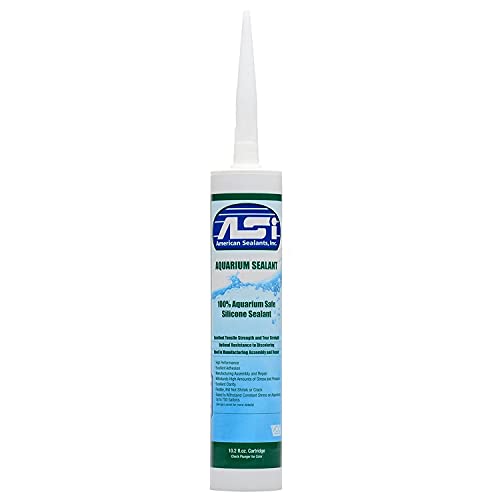
Brand: ASI. A high-modulus, clear silicone that bonds to glass without primers and remains stable under continuous water immersion. It is non-slump and suitable for vertical seams. Best for visible joints in tanks where a transparent finish is desired. Limitation: do not rely on it for structural components; verify bead size for large aquariums.
Kraken Bond Aquarium Silicone Sealant Clear (2×10.1 oz)
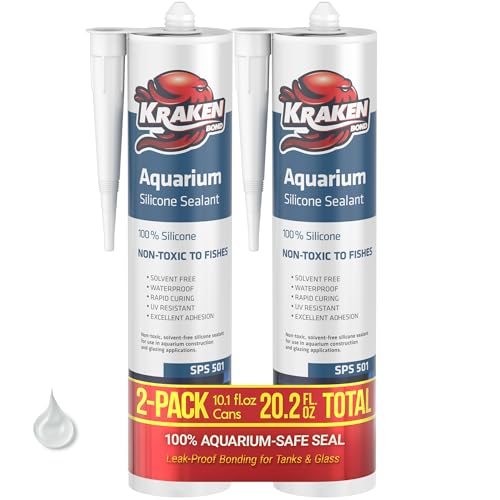
Brand: KRAKEN BOND. This 2-pack offers a durable, waterproof, non-toxic seal suitable for reliable aquarium repairs. It remains flexible and resistant to temperature fluctuations, making it a solid choice for long-term aquariums. Best for larger projects or when you want extra supply. Caution: ensure proper curing environment for full strength in high-humidity areas.
Buying Guide
What should you consider when choosing aquarium silicone?
- Safety for aquatic life: Look for 100% silicone, non-toxic formulations suitable for fish and plants.
- Cure time and working time: Quick cures reduce downtime, but ensure full cure for lasting seals.
- Adhesion and surface compatibility: Prefer products that bond well to glass without primers on non-porous surfaces.
- Water exposure: Choose silicone that remains elastic and non-yellowing under saltwater and UV exposure.
- Color finish: Clear silicone blends with glass; black or colored options affect aesthetics of seams.
- Temperature range: Ensure the sealant holds elasticity and adhesion across expected room and tank temperatures.
- Package size and value: For recurring projects, a two-pack or larger may reduce cost per repair.
Common questions buyers ask
- Q: Is silicone safe for fish?
- A: Look for 100% silicone, absence of solvents, and explicit fish-safe or non-toxic labeling.
- Q: Can I apply silicone underwater?
- A: Some formulas cure underwater, but most perform best on a dry or minimally damp surface for strong adhesion.
- Q: How long should I wait before adding fish after sealing?
- A: Allow full cure per product directions, often 24–48 hours, before introducing aquatic life.
- Q: Do I need primers?
- A: Many glass-specific sealants claim primerless adhesion on non-porous glass surfaces, but confirm surface requirements on the product label.
- Q: Is a colored sealant better for aesthetics?
- A: Clear silicone is often preferred for invisibility; black silicone can offer cleaner lines for certain tank designs.
Short FAQ
- What is the safest aquarium silicone for fish? A: Look for 100% silicone with verified non-toxic formulations and ISO or industry-standard compliance.
- How fast does aquarium silicone cure? A: Many sealants dry to touch within 30 minutes, but full cure typically 24–48 hours depending on bead size and conditions.
- Can silicone sealants be used on other non-porous surfaces? A: Yes, many models also adhere to aluminum and ceramic tiles.
- Should I use a primer? A: For glass and non-porous surfaces, many options claim primerless adhesion, but follow product directions for best results.
- Is it okay to tint or choose black sealant? A: Choose based on tank design; clear for seamless seams, black for modern, contrasting joints.