Choosing a reliable heater is essential for maintaining consistent temperatures in a 75-gallon aquarium. The right heater should deliver steady heat, include safety protections, and be easy to monitor. Below are five top picks well-suited for 40–75 gallon tanks, all designed to handle both freshwater and saltwater setups. Each option offers robust temperature control, durable construction, and practical features to simplify ongoing maintenance.
| Brand | Name | |||
|---|---|---|---|---|
| Orlushy | Submersible Aquarium Heater, 500W | 500W | 40–75 gallons | Adjustable thermostat; explosion-proof quartz glass |
| HiTauing | Aquarium Heater, 300W with LED Digital Display | 300W | 40–75 gallons | LED display; dual suction cups; 8.2 ft cord |
| HiTauing | Aquarium Heater, 50W/100W/200W/300W/500W Submersible | 50W–500W | 40–75 gallons | Over-temperature protection; automatic power-off |
| HiTauing | Aquarium Heater, Upgraded 300W/500W with Intelligent Leave-Water Stop | 300W/500W | 40–75 gallons | Leaving-water safety; advanced temperature control |
| Hygger | Aquarium Heater 300W/500W/800W/1000W with Digital LED Controller | 300W–1000W | 40–135 gallons (depending on wattage) | Digital controller; multiple protection alarms |
Note: All five selections are suitable for mid-to-large home aquariums and emphasize safety, reliability, and user-friendly controls. Review wattage and tank size guidelines to ensure proper pairing with your setup.
Orlushy Submersible Heater, 500W
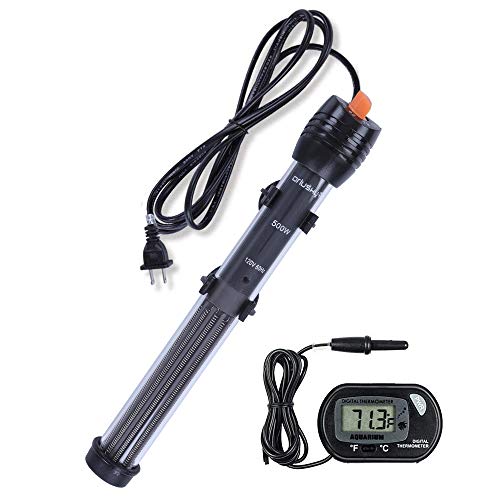
The Orlushy 500W heater is designed for 40–75 gallon tanks and features a sensitive thermostat that maintains a uniform temperature. It includes automatic shut-off once the target temperature is reached, and its explosion-proof 2mm quartz glass supports both freshwater and saltwater environments. The heater is easy to conceal in the tank and comes with two suction cups for secure mounting. The 6-foot power cord provides flexible placement options, and its 110–120V operation aligns with standard American outlets.
HiTauing Aquarium Heater, 300W
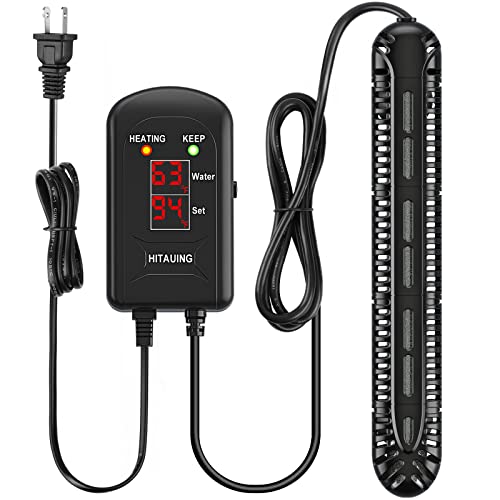
The 300W HiTauing heater provides stable heating with a long 8.2-foot cord and a clear LED display. It uses a durable ABS shell and explosion-proof quartz glass with a nickel-chromium heating element, ensuring safer operation in both marine and freshwater aquariums. The device includes two intelligent protectors: an over-max-temperature warning and an off-water warning. It is designed for tanks in the 40–75 gallon range and is compatible with smaller ponds and other aquatic habitats requiring reliable heat control.
HiTauing Aquarium Heater, 50W/100W/200W/300W/500W
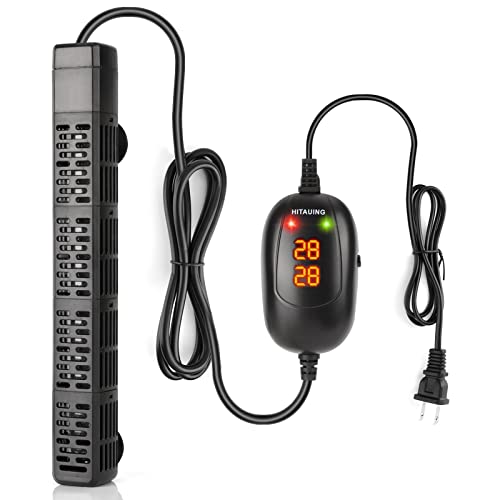
This HiTauing model line offers multiple wattages, including 300W, 500W, and higher, designed for 40–75 gallon tanks. It emphasizes rapid heating with a stable nickel-chromium heating wire and a robust ABS shell. A built-in temperature control system supports Fahrenheit and Celsius, and the device includes intelligent sensors that stop heating if the heater is exposed to air or if it exceeds the set temperature. The long power cord provides flexible installation options for diverse aquariums.
HiTauing Upgraded 300W/500W Heater

The Upgraded HiTauing heater combines explosion-proof quartz glass with a reinforced ABS shell for safety and longevity. Available in 300W or 500W, it is designed for 40–75 gallon tanks and features an intelligent temperature control system with a digital display. The heater head has an automatic shutoff feature when leaving water, and the device includes safeguards to prevent overheating, making it a solid option for community tanks and reef setups alike.
Orlushy Submersible 300W Heater
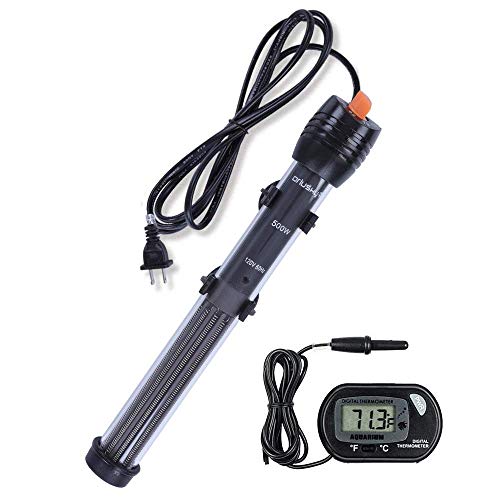
Orlushy’s 300W model supports 40–55 gallon tanks with a compact 11-inch length. It uses a 6-foot cord and a 2 mm thick quartz glass construction. The temperature adjustment is straightforward and allows small increments for precision heating. The unit is designed to be discreet within the tank while delivering consistent heat, and it remains compatible with both freshwater and saltwater environments.
HANLESHUKA Submersible 100W/200W/300W/500W Heater

HANLESHUKA offers a range of wattages (100W–500W) in a single compact design, suitable for smaller 10–20 gallon setups or as a supplemental heater for larger tanks. The heater features explosion-proof quartz glass, a durable ABS shell, and dual temperature protection. It is designed for both freshwater and saltwater aquariums and includes a smart temperature control interface for easy operation and consistent performance.
Buying Guide: Key Purchase Considerations
- Tank size and wattage: For a 75-gallon aquarium, look for heaters in the 300–500W range. If purchasing a multi-wattage model, ensure the selected wattage matches your tank size and environmental needs.
- Temperature control: Choose models with precise digital or external controllers, easy-to-read displays, and preset temperature ranges that align with aquatic species in your tank.
- Safety features: Prioritize auto shut-off, leaving-water protection, over-temperature alerts, and robust protection against water exposure and splashes.
- Materials and durability: Explosion-proof quartz glass and a strong ABS shell reduce breakage risk and enhance safety in crowded or heavily used tanks.
- Cord length and mounting: Longer cords (6–8 ft or more) offer flexible placement. Look for dual suction cups and unobtrusive designs to minimize visual impact.
- Maintenance and monitoring: Seek heaters with clear indicators, simple calibration, and compatibility with freshwater and saltwater environments to simplify ongoing maintenance.
- Redundancy vs. simplicity: In heavily populated or critter-rich tanks, some aquarists prefer two smaller units for redundancy, while others opt for a single larger heater to minimize wiring.
When selecting a heater, also verify compatibility with your specific species, typical water temperatures, and seasonal fluctuations. Regular checks of temperature accuracy and visible inspection of sealing and power cord integrity help sustain reliable performance over time.