Answering the need for beginner-friendly, reliable discus options, this guide highlights five red-themed, beginner- to mid-level throwing discs. Ideal for youth and high school athletes, each pick focuses on stability, control, and steady progression. The top choices are best for new throwers building form, while a few offer more advanced balance for intermediates. A quick product summary follows to help you compare at a glance.
| Product | Brand | Weight | Best For |
|---|---|---|---|
| TC Red Ranger Girls Discus | Trail Creek | 1 kg | Beginner girls, balance-focused training |
| SPORTAXIS Transparent Discus Throw | SPORTAXIS | 1 kg | Beginner to intermediate, easy throws |
| RT Red Echo Discus 1.6 kg | Generic | 1.6 kg | Early junior competition, balanced flight |
| TC Red Crossfire Discus | Generic | 1 kg | Girls high school, durable practice disc |
| Red Super Discus “Low Spin” 1 Kilo | Stackhouse | 1 kg | Beginning to intermediate throwers, reduced wobble |
TC Red Ranger Girls Discus – 1 kg

This 1 kg discus from Trail Creek is designed as a solid starting point for learning discus throwing. The center-weighted design promotes balanced, stable flight, helping novices achieve consistent distances while refining technique. Its 70% rim weight supports a reliable spin ratio, enabling young throwers to focus on form rather than fighting erratic flights. Best for new female athletes who need a forgiving disc as they build confidence and technique. Caution: heavier discs can be challenging for very young beginners, so start with proper grip and stance drills.
SPORTAXIS Transparent Discus Throw – 1 KG

This 1 kg discus emphasizes a weight-centered design to facilitate easy throws for beginners and intermediate throwers. Steel rim and robust construction contribute to durability during practice sessions, while a centered balance aids consistent flight trajectories. The discus is well-suited for developing core throwing skills and building confidence as athletes progress. Better for: players who want a predictable disc that tolerates form variances without dramatic flight changes. Caution: steel rims are durable but can be harder on technique if grips aren’t secure.
RT Red Echo Discus – 1.6 kg
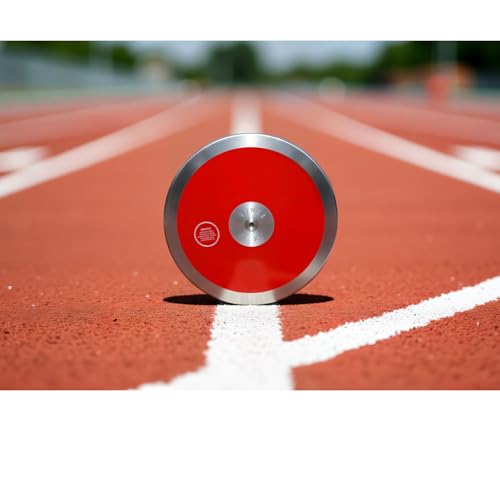
This 1.6 kg discus offers advanced performance within a high school setting, providing a balanced design aimed at longer throws. The product emphasizes a stable flight path and a moderate spin rate, aiding beginners to observe progress while gradually building strength and technique. Best for athletes transitioning from 1 kg discs who want incremental challenge. Limitation: heavier weight requires stronger shoulder and core conditioning to maximize potential.
TC Red Crossfire Discus – 1 kg

Geared toward high school girls, this 1 kg discus blends durability with performance. The 70% rim weight supports a balanced throw, combining control with distance. ABS plastic side plates enhance robustness for regular practice and competition preparation. Choose this if: you need a reliable, durable option that emphasizes consistent handling. Limitation: some athletes may outgrow it quickly as skill improves and distances increase.
Red Super Discus “Low Spin” 1 Kilo

This 1 kg discus from Stackhouse features an 80% steel rim for reduced wobble and a self-correcting flight that helps build throwers’ confidence. It’s an excellent implement for beginners and early intermediates who want a disk with forgiving flight characteristics. Best for athletes who want steadier, more predictable throws while developing form. Limitation: higher rim weight means it may require more energy to reach maximum distances for some users.
Buying Guide
What weight should I choose?
For beginners, a 1 kg discus is typically the most forgiving and easiest to learn with. Intermediate throwers may experiment with 1.6 kg discs to push distance, while still maintaining control. Consider body strength, experience, and training goals when selecting weight.
Why is rim weight important?
Rim weight affects stability and spin. Higher rim weight (around 70–80%) usually yields more stable flights with smoother throws, which helps beginners focus on technique. Lower rim weight can encourage faster spins but may be less forgiving for new throwers.
Material and build quality
Discus with steel rims and durable plastic side plates tend to be more resilient for frequent practice. ABS plastic side plates increase durability, while a solid construction supports repeated practice sessions without frequent replacements.
On-field considerations
Choose discs with reliable, predictable flight for practice environments. If you’re coaching youth, opt for discs specifically marketed toward beginners and kids, with clear guidance on grip, stance, and release.
Which disc is best for girls’ high school training?
Discs designed for girls’ events typically combine lighter weights with stable flight characteristics. Look for 1 kg options with centered weight distribution and durable construction to handle regular practice and competition pacing.
How to evaluate a disc’s performance
Assess flight stability, spin rate, and distance in controlled drills. A disc that flies flatter with a consistent arc generally helps new throwers learn proper form more efficiently than one with erratic flight or unpredictable behavior.
FAQ
- What weight is best for a complete beginner? A 1 kg discus is typically easiest for beginners to learn proper throwing technique and achieve consistent distances.
- Should I pick a red discus for visibility? Color can aid visibility during practice and meets; red options are common and easy to spot on the field.
- Is a higher rim weight always better? Higher rim weight improves stability and control but may require more upper-body strength; choose based on training level and comfort.
- Can a 1.6 kg discus be used by beginners? Some beginners may progress to 1.6 kg discs as they gain strength, but start with 1 kg to build form first.
- What should I look for in a practice discus? Look for durable construction, a balanced flight path, and a rim weight around 70% for beginner-friendly performance.
- Are there discs specifically for girls’ events? Yes, several discs are marketed toward girls’ high school events and women’s 1 kg competitions, often emphasizing balanced throws and durability.