In a saltwater setup, a reliable wet/dry filtration system paired with a precise auto top-off (ATO) ensures stable salinity, consistent water parameters, and a healthier aquatic life. This guide highlights five top products that support automatic water level control, efficient filtration media, and robust reliability for reef and mixed tanks. Ideal buyers include reef hobbyists, nano-tank keepers, and hobbyists seeking hands-off maintenance without compromising water quality.
Summary table of selected products
| Product | Best For | Why Selected |
|---|---|---|
| Useek Auto Top Off For Saltwater Aquarium Water ATO System (Blue) | Reef and mixed tanks with rimmed or rimless styles | Compact, real-time protection with QST, prevents salinity fluctuations |
| Auto Top Off System ATO Saltwater Aquarium (ATET) | Any reef or fish-only system needing continuous water top-off | Dual anti-overflow, stable salinity maintenance |
| Useek Auto Top Off For Saltwater Aquarium (Green) | Visible liters of aquariums with space constraints | Same compact design and protective features as Blue version |
| Auto Top Off System Aquarium (Qwakay) | Smaller to mid-size tanks needing smart controls | Smart alarm system and low-voltage operation |
| Aquatic Experts 1″ Bio Balls | Wet/dry filtration setups and canister filters | High surface area for beneficial bacteria, low clogging |
Useek Auto Top Off for Saltwater Aquarium Water ATO System – Blue

What it is best for: Reef and saltwater tanks that rely on evaporation compensation to stabilize salinity. The compact 0.7-inch diameter design fits in rimmed or rimless tanks and sumps without distraction. The unit uses real-time protection with QST to avoid overfilling and dry running, making it suitable for hobbyists who want dependable, hands-off top-off. Limitations: approvals and compatibility with specific pump or bucket setups should be verified before installation.
- Automatic top-off maintains stable salinity by compensating evaporation.
- Compact, space-saving design integrates easily into various tank setups.
- QST-based protection reduces risk of pump failure or overfill.
ATET Auto Top Off System for Saltwater Aquarium
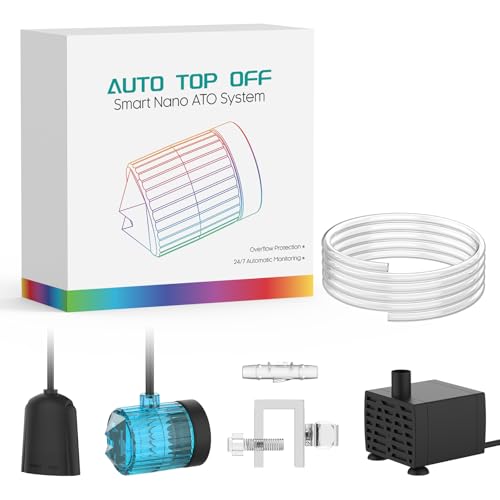
What it is best for: Home or office tanks needing uninterrupted water top-off with smart protection. The dual anti-overflow system and QST Smart Technology help maintain consistent salinity and water parameters while you’re away. Caution: ensure sensor placement and bucket configuration comply with the setup to prevent unintended refills.
- Dual anti-overflow guards protect against overfilling.
- Keeps salinity and parameters within ideal ranges.
- Ultra-compact 0.79″ diameter sensor fits tight spaces.
Useek Auto Top Off for Saltwater Aquarium – Green

What it is best for: Similar to the Blue version, aimed at space-conscious setups, providing real-time protection and stable salinity. It is well-suited for reef and fish tanks where minimal intrusion is preferred. Limitation: verify tank dimensions and reservoir compatibility to ensure the nano top-off device fits in the intended area.
- Same core features as the blue variant: compact and protective.
- Design supports rimmed or rimless configurations.
- Visual alerts help monitor refill status and sensor health.
Auto Top Off System Aquarium – Qwakay

What it is best for: A compact smart ATO that suits small to mid-sized tanks with a reliable alarm system. It uses a low-voltage 12V setup, which is energy-efficient and safe for aquariums. Best for hobbyists who want simple installation and clear fault indication. Caution: ensure the pump and controller are correctly wired to prevent nuisance alarms during power interruptions.
- Smart alarm for water bucket status, leaks, or sensor issues.
- 12V operation emphasizes safety and energy efficiency.
- Easy to install and maintain with reliable control.
Aquatic Experts 1″ Bio Balls

What it is best for: Wet/dry filtration systems and canister filters that require high surface area media for beneficial bacteria. The 1″ bio balls promote efficient nitrification and reduce clogging thanks to an open spine design. Best for small to medium setups that need robust biological filtration. Limitation: plan for appropriate media quantity (100-150 balls per 25 gallons depending on saltwater use) to maximize effectiveness.
- High surface area encourages beneficial bacteria growth.
- Open structure resists clogging and supports stable filtration.
- Pack size suits smaller aquariums and can be customized for tank volume.
Buying Guide: Wet/Dry Filtration and Auto Top-Off Essentials
What to consider when choosing ATO and filtration components for a saltwater wet/dry system:
- Tank size and configuration: Rimmed vs. rimless, sump presence, and available space affect ATO compatibility.
- Maintenance needs: Look for ATO with reliable sensors, visual alerts, and anti-overflow features to minimize manual checks.
- Salinity stability: Products with real-time protection and auto-refill timers reduce salinity fluctuations in evaporative systems.
- Filtration media: Bio balls or other bio-media should match your filtration style and tank bioload for optimal nitrification.
- Energy use and safety: Low-voltage components and compact designs reduce energy use and electrical risk in saltwater environments.
- Installation and compatibility: Ensure that the ATO pump, sensor, and controller work with your reservoir and plumbing setup.
- Future expansion: If you plan upgrades, select media and ATO units that scale with larger tanks or additional compartments.
Frequently Asked Questions
- What is a wet/dry system in a saltwater aquarium?
A wet/dry system combines mechanical filtration with biological media to remove debris and cultivate beneficial bacteria that process waste, supporting stable water quality in marine tanks.
- Why use an auto top-off (ATO) in a saltwater tank?
ETO maintains consistent water level and salinity as evaporation occurs, reducing stress on corals and fish.
- What should I consider when choosing bio balls for a wet/dry system?
Choose bio balls with high surface area and open-spine design to minimize clogging and maximize microbial colonies.
- Are there safety concerns with ATO units?
Look for low-voltage designs, dry-run protection, and reliable sensors to prevent overfill and pump damage.
- Can I mix different ATO brands?
Mixing brands is possible if you confirm compatible electrical specs, sensor sizing, and reservoir plumbing, but sticking to one ecosystem can simplify troubleshooting.
- How often should I service bio balls?
Rinse gently as needed to remove debris without destroying beneficial bacteria; avoid over-cleaning to preserve biofilm.