Looking for the right wave maker to keep your fish tank healthy and vibrant? This guide profiles five versatile options that suit a range of tank sizes and needs. Best for hobbyists seeking adjustable flow, easy mounting, and reliable performance in saltwater or freshwater setups. Each product section explains who it’s best for and why it was selected, plus a practical caveat to consider before buying. A quick buyer’s table follows to help you compare at a glance.
| Product | Best For | Key Benefit |
|---|---|---|
| Hygger Mini Wave Maker | Small to mid-sized tanks (15-40 gal) | 360° rotatable head for versatile flow |
| FREESEA Magnetic Wave Maker | Medium to large tanks (55-125 gal) | Dry hands, quick repositioning with magnetic mount |
| AQUANEAT Circulation Pump | 75-120 gal tanks | Strong 800 GPH with full rotation |
| Freshwater or saltwater, mid-sized tanks | 360° rotation and anti-backsiphon | |
| Hygger Cross Flow Wave Maker | Up to 135 gal reefs and community tanks | 360° cross-flow wave pattern with LED control |
Hygger Mini Wave Maker for 15-40 Gallon Aquarium

Best for small to mid-sized tanks, this Hygger model delivers up to 530 GPH with a 360° rotatable head. The 360° design lets you aim the current to thin out dead zones and improve circulation, filtration, and oxygenation. It’s lightweight, easy to disassemble for cleaning, and designed for durability with a corrosion-resistant ceramic shaft. The included protective guard is removable for easier maintenance.
Who it’s best for: hobbyists with 15-40 gallon tanks who want flexible flow directions and straightforward maintenance. Why selected: combines versatile mounting with quiet operation and solid reliability for both freshwater and saltwater setups.
Limitations: not as powerful for large tanks (over 40 gallons) or reef-heavy systems where higher flow is needed.
FREESEA Magnetic Wave Maker for Aquarium
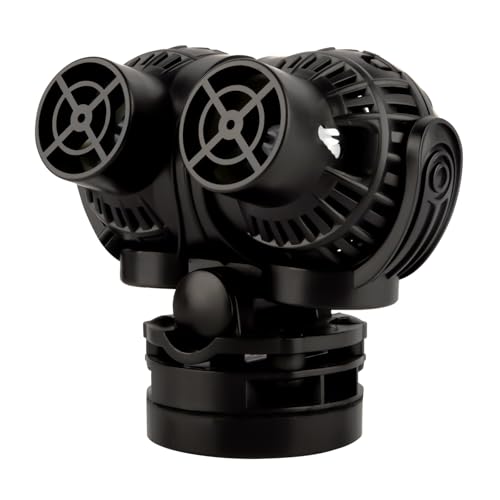
Best for larger tanks, particularly 55-125 gallons, this wave maker uses a magnetic mount for quick repositioning without draining water. The dual 180° adjustable heads help eliminate dead spots and improve overall water quality by enhancing circulation. It’s designed for dry-hand adjustments and easy realignment as aquascapes change.
Who it’s best for: aquarists upgrading to a more adaptable, high-flow solution in bigger tanks. Why selected: the magnetic mount enables fast layout tweaks, saving time and maintaining a clean setup.
Limitations: may require careful placement to avoid interference with equipment or overflow zones in very crowded layouts.
AQUANEAT Circulation Pump, 800GPH

Designed for mid-to-large tanks (75-120 gal range), this pump delivers 800 GPH with a robust suction cup setup and 360° rotation. It stirs up sediment for better filtration, increases oxygenation, and helps fish, corals, and plants thrive by mimicking natural currents.
Who it’s best for: keepers seeking a balanced, high-flow option that doubles as a reliable all-around circulator. Why selected: strong performance with flexible direction makes it a practical “multi-use” pump for many setups.
Limitations: not recommended for very small tanks or for hobbyists needing ultra-quiet operation at night due to higher flow noise in some installations.
DaToo 800GPH Mini Aquarium Circulation Pump

Best for flexible freshwater and saltwater use in mid-sized tanks, the DaToo wave pump delivers 800 GPH with a 360° rotatable head and a compact footprint. It emphasizes 360° water flow, anti-backsiphon design, and a protective filter cover to reduce fish intake risks while still improving oxygenation and filtration.
Who it’s best for: hobbyists who want a feature-rich, space-conscious pump with straightforward setup. Why selected: all-in-one flow management with a focus on safety and continuous operation.
Limitations: the inline noise level can be noticeable on some installations; consider mounting position and tank lid options to mitigate.
Fluval Sea CP3 Wave Maker

Best for small to medium reefs and freshwater tanks up to 50 gallons, the Fluval CP3 Wave Maker offers strong, adjustable flow in a compact form. The 270° adjustable nozzle enables precise control to reduce dead spots and promote healthy water movement for fish, corals, and plants.
Who it’s best for: aquarists needing a compact, reef-friendly option with reliable performance. Why selected: well-established brand with a reputation for stable flow and simple adjustments.
Limitations: flow can be less powerful for larger or heavily stocked tanks; pairing with another pump may be necessary for high-flow requirements.
Buying Guide: Key Considerations For Choosing A Wave Maker
- Tank size and compatibility: Match the device’s GPH rating and mounting options to your tank volume and layout. Larger tanks often benefit from higher flow and dual-head designs.
- Flow patterns and adjustability: Look for 360° rotatable heads, dual heads, or cross-flow technology to minimize dead spots and simulate natural currents.
- Mounting and placement: Magnetic mounts, suction cups, or dry-accessible locations affect ease of adjustments and maintenance. Consider whether you need quick repositioning during aquascaping.
- Noise and energy use: Quiet operation and efficient motors help reduce disturbances for both fish and the living environment.
- Maintenance and durability: Removable guards, corrosion-resistant shafts, and cleanability matter for long-term reliability in saltwater and reef setups.
- Controller features: LEDs, feeding pauses, or memory functions can simplify daily routines and preserve tank stability during feeding or power interruptions.
Frequently Asked Questions
- What size wave maker do I need for a 20-gallon tank? Typically 300-600 GPH is suitable, depending on stocking and corals. Choose one with adjustable flow and easy maintenance.
- Are magnetic wave makers better than suction cup models? Magnetic mounts offer quicker repositioning and stronger hold for larger tanks, but ensure there’s ample magnet strength and no interference with metal equipment.
- Can wave makers help with fish health? Yes. Proper flow improves oxygenation, reduces dead spots, and can aid in filtration by moving debris toward filters.
- Is a single wave maker enough for reef tanks? Reef and heavily stocked systems may require multiple powerheads or high-flow models to create constant, varied currents.
- How often should wave makers be cleaned? Regular cleaning every 1-2 months is typical, or sooner if you notice reduced flow or debris buildup on guards and intake areas.
- Do wave makers create heat in the tank? Generally no significant heat; however, high-flow pumps can exert the motor and contribute minor heat, especially in smaller enclosures.