Answer: The best water test for betta fish combines accuracy, ease, and versatility in one kit. For most betta owners, reliable multi-parameter test strips that cover pH, ammonia, nitrite, nitrate, hardness, alkalinity, and chlorine are ideal. The top picks below suit beginners, busy hobbyists, and those maintaining multiple tanks. Each product is evaluated for clarity of results, speed, and practicality in home aquariums. The goal is to help you detect hidden water issues early and keep your betta in a stable, safe environment.
Summary of chosen products
| Product | Best For | Key Benefit | What It Tests |
|---|---|---|---|
| AAwipes 8-in-1 Aquarium Test Kit (K02-50) | New hobbyists, small tanks | Comprehensive 8-parameter testing in 3 simple steps | Free Chlorine, Nitrate, Nitrite, Hardness, Carbonate, Total Alkalinity, pH, Ammonia nitrogen |
| SJ WAVE 11 in 1 (B0DBQW4J8D) | Experienced hobbyists with diverse setups | One kit for 11 parameters, quick home testing | Ammonia, pH, Iron, Chlorine, GH (hardness), Alkalinity, Nitrate, Nitrite, Copper, Temperature, more |
| API 5-in-1 25-Count | Frequent testers, larger tanks | Large quantity, consistent results | pH, Nitrite, Nitrate, Carbonate, General Hardness |
| API 5-IN-1 4-Count | Travel or backup kits | Compact, reliable quick checks | pH, Nitrite, Nitrate, Carbonate |
| Tetra EasyStrips 6-In-1 | All-around users | One-strip, six tests for broad monitoring | Nitrates, Nitrites, Hardness, Chlorine, Alkalinity, pH |
AAwipes 8-in-1 Aquarium Test Kit for Fish Tanks

The AAwipes kit provides 8-in-1 testing with strips designed for high-contrast color changes. It measures Free Chlorine, Nitrate, Nitrite, Hardness, Carbonate, Total Alkalinity, pH, and Ammonia nitrogen. It is suitable for freshwater and ponds, and is intended to help prevent hidden water problems that can stress a betta. Best for beginners or small tanks, who benefit from a single kit covering most common water parameters. A potential limitation is reading color charts under bright lighting; ensure consistent lighting when comparing colors.
SJ WAVE 11 in 1 Aquarium Test Strips

SJ WAVE’s 11-in-1 kit offers a broad panel, including ammonia, pH, iron, chlorine, total hardness, carbonate, nitrate, nitrite, copper, temperature, and an additional parameter. It’s well-suited for betta tanks that may experience fluctuating water conditions or hobbyists who manage both freshwater and saltwater systems. The kit’s advantage is depth of testing; the caution is the larger chart to interpret, so keep the color guide handy during testing to avoid misreads.
API 5-in-1 Test Strips (25-Count)
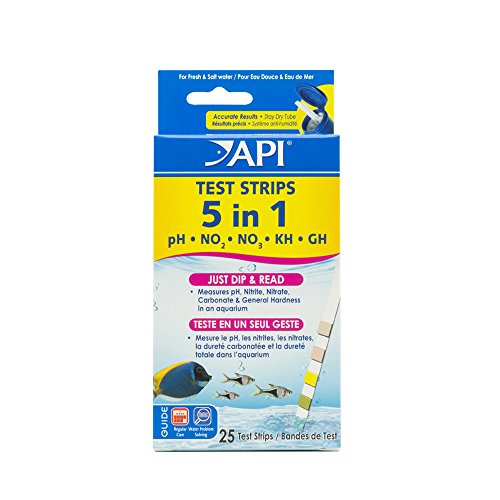
API’s 5-in-1 strips are a staple for many aquarists. They monitor pH, nitrite, nitrate, carbonate (alkalinity proxy), and general water hardness. This product is ideal for betta keepers who want a repeatable, widely-supported testing method with a concise panel. Best for regular checkups and users who prefer a short, consistent color-matching process. A limitation is that it covers five tests rather than a broader set; some users may want additional parameters not included here.
API 5-IN-1 Freshwater & Saltwater Strips (4-Count)

This compact box provides a quick check for pH, nitrite, nitrate, carbonate, and hardness. It’s best for betta owners who want a travel-friendly backup or a quick in-between test. The main advantage is portability; the caveat is the smaller quantity in the box, which can lead to more frequent purchases for active tanks.
Tetra EasyStrips 6-In-1

Tetra EasyStrips deliver a 6-in-1 test on a single strip, covering nitrates, nitrites, hardness, chlorine, alkalinity, and pH. It’s practical for betta tanks where space is limited and quick checks are valuable. Choose this if you want a simple, all-in-one strip with a straightforward color chart. A limitation is the smaller parameter set compared to some 8- or 11-in-1 kits; consider a supplemental test if you suspect trace issues or need ammonia monitoring.
Buying Guide: How to Choose the Right Betta Water Test Kit
- What parameters matter most for betta care? Prioritize pH, ammonia, nitrite, nitrate, and general hardness (GH). Alkalinity (KH) can help stabilize pH, especially if you use live plants or frequent water changes.
- How many tests do you need per week? Beginners may start with 1–2 tests weekly; active tanks or new bettas may require more frequent checks.
- Do you maintain multiple tanks? A larger kit (like 8-in-1 or 11-in-1) reduces the number of purchases and simplifies routine testing.
- Is portability important? Travel-friendly or backup kits are helpful for frequent movers or vacation care.
- What about ease of interpretation? Kits with clear color charts and quick read times help avoid misreadings during busy days.
FAQ
- What is the most important parameter to test for a betta tank? Ammonia and nitrite are critical to monitor, as they are toxic to fish at any detectable level. Regular testing helps you act quickly.
- How often should I test betta water? For new tanks, test 2–3 times per week during cycling. Once stable, 1–2 times weekly is common; adjust based on changes in water chemistry or behavior.
- Can I use freshwater strips for saltwater bettas? Some strips advertise dual-use; however, bettas are typically kept in freshwater. If you keep a brackish or marine setup, confirm the kit tests the relevant parameters.
- Which kit is best for beginners? An 8-in-1 or 11-in-1 kit with simple charts provides a broad range of data in an easy format, ideal for new hobbyists.
- Do test strips require calibration? Most strips rely on color charts rather than instrument calibration. Ensure you compare colors under consistent lighting and follow the test steps exactly.
- Should I test water after water changes? Yes. Testing after a water change confirms the new water matches your tank’s parameters and helps avoid shocks to your betta.