Answering the question “which water mover is best for my aquarium?” this guide highlights five reliable wave makers that fit common tanks and fish-keeping goals. These devices improve circulation, oxygenation, and filtration while reducing dead zones. They’re best for hobbyists seeking adjustable flow, quiet operation, and easy maintenance. The following selections target different tank sizes and setups, from small nano tanks to larger community or reef setups.
| Product | Tank Compatibility | Key Benefit | Why It Stands Out |
|---|---|---|---|
| hygger Mini Wave Maker | 15-40 gal | 360° adjustability, quiet operation | Great for small to mid-size tanks needing flexible directions |
| DaToo 800GPH Wave Pump | Freshwater & Saltwater, midsize | 360° rotation, anti-backflow | Balanced mix of circulation and filtration with low noise |
| AQUANEAT 800GPH Circulation Pump | 75-120 gal freshwater or 60-75 gal saltwater | Strong flow, 360° rotation | High output with versatile placement |
| FREESEA Magnetic Wave Maker | 55-125 gal | Quick 1-second reposition, no draining | Ideal for large tanks with frequent layout changes |
| hygger Cross Flow Wave Pump | Up to 135 gal | Smart LED controller, multi-mode waves | Premium control and broad coverage |
Buyer tip: pick a model with adjustable flow and easy cleaning, especially if you keep delicate corals, small fry, or densely planted setups. All selections below include direct product details and explain who they’re best for, plus a practical caution or limitation where relevant.
hygger Mini Wave Maker For 15-40 Gallon Aquarium

Best for compact setups where space is at a premium. This model features a 360° rotatable ball joint, allowing easy direction changes to fit layouts with rocks, plants, or fins. It promotes oxygenation by creating a surge current near the surface and aids filtration by nudging debris toward the filter intake. The device is designed for saltwater and freshwater use, with corrosion-resistant components and a removable guard for cleaning. Limitation: the 530 GPH output may be high for extremely small or delicately stocked nano tanks, so set lower flow if needed.
DaToo 800GPH Mini Aquarium Wave Maker

Better for mid-sized tanks requiring robust circulation with quiet operation. The DaToo unit offers 360° rotation with anti-backflow technology to prevent siphoning and maintain stable flow. It supports multiple benefits in one: oxygenation, enhanced filtration, and water movement. Caution: the built-in filter cover is designed to block fish from intake, but large or active fish may still require supervision during initial setup to ensure proper placement.
AQUANEAT Circulation Pump, 800GPH

Best for larger tanks (75-120 gallons in freshwater and 60-75 gallons in saltwater) needing strong overall mixing. The 800 GPH output and 360° rotation enable versatile placement to eliminate dead zones and improve both surface agitation and filtration efficiency. Advantage: with strong flow, debris and leftover food are more easily moved toward the filter. Limitation: not ideal for very small tanks where too much flow can stress sensitive inhabitants.
FREESEA Magnetic Wave Maker for Aquarium
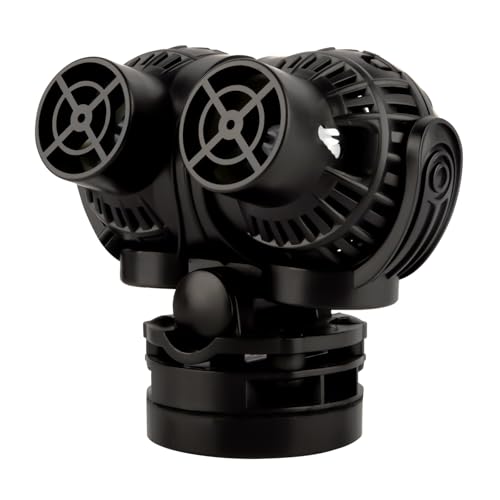
Best for owners who frequently reconfigure layouts in larger tanks. The magnetic mount allows 1-second repositioning on 15 mm glass without emptying or wetting hands, helping maintain aquascape integrity during changes. It supports dual heads with adjustable angles to tackle dead spots effectively. Caution: magnetic mounts require careful handling around electronics and may not suit non-magnetic surfaces or very thick glass beyond the stated spec.
hygger Aquarium Wave Maker With Cross Flow
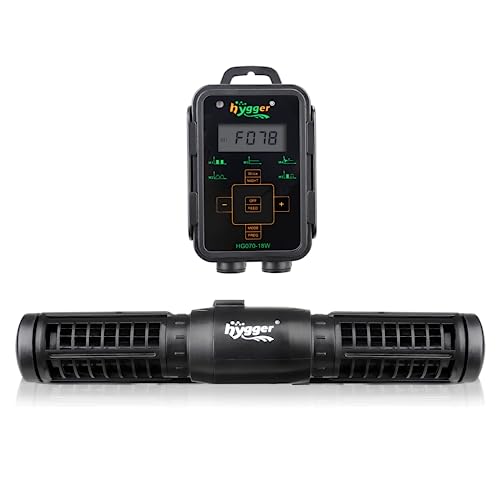
Best for readers who want precise programmable control. This model uses cross flow technology to distribute waves evenly around the tank, simulating natural currents. The LED display controller offers multiple modes (pulse, sine, constant, random, cross flow), a wide range of flow rates, feeding mode, night mode, and linkage options. It’s well-suited for reef and mixed tanks where consistent, aesthetically pleasing wave patterns matter. Caution: higher feature set means a more complex setup—follow the controller instructions carefully to avoid misconfigurations.
Buying Guide: Key Considerations For Choosing A Water Mover
- Tank size and inhabitants: Match flow rate and direction options to fish, corals, and plants. Larger tanks need higher GPH or multiple heads.
- Flow patterns: Decide between random, pulse, constant, or cross flow modes. For reefs, a cross-flow or randomized pattern often yields the most natural movement.
- Direction control: Look for 360° rotation or multi-head configurations to eliminate dead zones and target surface agitation.
- Noise and maintenance: Quiet operation and easy disassembly for cleaning help maintain tank health and user satisfaction.
- Installation: Consider glue-free suction cups, magnetic mounts, or easily accessible mounting areas. Ensure compatibility with tank glass thickness.
Frequently Asked Questions
- What size wave maker is best for a 20-gallon tank?
A: A smaller, 200-400 GPH model with 360° rotation or a compact cross-flow pump is typically suitable, avoiding excessive flow that stresses livestock. - Do wave makers require frequent cleaning?
A: Yes. Regular cleaning of the impeller, guards, and mounts helps maintain performance and prevent clogs. - Can wave makers help with algae control?
A: Indirectly. By improving water movement and filtration, debris is more effectively removed, reducing nutrient build-up that can fuel algae. - Are magnetic wave makers safe for planted tanks?
A: They can be, provided the magnetic mount is safe for the specific glass thickness and does not disrupt light fixtures or substrate. - Is a higher GPH always better?
A: Not necessarily. Excessive flow can stress fish and displace substrates or corals. Choose flow to meet tank inhabitants’ needs.