Answering the need for reliable aquarium water hardness data, this guide highlights top water hardness test kits suitable for hobbyists and serious aquarists alike. Each product is evaluated for accuracy, ease of use, and applicability to freshwater and marine tanks. Best for beginners, best for dense fish populations, or best for larger setups, these picks help you monitor calcium and magnesium levels to protect fish, corals, and beneficial bacteria. Below, compare five solid options and see which kit best fits your tank size, species, and maintenance routine.
| Product | Best For | Format | Use Case |
|---|---|---|---|
| API 5-in-1 Test Strips | Beginners and quick checks | Strip | General hardness and multiple parameters |
| AAwipes 8-in-1 Kit | Comprehensive testing | Strip | Freshwater and ponds; 8 parameters |
| SJ WAVE 11 in 1 Kit | All-in-one home testing | Strip | 11 parameters; easy home testing |
| Hach Total Hardness Kit | Precise lab-style testing | Drop titration | Calcium carbonate hardness |
| VARIFY Water Hardness Kit | Clear visuals for quick readings | Strips | 0-425 ppm; 0-25 gpg range |
API 5-in-1 Test Strips Freshwater & Saltwater
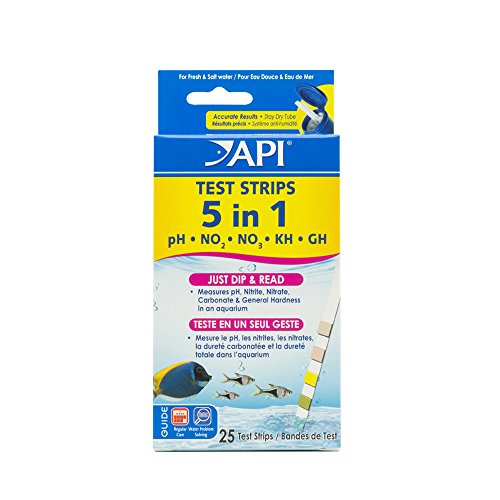
Best for quick, multi-parameter checks in both freshwater and saltwater tanks. This kit monitors pH, nitrite, nitrate, carbonate, and general water hardness. Dip a strip into tank water and compare result colors with the chart. Suitable for hobbyists who want fast guidance without multiple reagent bottles. Best for beginners or as a supplementary test alongside more precise methods.
AAwipes 8-in-1 Aquarium Test Kit

Selected for thorough freshwater and pond monitoring, this kit covers Free Chlorine, Nitrate, Nitrite, Hardness, Carbonate, Total Alkalinity, pH, and Ammonia nitrogen. It provides a clear color readout with a fast three-step process and is designed for quick action to prevent water quality issues. Best for those who want a broad, reliable profile in one kit. Caution: read the Ammonia step separately for accuracy.
SJ WAVE 11 in 1 Aquarium Test Strips

Best for a comprehensive home test with 11 parameters, including ammonia, pH, nitrates, nitrite, iron, copper, and temperature. It’s designed for consumers who want an all-in-one sense of aquarium water quality without purchasing multiple kit components. Choose this if you maintain diverse species and want a single, consolidated reading. Limitation: very detailed readings may require careful color interpretation against the chart.
Hach Total Hardness Test Kit, Model 5-B

Best for precise, laboratory-style hardness measurement using a drop-count titration method. Designed to measure CaCO3 hardness across 1-30 gpg, this kit includes reagents and essential tools for field and lab testing. Choose this when accurate, repeatable hardness data matters, such as when calibrating hard water aquariums. Limitation: more involved process than strip tests.
VARIFY Water Hardness Test Kit

Best for users who want a clear, quick read with an oversized color chart. The kit tests hardness in a broad range (0-425 ppm, 0-25 gpg) and targets home, drinking water, wells, pools, and appliances. Opt for this if you value ease-of-interpretation and a wide testing range. Caution: color interpretation can vary with lighting conditions.
ColorKiM Total Water Hardness Kit

Best for quick, two-component testing that gives fast results for pools, spas, aquariums, and industrial water. The kit uses a single drop-and-see method to indicate hardness, which helps avoid slow color-matching. Choose this when you want straightforward, rapid results with minimal equipment. Limitation: may require strict adherence to drop count for consistency.
Buying Guide
What should you consider when selecting a water hardness test kit for an aquarium?
- Test type: Strips versus drop-count titration. Strips are quick and easy; titration tends to be more precise.
- Parameters covered: If you need only hardness (GH) or a broader profile (pH, alkalinity, nitrate, ammonia, etc.), pick accordingly.
- Tank type and inhabitants: Freshwater tanks with soft water fish vs. hard-water species may require different testing depth.
- Reading ease: Large, clear color charts help reduce interpretation errors, especially in low-light setups.
- Cost per test: Consider long-term costs, especially for large tanks or frequent testing schedules.
- Frequency of testing: New setups may benefit from more frequent readings than established tanks.
- Storage and stability: Reagent stability and kit shelf life affect accuracy; store per instructions.
Practical questions for buyers
- Do I need a single kit for multiple parameters or a dedicated hardness-only kit?
- Is my tank mostly freshwater, saltwater, or a mixed system requiring versatile tests?
- How important is lab-style precision versus quick home readings?
- Will I test frequently, and does the kit offer cost-efficient long-term use?
Comparison snapshot
- Best for quick checks: API 5-in-1 and VARIFY kits offer fast, readable results for everyday maintenance.
- Best for comprehensiveness: SJ WAVE and AAwipes provide extensive parameter coverage, suitable for diverse setups.
- Best for precision: Hach provides drop-count titration with laboratory-style accuracy for critical hardness measurements.
FAQ
- What is water hardness in aquariums? It refers to the concentration of calcium and magnesium salts, typically measured as GH or in ppm/gpg.
- How often should I test aquarium hardness? Beginners may test weekly, while established tanks in sensitive setups may benefit from more frequent checks.
- Can I rely on strips for all readings? Strips are convenient but may be less precise than titration methods; use titration when precise hardness data is critical.
- What should I do if hardness is too high or too low? Adjust water changes, consider buffering additives, or use a compatible water softening or remineralization strategy as appropriate for your tank.
- Are these kits suitable for ponds or wells? Some kits are versatile enough for freshwater ponds and well water; verify the product scope and color charts before use.
- Is it necessary to test every parameter? For basic maintenance, hardness and pH are often most critical, but a broader profile helps prevent unseen issues in diverse systems.