When selecting a water changer for an aquarium, the best options provide fast, bucket-free water changes, quiet operation, and reliable gravel cleaning. This guide targets hobbyists who want an easy, semi-automatic system that minimizes noise and spills. It highlights five top picks that balance performance, ease of use, and value for typical home aquariums. Suitable buyers include busy hobbyists, those with medium to large tanks, and users who want a straightforward gravel-cleaning solution without hauling heavy buckets.
Product snapshot: the table below compares five popular water-changing tools, focusing on best fit, tank size suitability, and notable strengths. Use it to narrow choices quickly before reading detailed sections.
| Product | Best For | Tank Size Range | Key Benefit |
|---|---|---|---|
| enomol Gravel Vacuum (50ft) | Large tanks; frequent water changes | Medium–Large | Long hose for reach; quick drain and fill |
| Tetra Water Cleaner Gravel Siphon | Up to 55 gal | Simple, compact siphon | |
| Python No Spill Clean and Fill | Hands-free, large maintenance tasks | Large to extra-large | Complete maintenance system with faucet adaptors |
| hygger Bucket-Free Kit | Time-saving, no bucket handling | Small–mid tanks | Integrated siphon, auto water flow |
| DXOPHIEX Gravel Vacuum | All-in-one quick changes | All sizes | Two-valve operation, long hose |
enomol Gravel Vacuum for Aquarium Water Changer (50ft)

Best for larger tanks or frequent water changes. This semi-automatic changer uses two valves and a long hose to drain water using tap pressure, then refills after the drain. The 16.5-inch gravel cleaning tube includes a built-in filter for debris agitation without waking shy fish. It is best for buyers who want a straightforward, bucket-free workflow with extended reach. A potential limitation is the need for stable faucet connection and proper valve operation to avoid overflows.
Tetra Water Cleaner Gravel Siphon
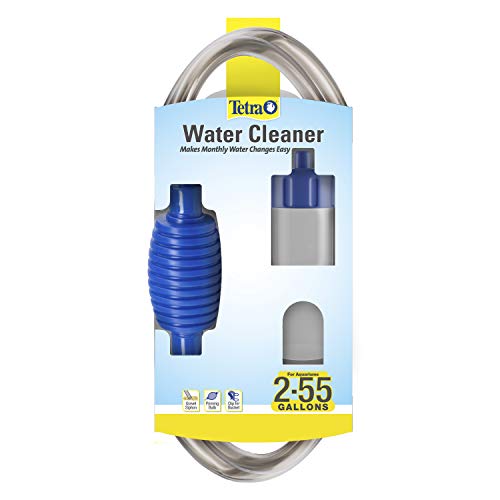
Best for those with smaller to mid-sized tanks seeking a simple, reliable siphon. It targets easy maintenance by enabling 30-minute 30% water changes every 30 days, reducing disruption to fish. The design favors users who want a compact, ready-to-use solution without extra bells and whistles. A limitation is that it’s sized for tanks up to 55 gallons, which may not fit very large setups.
Python No Spill Clean and Fill System

Best for hobbyists who want a full maintenance system with minimal manual effort. The Python setup includes a complete kit with hose, gravel tube, connectors, faucet pump, and brass adapter. It enables bucket-free, spill-free operation and aims to streamline regular water changes. Limitations include the need for a compatible faucet and initial setup, which may require a brief learning curve for perfect flow control.
hygger Bucket-Free Aquarium Water Change Kit

Best for hands-off enthusiasts who want to attach to a faucet and let gravity handle the rest. The kit emphasizes no-bucket use, auto-siphon operation, and combined draining, filling, and gravel cleaning. It’s well-suited for mid-sized tanks where saving time matters. A caution: the faucet compatibility is essential, as some fixtures may require adapters not included in all bundles.
hygger 360GPH Gravel Cleaner 5-in-1
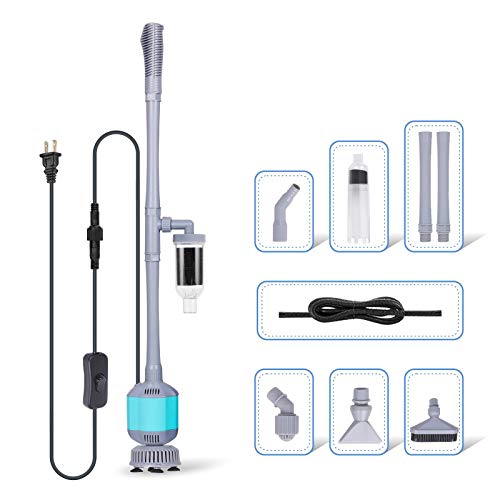
Best for power users needing strong flow and multi-function cleaning. This 5-in-1 tool provides heavy-duty gravel cleaning, water changing, and filtration support with a high head and adjustable length. The 360GPH capability speeds up larger tanks’ maintenance. A limitation is that the unit’s higher flow may require careful handling to prevent splashing in delicate setups.
DXOPHIEX Gravel Vacuum with 30ft Hose

Best for reliable, quick water changes with a practical two-valve setup. The 19-inch long cleaning tube reaches the bottom of most tanks, and the auto-siphon feature reduces noise and disturbances to fish. Choose this if you want a universally adaptable option that works across common aquarium sizes. A potential limitation is the need for correct valve operation to avoid leaks or incomplete changes.
Buying Guide: Key Considerations For Choosing A Water Changer
How big is your tank? For large tanks, look for longer hoses and higher flow rates. For smaller tanks, compact siphons with universal adapters work well without overwhelming water displacement.
Is noise or disturbance a priority? Auto-siphon and non-electric designs are ideal when silence matters, especially for shy species.
Do you want a complete kit or modular parts? Full maintenance systems remove extra steps but can require more initial setup, while modular kits let you add features gradually.
How important is faucet compatibility? Many kits rely on standard faucets; verify that adapters are included or readily available for your plumbing.
Maintenance and filters: Some units include filters or debris traps in the cleaning tube. Consider how often you’ll need to clean or replace these components.
Tank versatility: If you plan to switch between multiple tanks, a longer hose and adjustable height options provide flexibility without buying separate tools for each tank.
Frequently Asked Questions
- What is a water changer used for in aquariums?
A water changer automates or semi-automates water removal and replacement to maintain water quality and ease routine maintenance.
- Can these devices be used with saltwater tanks?
Many are designed for freshwater, but some models support saltwater with appropriate materials; always check the product’s compatibility.
- Do I need special tools to install a water changer?
Most kits include adapters and hoses; some may require basic plumbing connections depending on the faucet and setup.
- How often should I perform water changes?
Typically every 1–4 weeks depending on tank size, bioload, and water parameters; follow your aquarium’s maintenance plan.
- Are these devices noisy?
Most modern siphons are designed to be quiet, especially non-powered models; electric pumps may add minimal noise.
- What is the advantage of a bucket-free system?
Bucket-free systems reduce physical effort, minimize spills, and simplify gravel cleaning while saving time.