Maintaining stable water temperature is essential for fish, coral, and aquatic plants. The right temperature controller helps you automate heaters and coolers, reduce stress on inhabitants, and protect against equipment failures. Below are five top-rated options designed for aquariums, terrariums, and related setups. Each product section includes practical features, so you can compare at a glance.
| Product | Brand | Key Feature | Typical Use |
|---|---|---|---|
| Inkbird ITC-306A WiFi Temperature Controller | Inkbird | Dual relays, dual probes, app notifications | Aquarium heaters and breeding setups |
| Inkbird ITC-308 Digital Temperature Controller | Inkbird | Dual relays, °C/°F display | Heating and cooling tasks for tanks |
| Inkbird ITC308S Temperature Controller | Inkbird | Submersible probe, dual display | Aquarium heating and cooling with alarms |
| Inkbird Aquarium Heater With Probe | Inkbird | Two heating outlets, day/night cycles | Freshwater and reef tank heating |
| WILLHI WH2408 Temperature Controller | WILLHI | Two knobs, wide temperature range | Terrariums, greenhouses, aquariums |
Note: This guide focuses on objective specifications and typical use cases to help you compare features across popular models.
Inkbird ITC-306A WiFi Temperature Controller

The Inkbird ITC-306A offers dualprotection with two relays so a heater can be shut off if overheating is detected. It includes two probes to improve reliability when placed at a distance in the tank. An alarm and mobile app notification alert you if the temperature difference exceeds 3°C (5°F). A heating-time customization lets you set a heating interval from 1 to 72 hours, with alerts if the target is not reached. This makes it suitable for breeders and hobbyists who want remote monitoring and more nuanced heating control.
Inkbird ITC-308 Digital Temperature Controller

This model supports both heating and cooling equipment via dual relays, allowing automatic switching as conditions change. It features a clear °C/°F display and a dual display window that shows the actual and set temperatures simultaneously. It is well-suited for controlling heaters in tanks and can coordinate with cooling devices when needed, offering straightforward setup and reliable performance for hobbyists and professionals alike.
Inkbird ITC308S Temperature Controller With Submersible Probe
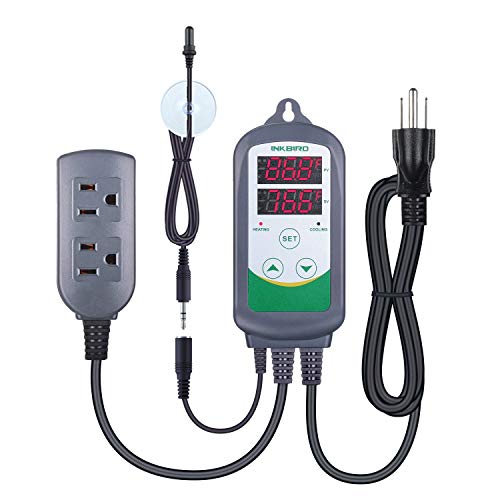
The ITC308S provides a fully submersible probe designed to work well in water, with a dual-display window to simultaneously show measured and set temperatures. It supports both heating and cooling control (On/Off) and includes calibration options as well as alarms for over-temperature and sensor faults. This makes it a robust option for aquarium setups that require precise and visible temperature management.
Inkbird Aquarium Heater With Probe Thermostat
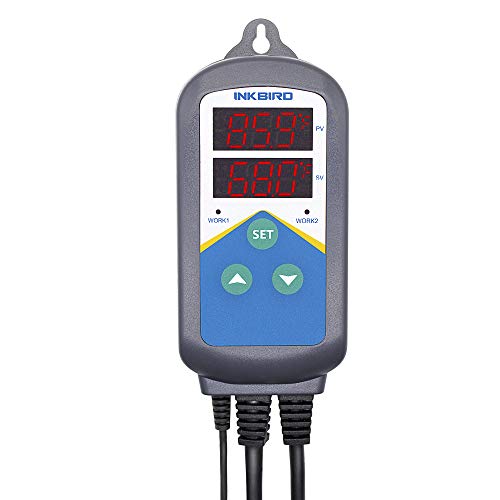
This heater-focused controller provides dual-time cycle scheduling for day and night temperatures, with a built-in dual-display for easy monitoring. It’s designed for simple plug-and-play operation and is suitable for freshwater and saltwater aquariums, as well as ornamental setups. Note that it is a heating-only controller, which makes it a streamlined choice for users who do not need cooling options but want dependable temperature control with drift prevention.
WILLHI WH2408 Temperature Controller

The WILLHI WH2408 features two control knobs for on/off temperature adjustments, delivering precise control from -50°C to 110°C (-58°F to 230°F). It is suitable for a wide range of uses, including reptile terrariums, greenhouses, incubators, and aquariums. The unit emphasizes safety with a fire-retardant case and built-in isolation, while the probe remains usable in damp environments. It’s a versatile option for users who value hands-on setup and broad application potential.
Buying Guide: Key Purchase Considerations
When selecting an aquarium temperature controller, consider these factors to ensure you meet your tank’s needs.
- Control type: Heating-only vs. heating and cooling support. Dual-relay models enable both heater and chiller or fan control for tighter regulation.
- Probes and placement: Submersible probes provide accurate readings in water but need proper placement away from heat sources to avoid false readings. Dual probes can offer better detection of temperature gradients.
- Display and alarms: Dual display windows help you monitor set vs. measured temperatures. Alarms (high/low, sensor faults) reduce risk by alerting you to issues early.
- Connectivity: WiFi-enabled models allow remote monitoring and alerts via apps, which is helpful for reef tanks or systems that require off-site supervision.
- Power handling: Check maximum load to ensure the device can handle your heater’s wattage. Many models cap around 1000–1200W for aquarium use.
- Durability and environment: Look for splash-resistant housings or probes designed for water exposure. Consider the overall build if used in humid terrariums or greenhouses.
- Scheduling features: Day/night temperature cycling can mimic natural conditions, supporting certain livestock and plant life.
- Ease of setup: Simpler interfaces reduce setup time and mistakes. Dual knobs or straightforward menus help new users configure quickly.
Practical selection tips:
- For remote monitoring and alerts, prefer WiFi-enabled models with companion apps.
- If you maintain both heating and cooling in a reef or planted tank, prioritize dual-relay units with reliable probes.
- For straightforward heating control in freshwater tanks, a dedicated heating controller with day/night cycles can be the most cost-effective option.
- Evaluate whether you need a submersible probe or a non-submersible setup based on your tank design and maintenance routine.