Answering the question “which small salt water aquariums fit my space and budget?” this guide highlights compact kits and additives ideal for hobbyists starting or expanding a nanoscale marine or reef display. Best for beginners: all-in-one kits that bundle equipment and lighting. Best for ongoing maintenance: trusted salts and conditioners that support stable water chemistry. The following top picks serve small tanks from around 8 to 14 gallons and provide clear viewing while supporting healthy marine life. See the quick comparison table below to start your shopping at a glance.
| Product | Brand | What It Is | Best For |
|---|---|---|---|
| Coralife SMART BioCube Jr | Coralife | All-in-one 14-gallon kit with hood, LEDs, filter and pump | Best for beginners who want an integrated system |
| Coralland 8-Gallon Saltwater Aquarium | IOAOI | Compact nano tank with low-iron glass design and angled joints | Best for space-constrained setups |
| Instant Ocean Sea Salt 50 Gallons | Instant Ocean | Marine salt mix for reef-ready water chemistry | Best for established small saltwater tanks |
| API TAP WATER CONDITIONER | API | Water conditioner to neutralize chlorine/chloramines | Best as a safety step when preparing new water |
| API AQUARIUM SALT Freshwater Salt 36-Ounce | API | Salt mix intended for freshwater aquariums | Best contrast to marine salts for mixed setups |
Coralife SMART BioCube Jr 14-Gallon Kit

The Coralife SMART BioCube Jr is a compact all-in-one system designed for saltwater or freshwater setups. It includes a hood, white and blue LED lighting, a filter, a quiet pump, dual intakes, and an adjustable nozzle. This makes it a strong choice for beginners and hobbyists who want a ready-to-use package in a small footprint. Best for buyers who value an integrated, space-saving solution that reduces the amount of separate equipment to manage. A limitation is that a small kit like this may require adding optional upgrades for advanced corals as your confidence and stock grow.
Coralland 8-Gallon Saltwater Aquarium

The Coralland 8-Gallon Saltwater Aquarium emphasizes ultra-clear low-iron glass and a 45° angled joint design. With 5.5 gallons of display space and a 2.5-gallon rear sump, it aims to maximize viewing clarity while providing a compact platform for small marine fish, invertebrates, or reef setups. Suitable for enthusiasts seeking a stylish, space-efficient tank with modern aesthetics. Best for those who want premium glass quality and a unique silhouette in a small room or desktop display. Caution: the small size may limit the number of inhabitants and coral complexity you can maintain.
Instant Ocean Sea Salt 50 Gallons
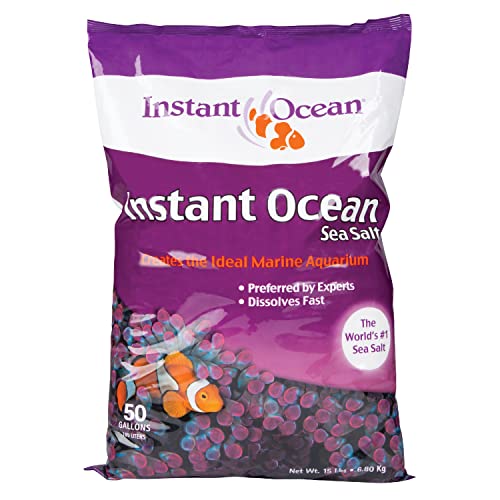
Instant Ocean Sea Salt is formulated specifically for marine aquariums and includes major, minor, and trace elements necessary for healthy marine life. It dissolves quickly and creates a ready-to-use solution that helps maintain stable salinity and pH for small saltwater tanks. Best for hobbyists who want a dependable, widely used salt mix for reef or fish-only setups. A potential limitation is salt mix substitutions can affect water parameters, so precise mixing and testing remain important.
API TAP WATER CONDITIONER

API TAP WATER CONDITIONER neutralizes chlorine and chloramines and helps protect gills and tissue during water changes. It’s a practical helper when preparing tap water for small saltwater or mixed tanks, ensuring a safer transition for new fish or invertebrates. Best for be-gun owners who want a simple, widely available conditioner. Limitation: it does not replace a proper salt mix or testing plan; it is a conditioner, not a substitute for proper water chemistry management.
API Aquarium Salt Freshwater 36-Ounce

This API freshwater salt is included to illustrate the distinction between salts designed for freshwater and marine environments. For small saltwater tanks, marine salt mixes like Instant Ocean are typically preferred for maintaining appropriate salinity and trace elements. Best for aquarists maintaining freshwater tanks to compare with marine options. Caution: use the correct salt type for your specific water type to avoid stressing marine life.
Buying Guide: Small Salt Water Aquarium Essentials
- Tank size and purpose: For nanos or desktops, 8–14 gallons is common; consider whether you want a fish-only system or a small reef.
- All-in-one vs. modular: All-in-one kits simplify setup; modular setups offer flexibility but require more equipment planning.
- Salt mix selection: Use marine salt mixes specifically formulated for saltwater; avoid freshwater salts in marine tanks.
- Water conditioning: Have a reliable water conditioner for dechlorination; test salinity, temperature, pH, and alkalinity regularly.
- Lighting and filtration: Choose lighting appropriate for your chosen bioload and coral compatibility; ensure filtration meets your tank’s needs.
- Expansion potential: If you plan to upgrade later, select a tank with a scalable filtration and lighting plan.
- Maintenance routine: Regular water changes, salinity checks, and parameter testing are essential in small marine setups.
Frequently Asked Questions
- What size is best for beginners considering a small saltwater setup?
– An 8–14 gallon tank is a common starting point for beginners, balancing manageable maintenance with visible variety. - Should I buy an all-in-one kit or assemble my own?
– All-in-one kits simplify initial setup and reduce equipment conflicts; assemble your own if you want custom filtration or advanced lighting. - What salt mix is recommended for small marine tanks?
– A proven marine salt mix, such as Instant Ocean, is widely recommended for stable salinity and trace elements. - How often should I test water parameters in a nano tank?
– Test salinity, pH, alkalinity, and temperature weekly, and perform partial water changes as needed to maintain stability. - Is conditioner enough to prepare new water for a saltwater tank?
– Conditioner neutralizes chlorine and chloramines, but you still need a proper salt mix and salinity control for a marine setup. - Can I mix freshwater and saltwater equipment in a small tank?
– It’s not recommended to mix freshwater and saltwater equipment or substrates in the same tank due to differing water chemistry needs.