Slate rocks provide natural texture, color, and structure for aquariums, terrariums, and miniature displays. This guide highlights five well-suited slate options for creating caves, ledges, cliffs, and basking shelves. Each pick targets specific tank sizes, craft goals, and user needs—helping buyers choose the best fit for planted, biotope, or mixed setups. The top picks are organized by practicality, safety, and versatility for both fish and reptiles.
Buyer Summary
| Product | Best For | Key Benefit |
|---|---|---|
| Natural Slate Stone 1 to 3 Inches (2lbs Grey) | Small tanks and nano setups | Compact pieces for intricate caves and ledges |
| Natural Slate Stone 3 to 5 inch Rocks (5lbs) | Medium to large layouts | Big cliffs and stable structures |
| YISZM Slate Rock for Aquarium (3-5 or 5-7 inches) | Flexible layout options | Polished edges, multiple sizes |
| FISCAPE 6.1-8.1 Inches Slate Rocks (6 pcs) | Bold, large-scape designs | Flat surfaces for tiered builds |
| Natural Slate Stone 1/2 to 1 inch (1lb) | Fairy gardens and micro displays | Delicate, natural details for tiny scenes |
Natural Slate Stone 1 to 3 Inches for Aquariums
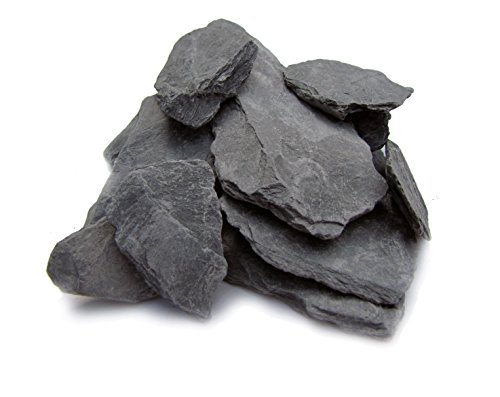
Best for compact tanks and nano setups, these 1–3 inch pieces provide flexible options for creating small caves, steps, and gentle berms. Safe for aquariums and terrariums, the pieces come from a USA-sourced family business and carry a matte slate grey color with a hint of blue. They can be glued to driftwood or used in combination with larger pieces to structure a natural scene. Suitable for both planted and paludarium layouts, this size range helps beginners and hobbyists craft micro-landforms without overpowering a tank.
Who it’s best for: hobbyists with small tanks, beginners building gentle underwater topography, and anyone wanting subtle, multi-use stones. Limitation: some stones may depart from exactly 1–3 inches, so expect slight variation in piece size.
Natural Slate Stone 3 to 5 Inch Rocks

Best for medium to larger layouts, these 3–5 inch rocks enable dramatic cliffs, caves, and berms. The slate’s deep grey tone helps aquatic plants and inhabitants stand out while remaining inert and safe for both freshwater and saltwater tanks. They can be laid flat, stood on end, or angled with support, and pair well with larger stones, gravel, or driftwood to create a balanced, natural scene. Strong choice when you want visible structural features in mid-sized displays.
Who it’s best for: aquascapers needing substantial rock forms and reptile terrarium builders seeking heat-retaining, sturdy surfaces. Caution: larger pieces may require careful placement to avoid sudden shifts in tank microhabitats when rearranging decor.
YISZM Slate Rock for Aquarium (3-5 or 5-7 Inches)

Best for flexible layouts, YISZM offers 3–5 inch or 5–7 inch stones with polished edges for safe handling. These inert slate rocks do not alter water chemistry, making them suitable for both freshwater and saltwater environments. Use to form landscapes with caves, cliffs, and mountains, or combine with driftwood and substrate for dynamic scenes. They also work well in terrariums and model railways. Choose this if you want readily adjustable pieces that maintain a natural look over time.
Who it’s best for: hobbyists seeking versatile sizes and polished edges for easy handling; aquascapers wanting safe, stable decor that won’t affect water parameters. Caution: edges are polished, but rough handling can still cause chipping if forced apart during rearrangements.
FISCAPE 6.1-8.1 Inch Slate Rocks

Best for bold, large-scape designs, these 6.1–8.1 inch stones are ideal for creating expansive ledges, terraces, caves, and dramatic backdrops. The flat, layered surfaces optimize stability for multi-tier builds, while the dark gray tone provides strong contrast against greens and bright corals. They are suitable for medium to large aquariums and can anchor mosses and ferns for a natural, mature look. Use with smaller stones and gravel to fill gaps and avoid gaps that trap detritus.
Who it’s best for: aquarists planning major sculptural features or terrarium builders seeking substantial, long-term decor. Caution: heavier pieces require careful placement to prevent destabilization when rearranging tank layouts.
Natural Slate Stone 1/2 to 1 Inch for Miniatures

Best for fairy gardens, model railways, and tiny dioramas, this size range provides fine detail for walkways, steps, archways, caverns, and micro-caves within miniature displays. Slate stones are natural and durable, and these pieces are suitable for use in aquariums, terrariums, vivariums, and other pet enclosures. They hold heat well for reptiles and can be glued to create delicate cave systems or mountain ranges. Choose this if you build small, intricate scenes that require realistic texture at a close scale.
Who it’s best for: hobbyists crafting tiny worlds, educators designing display scenes, and reptile enthusiasts building micro habitats. Caution: the small size means fewer large-scale structural options and requires precise placement for stability in water or air environments.
Buying Guide
What size should I choose for my tank?
For small tanks, non-dominant accents in 1–3 inch ranges work well. Medium tanks benefit from 3–5 inch rocks for caves and ledges, while larger tanks can support 6–8 inch pieces to create bold landscapes.
Are slate rocks safe for aquariums?
Yes. The products listed are described as 100% natural, inert slate that does not alter water chemistry, making them suitable for freshwater and saltwater setups when cleaned before use.
How should I prepare slate rocks before adding them to a tank?
Rinse to remove dust, scrub gently with a brush, and soak if recommended by the product. Avoid using adhesives not rated for aquarium use unless specified, and ensure any glue or grout is aquarium-safe and fully cured before introducing inhabitants.
Which shapes help with functional layouts?
Flat surfaces help with stable ledges and tiers, while angled pieces enable natural archways and dramatic cliff walls. Mixed sizes create depth and a multi-layered environment that supports plants and hiding spots.
FAQ
- Are slate rocks safe for fish tanks?
- Can slate rocks be glued to driftwood?
- What maintenance is required for slate decor?
- How do I create caves with slate rocks?
- Do slate rocks affect pH levels?
- Can slate rocks be used in terrariums as well?
Yes, when sourced from reputable suppliers, slate remains inert and doesn’t release harmful chemicals into the water.
Yes, use aquarium-safe glue to attach slate pieces to driftwood or other decor, ensuring a stable setup.
Rinse before installation and periodically inspect for loose pieces. Clean as part of routine tank maintenance to prevent detritus buildup in crevices.
Use multiple pieces to form interlocking caves; secure with aquarium-safe adhesives and allow proper curing before adding inhabitants.
Slate is inert and typically does not affect pH; monitor your tank as part of standard water parameter checks.
Yes, slate is versatile for terrariums, vivariums, and paludariums, providing climbing surfaces and heat retention.