If you’re sealing leaks, building new tanks, or performing repairs, silicone that is safe for fish and provides a reliable, flexible seal is essential. This guide highlights top silicone sealants that are non-toxic, waterproof, and durable, with clear guidance on who each product is best for. The selections favor ease of use, quick curing, and compatibility with both freshwater and saltwater setups. Ideal buyers include beginners seeking straightforward applications, hobbyists aiming for long-lasting bonds, and aquarists needing color-accurate finishes for visible seams.
Summary table of selected products:
| Product | Brand | Best For | Key Benefit |
|---|---|---|---|
| Aqueon Silicone Sealant Clear 3 Ounces | Aqueon | New tank builders, quick repairs | Permanently flexible, waterproof seal |
| SELSIL Aquarium Silicone Clear Sealant (10.14 fl oz, 1 Pack) | SELSIL | Long-lasting bonds on glass | 100% silicone polymer, ozone- and UV-resistant |
| 1 Pack Aquarium Silicone Clear Sealant (10 Fl Oz) | LISRUX | Quick repairs, beginner-friendly | Fast curing, non-toxic, strong adhesion |
| DaToo Aquarium Silicone Sealant (10.14 Fl Oz) | DaToo | Versatile, multiple projects | 100% silicone, VOC compliant, solvent-free |
| Kraken Bond Aquarium Silicone Sealant Clear (2×10.1 fl oz) | KRACKEN BOND | Professional-looking seams | 2-pack, fast curing, all-weather seal |
Aqueon Silicone Sealant Clear 3 Ounces
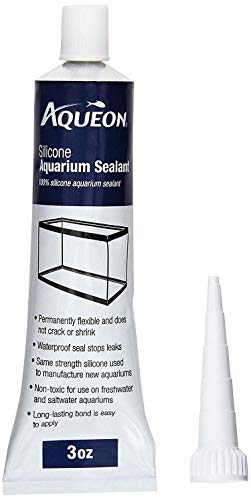
Aqueon Silicone Sealant provides a waterproof seal that remains permanently flexible. It is designed to stop leaks and resist shrinking or cracking, making it suitable for quick repairs and small fixes. Best for hobbyists who need a reliable, easy-to-apply sealant for glass aquariums or aquarium components.
Best for: Beginners and casual aquarists needing a simple, dependable sealant for glass tanks. Choose this if you want a straightforward application with long-lasting flexibility.
Limitation: The product size is on the smaller side, so larger jobs may require multiple tubes.
SELSIL Aquarium Silicone Clear Sealant

SELSIL’s silicone sealant is high elasticity, solvent-free, and ozone- and UV-resistant. It adheres well to glass and non-porous surfaces without primers and is suitable for freshwater and saltwater aquariums. It’s a solid choice for long-term durability and flexible performance in varied conditions.
Best for: Aquarists seeking a robust, non-toxic sealant with strong versatility across surfaces and water types. It’s especially well-suited for larger aquarium builds and repairs that require durable elasticity.
Caution: Ensure proper ventilation when applying, and allow full cure time as listed for optimal elasticity and bond strength.
1 Pack Aquarium Silicone Clear Sealant (LISRUX)

This LISRUX sealant is non-toxic and acid-cured, offering quick curing with a practical 30-minute surface dry time and up to 48 hours for full cure. It forms a permanently soft silicone rubber, delivering strong adhesion on glass without primers and compatibility with various building materials.
Best for: Aquarists who want a fast-use option with a clear understanding of cure times and temperature considerations. It’s a good pick for projects requiring rapid turnarounds and reliable performance in diverse temperatures.
Limitation: Cure time can extend in cooler temperatures or large beads, so plan accordingly for larger repairs.
DaToo Aquarium Silicone Sealant Clear Type
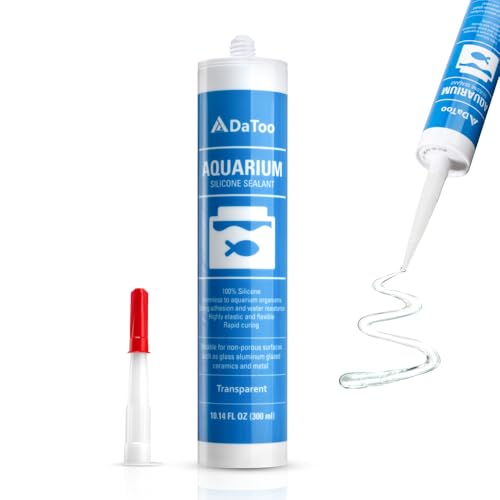
DaToo offers a 100% pure silicone formula with no solvents, making it a reassuring choice for ecological safety in aquariums. It cures quickly, adheres well to glass without primer, and remains flexible across temperatures, making it suitable for both freshwater and saltwater environments.
Best for: Projects where ecological safety and fast curing are priorities. Choose this if you want a straightforward, solvent-free option with broad compatibility.
Caution: Full curing can take up to 48 hours; plan large repairs around cure time and ambient conditions.
4 Pack Aquarium Silicone Clear Sealant (LISRUX)

This set offers four tubes of the same high-elasticity, non-toxic sealant. It’s ideal for ongoing tank maintenance, multiple projects, or larger rebuilding tasks where consistency and reliability across all seals are important.
Best for: Fish keepers planning frequent sealant work or those who want consistent performance across several repairs. It’s a cost-effective option for steady maintenance without compromising safety.
Limitation: In some cases, multiple tubes may be needed for large tanks, affecting total project time and planning.
Kraken Bond Aquarium Silicone Sealant Clear (2×10.1 fl oz)
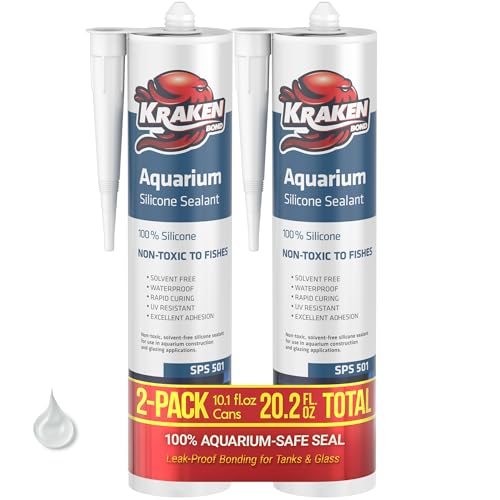
Kraken Bond’s clear sealant focuses on permanent leaks and non-toxic performance, with all-weather resilience to maintain a waterproof seal across different temperatures. The two-pack option helps with larger builds or multiple repairs, delivering a consistent clear finish for aquarium aesthetics.
Best for: Aquarists needing professional-grade clarity and a robust all-season seal. Opt for this if you want a reliable, high-elongation sealant with substantial coverage for larger tanks.
Caution: Ensure the working surface is clean and dry for best adhesion; temperature and humidity can affect cure time.
Buying Guide: Key Purchase Considerations For Aquarium Silicone
What makes silicone fish-tank safe?
Look for 100% silicone formulations that are non-toxic and solvent-free. These sealants are designed to cure with atmospheric moisture, forming a flexible rubber that resists chemicals and temperature changes without harming aquatic life.
How to choose by project type
- New tank builds: Choose high-elasticity, clear sealants with fast cure to minimize downtime.
- Repairs on glass: Prioritize strong adhesion to smooth surfaces and quick handling time.
- Saltwater vs. freshwater: Confirm compatibility with both water types if you maintain mixed setups.
Application tips
- Prepare surfaces by cleaning with isopropyl alcohol and allowing to dry completely.
- Avoid applying in extremely cold or humid conditions when possible to ensure optimal cure.
- Apply in a continuous bead and smooth promptly for a neat seal that dries evenly.
Safety and maintenance considerations
- Ventilate the area during application; avoid skin contact and inhalation of fumes.
- Inspect cured seals periodically for signs of cracking or discoloration and re-seal if needed.
- Store unused tubes upright in a cool, dry place to preserve elasticity.
Choosing between a single tube and a multi-pack
Single-tube options are handy for quick, small repairs, while multi-packs cover ongoing maintenance and larger builds. For new aquariums or frequent repairs, a pack is often more cost-effective and ensures consistent materials across projects.
FAQ: Quick Answers For Aquarium Silicone Buyers
Is silicone safe for fish tanks?
Yes, when labeled as 100% silicone, solvent-free, and non-toxic, it is designed to be safe for fish and other aquatic life once fully cured.
How long does it take to cure?
Cure times vary by product and conditions, typically ranging from 24 to 48 hours for full strength, with surface-dry times shorter.
Can I use silicone on both glass and acrylic tanks?
Most aquarium silicones bond well with glass and common non-porous surfaces. Check product specs for acrylic compatibility if required.
Do I need to primer the surfaces?
Most aquarium silicones are designed to adhere to glass without primers, but always follow the manufacturer’s guidelines for best results.
What if the sealant is cloudy after curing?
Cloudiness can indicate contamination or improper curing. Remove the sealant and reapply after thoroughly cleaning and drying the surface.
Can I paint over silicone seals?
Typically not recommended, as paint adhesion on silicone is poor. Use silicone-compatible finishes or remove/install as needed for appearance concerns.