If you’re building or upgrading a saltwater setup, a reliable filtration system is essential for maintaining stable water conditions. This guide highlights five Amazon-listed filtration options chosen for clarity, reliability, and suitability for various saltwater environments. Each product is evaluated for who it’s best for, plus practical tradeoffs. A quick summary table is included to help you compare at a glance.
Product Comparison Snapshot
- Aquatic Life RO Buddie 4-Stage RO/DI System — Best for precise water purification and reef hobbyists.
- TARARIUM Turtle Tank Filter 3-Stage/4-Stage Options — Great value with adjustable flow for mixed marine tanks.
- Marineland Bio-Wheel Penguin 200 GPH — Best for simple, proven biological filtration in small to mid-size tanks.
- Aquatic Life Twist-In 4-Stage RO/DI — Best for higher purity and flexible 75 GPD output.
- Aqueon Starter Kit — Best for beginners seeking an integrated filtration and lighting package.
Aquatic Life RO Buddie 4-Stage RO/DI System
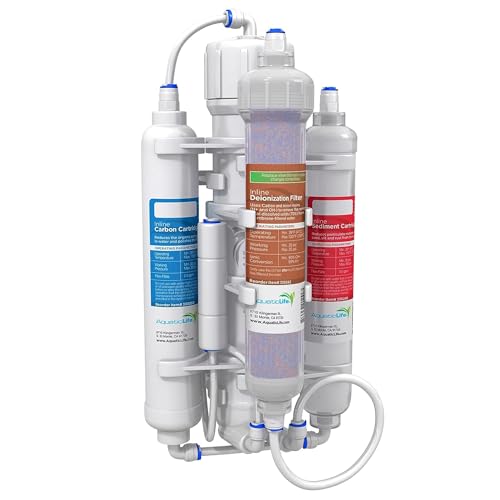
The Aquatic Life RO Buddie provides four stages of filtration, including reverse osmosis and resin-based DI to produce cleaner tap water for marine tanks, fountains, and humidifiers. This system targets hobbyists who value high-purity water for sensitive invertebrates and coral. Best for saltwater aquariums where precision in water chemistry is important. Note: it removes debris and chlorine but does not remove chloramines, so additional chloramine treatment may be needed in tap water.
Selected for buyers who want reliable, compact RO/DI filtration with straightforward maintenance. The sediment filter handles dirt and sand that can cloud water, while the carbon block helps reduce odors and chlorine. This makes it a suitable upgrade for reef tanks that require consistent water quality. A short limitation is that chloramines aren’t removed, which may require a secondary treatment strategy.
TARARIUM Turtle Tank Filter (3-Stage / 4-Stage)

This internal filter provides a multi-stage approach with debris-catching mesh sponges and biological media, plus adjustable flow for stable filtration in mixed freshwater and saltwater tanks. It’s a practical option for hobbyists managing moderate bioloads in 20–75 gallon ranges. Best for hobbyists who want a compact, adjustable filter with visible filtration stages. A potential limitation is that internal filters may need additional power filtration for heavier bioloads or larger tanks.
Marineland Bio-Wheel Penguin 200 GPH
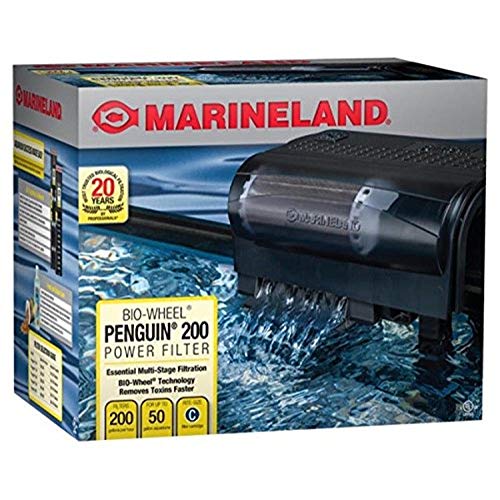
This hang-on-back filter uses rotating Bio-Wheel technology to provide robust biological filtration alongside mechanical and chemical stages. It’s well-suited for compact saltwater or reef tanks up to about 20–40 gallons. Best for owners seeking a simple, dependable filtration system without complex setup. Limitation: capacity is best for smaller tanks; larger systems may require multiple or more powerful filters for optimal bioload management.
Aquatic Life Twist-In 4-Stage RO/DI System
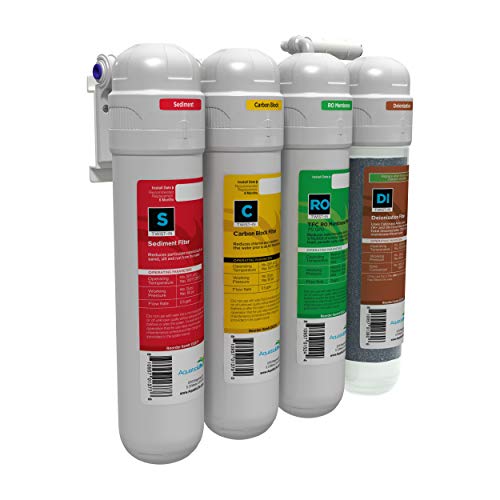
This four-stage system combines sediment, carbon, RO membrane, and DI resin to produce up to 75 GPD of purified water. It’s designed for aquariums that demand higher purity and stable salinity, benefiting sensitive corals and invertebrates. Choose this if you need a stronger RO/DI setup with clear, color-changing DI resin for easy monitoring. Caution: note that chloramines are not removed by this unit, so a chloramine-removal step may be necessary for tap water.
Aqueon Starter Kit with Filtration and LED

This starter kit combines a freshwater or saltwater-ready filtration system with LED lighting and a complete set of essentials. It’s ideal for beginners who want an all-in-one package to simplify setup and ongoing maintenance in smaller tanks. Best for newcomers seeking an integrated solution with guided maintenance. A limitation is that it may not suit seasoned hobbyists seeking high-end filtration customization or reef-specific features.
Buying Guide: Filtration Essentials For Saltwater Tanks
What filtration type does your tank need?
Saltwater systems benefit from a combination of mechanical, chemical, and biological filtration. Mechanical filtration removes physical debris, chemical filtration targets chemicals and odors, and biological filtration maintains beneficial bacteria that break down waste. Consider a system that offers at least two of these elements, plus compatibility with your tank size and inhabitants.
How important is water purity?
For reef tanks or tanks with sensitive invertebrates, higher purity water is crucial. RO/DI units deliver cleaner water by removing most dissolved solids. If your tap water quality varies, an RO/DI filtration step can reduce the risk of trace contaminants affecting coral health and stability.
What tank size and bioload are you managing?
Smaller tanks (20–40 gallons) often do well with compact, integrated filters. Larger tanks (40+ gallons) may require more robust filtering, including external canisters or multi-stage RO/DI units to keep up with waste and maintain stable salinity and pH.
Are chloramines a concern?
Many municipal water supplies use chloramines, which are not removed by all RO/DI setups. If your source water contains chloramines, plan for an additional filtration step or choose a unit specifically rated to remove chloramines.
Ease of maintenance and replacement parts
Opt for systems with easily accessible replacement filters and clear maintenance guidance. Quick-connect fittings, color-changing DI resin, and widely available replacement media reduce downtime and cost over the tank’s life.
Frequently Asked Questions
- Can I use an RO/DI system on any saltwater tank? Most reef, semi-reef, and standard saltwater tanks benefit from RO/DI water, especially when aiming for stable salinity and low contaminant load. Verify setup compatibility with your tank size and inhabitants.
- What’s the difference between RO and DI filters? RO removes a broad range of dissolved solids, while DI resin adsorbs remaining ions to produce ultrapure water. Combined RO/DI systems typically yield the cleanest water for sensitive marine life.
- Do all saltwater tanks require chloramine removal? If your tap water contains chloramines, chloramine removal is important. Some systems address it indirectly; others require a separate treatment to ensure safe water for fish and corals.
- How often should I replace media in these filters? Replacement schedules vary by media type and usage. DI resin changes color as it becomes exhausted, while carbon and sediment filters are replaced based on manufacturer guidance and water quality tests.
- Is a built-in filter enough for a reef tank? For many reef setups, a combination of mechanical, chemical, and biological filtration—or an external canister in addition to a basic filter—provides better water quality and stability.
- What maintenance pattern should I follow? Regularly test parameters (salinity, pH, ammonia, nitrite, nitrate) and inspect media for clogging. Clean or replace components as needed to keep flow rates and filtration effective.