Finding the right testing kit for a saltwater aquarium is essential to maintain stable water chemistry and safeguard marine life. This guide highlights top picks that balance accuracy, ease of use, and versatility. Designed for hobbyists with reef tanks, fish-only setups, or mixed-shores aquariums, these selections help you monitor essential parameters without guesswork. The table below summarizes the five chosen products and what they’re best for so you can compare at a glance.
| Product | Best For | Key Benefit |
|---|---|---|
| API Saltwater Master Test Kit 550-Test | All-in-one master testing | Accurate monitoring of pH, ammonia, nitrite, and nitrate |
| Pawfly 5 in 1 Aquarium Master Test Kit | Comprehensive color-match results | Five critical parameters in one kit for easy tracking |
| Droplytix Digital 10-in-1 Test Kit | Digital, app-based readings | Fast, color-free results via smartphone |
| SJ WAVE 11 in 1 Test Strips | Affordable multi-parameter strips | Eleven parameters with simple dip-and-read format |
| Hofun 5 in 1 Salinity, pH, Temp Meter | Water chemistry plus salinity | 5-in-1 function for quick checks in saltwater setups |
API Saltwater Master Test Kit 550-Test
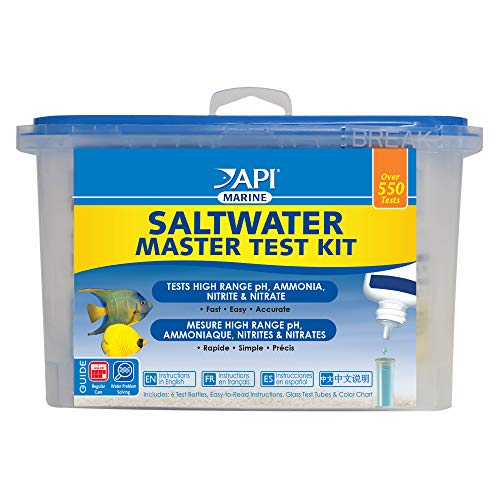
The API Saltwater Master Test Kit is designed for hobbyists who want a comprehensive overview of core water parameters. This 550-test kit includes six bottles of testing solution, a color card, and four test tubes with caps. It monitors high-range pH, ammonia, nitrite, and nitrate, making it suitable for reef and fish-only systems. Best for: beginners who want a complete starter package and seasoned hobbyists seeking a reliable routine testing routine. Caution: avoid mixing reagents from different kits as it can affect accuracy. This kit emphasizes long-term water health rather than quick checks, which is beneficial for ongoing tank stability.
Hofun 5 in 1 Digital Salinity and pH Meter
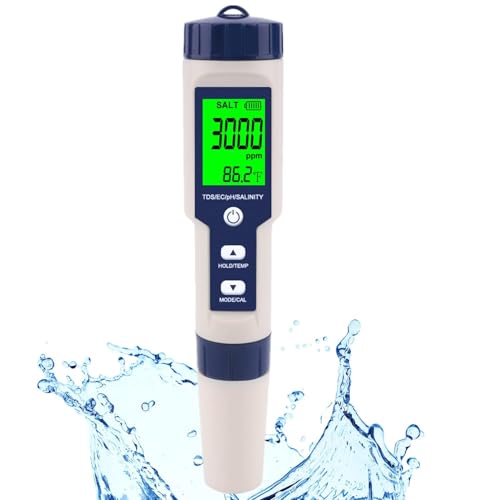
The Hofun digital salinity meter offers a 5-in-1 approach: salinity, pH, temperature, and related readings suited for aquarium, pool, and spa contexts. Its user-friendly interface includes multiple display modes (PPM, PPT, percent) for various applications, including seawater and freshwater testing. Best for: hobbyists who want quick, continuous monitoring with an integrated salinity function. Caution: ensure the meter is calibrated regularly for accurate salinity readings, especially in reef setups with fluctuating salinity.
Pawfly 5 in 1 Aquarium Master Test Kit

The Pawfly 5-in-1 kit covers pH, nitrite, nitrate, ammonia, and phosphate in one test. It’s suitable for both freshwater and saltwater tanks and uses color-matching charts for quick results. Best for: hobbyists who want a straightforward, all-in-one kit with clear color comparisons. Caution: for reef tanks with sensitive phosphate levels, verify results with a secondary method to confirm low phosphate readings.
SJ WAVE 11 in 1 Aquarium Test Strips

SJ WAVE provides an 11-parameter strip-based test for both freshwater and saltwater systems. It includes ammonia, pH, nitrate, nitrite, and general hardness, among others, with a compact kit and color charts. Best for: hobbyists who want cheap, quick checks and offline testing without devices. Caution: strips can be less precise than liquid tests; use as a routine check, not a sole diagnostic tool for reef health.
Droplytix Digital 10-in-1 Test Kit

Droplytix combines digital sensing with app connectivity to deliver ten parameters, including pH, ammonia, nitrate, nitrite, GH, KH, and chlorine. It’s designed to serve freshwater, saltwater, reef setups, and nano tanks, with an app to scan test strips when needed for accuracy. Best for: tech-friendly hobbyists who want real-time, phone-linked results. Caution: app reliability and firmware updates can affect data access in some environments; verify readings if the connection drops.
Buying Guide: Key Considerations For Saltwater Testing Equipment
Accuracy, scope, and ease of use drive selection. When choosing testing gear, consider:
- Parameters Covered: Saltwater tanks demand monitoring of pH, ammonia, nitrite, nitrate, salinity, and sometimes phosphate, alkalinity, and calcium. A kit that covers the core trio (pH, ammonia, nitrite, nitrate) plus salinity is often enough for many hobbyists.
- Readout Method: Liquid test kits with color charts are affordable and reliable but require manual matching. Digital meters or app-enabled strips reduce subjectivity but depend on calibration and device compatibility.
- Tank Type: Reef tanks require tighter phosphate and alkalinity tracking. For fish-only systems, broad parameters may suffice, with longer intervals for reef-specific care.
- Maintenance Frequency: Master test kits are convenient for routine checks, while strips are quick for frequent, non-precision monitoring. Digital options suit busy schedules but may have higher upfront costs.
- Ease of Use: Color-matching can be intuitive but may vary with lighting; digital reads minimize interpretation errors but require setup and occasional updates.
- Budget: For new tanks, a budget-friendly 4-in-1 or 5-in-1 starter kit may be adequate. Reef keepers often invest in digital or multi-parameter strips for precision.
FAQs
- Q: How often should I test a saltwater tank? A: Most hobbyists test weekly, and after water changes, testing 24–48 hours later helps verify stability.
- Q: Which parameter is most critical for reef tanks? A: Ammonia, nitrite, nitrate, and calcium/alkalinity balance are essential; phosphate levels should be monitored in established reef systems.
- Q: Are test strips reliable for saltwater? A: Strips offer quick checks and trend observations but may be less precise than liquid tests or digital meters; use them as part of a broader testing strategy.
- Q: Do I need a separate salinity tester? A: Salinity is crucial in reef tanks; many all-in-one kits include salinity or you may opt for a dedicated refractometer or digital salinity meter for accuracy.
- Q: How do I calibrate a digital pH or salinity meter? A: Follow the manufacturer’s calibration instructions, typically using buffer solutions for pH and known saline solutions for salinity. Regular calibration improves consistency.
- Q: Can I rely on app readings for aquariums? A: Apps offer convenience and data storage, but verify device compatibility and ensure you occasionally cross-check with a traditional method for accuracy.