When selecting a salt water tester kit, prioritize accuracy, ease of use, and clear readings for reliable maintenance. This guide highlights five top kits that fit common needs—from home aquariums to backyard pools—so you can choose the right tool for your setup. The top picks cover digital meters, 8-in-1 strips, and 125-count strips for quick checks. Each product is suited to different users: hobbyists monitoring small reefs, pool owners maintaining salt systems, and DIY enthusiasts who want quick, actionable data.
| Product | Best For | Key Benefit |
|---|---|---|
| API SALTWATER MASTER TEST KIT | Saltwater hobbyists | Comprehensive 550-test coverage |
| Hofun 5-in-1 Digital Meter | Aquarium and pool owners | Digital salinity, pH, temp, EC, TDS |
| Joyzakzak 8-in-1 Strips | Budget-conscious testers | Salt, pH, chlorine, alkalinity, and more |
| T TESTRUST 5-in-1 Tester | All-purpose tester | Salinity, pH, TDS, EC, temp |
| SaySummer Saltwater Strips | Simple quick checks | 8-parameter strips for saltwater |
API Saltwater Master Test Kit 550-Test
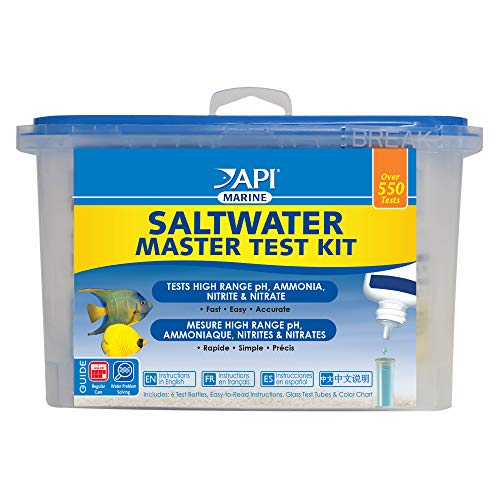
The API Saltwater Master Test Kit monitors four vital parameters—high range pH, ammonia, nitrite, and nitrate—using six bottles of testing solution, a color card, and test tubes with caps. This kit is best for saltwater hobbyists who want a robust, one-stop solution for routine water checks and proactive problem prevention. It helps prevent invisible water issues that can be harmful to fish and lead to losses, supporting consistent reef and fish care.
Best for: Saltwater aquarium owners seeking a comprehensive, all-in-one testing workflow with clear color-based readings. Cautions: Ensure proper handling of reagents and follow color card interpretations for accurate results.
ORAPXI pH And Salt Meter 5-in-1

This 5-in-1 digital tester covers salt concentration, pH, and includes practical unit options (ppm, ppt, and percentage). It’s ideal for pool owners with salt chlorine generators and anyone who prefers exact digital readings over color strips. It can help optimize salinity for pool and spa systems, reducing guesswork and improving chlorine generation efficiency.
Best for: Pool and spa users who want precise digital readings with flexible unit options. Cautions: Digital meters require proper calibration and battery maintenance for accurate readings.
SaySummer Saltwater Pool Test Strips Kit

SaySummer’s 125-count salt pool test strips test eight parameters in one dip, including salt, pH, and sanitizers. The color-chart design highlights the salt range on the chart for straightforward interpretation. This option is well-suited for budget-conscious users who want a bulk pack for regular checks in saltwater pools and hot tubs.
Best for: Budget buyers needing a large quantity of quick test strips. Cautions: Strips can be less precise than digital meters; use the color chart carefully for accurate interpretation.
All-New 2026 8-in-1 Pool Test Strips

Joyzakzak’s 8-in-1 strips add salt testing to the standard seven parameters, covering salt, pH, free and total chlorine, bromine, total alkalinity, hardness, and cyanuric acid. The Nordic fiber paper helps prevent color bleed for clearer results. This kit is ideal for aquatics hobbyists and pool owners who want all-in-one testing with reliable readability.
Best for: Quick, single-step testing with eight parameters in one strip. Cautions: Ensure proper storage to preserve strip integrity and avoid moisture exposure that can affect results.
EASYTEST Saltwater Pool Test Strips

These strips measure essential parameters for saltwater pools and spas. They emphasize the recommended salt range of 2700-3400 ppm, with a measurement span up to 6000 ppm. The kit is designed to help users avoid over- or under-salting by providing a straightforward color read and a clearly labeled scale.
Best for: Home pool owners who want an easy, color-based check with a clear salt range reference. Cautions: Color interpretation can vary with lighting; verify readings under consistent lighting conditions.
Buying Guide: Key Considerations For Your Salt Water Tester
- Accuracy vs. convenience: Digital meters offer precise readings, while test strips provide quick, all-in-one checks. Choose based on how often you test and how precise readings need to be.
- Parameter coverage: Identify the essential parameters for your setup—pH, salinity, ammonia/nitrite/nitrate, chlorine, alkalinity, and temperature. Some kits combine multiple tests in one.
- Volume and usage: For hobbyists with large tanks or multiple tanks, consider kits with more tests or bulk strips to reduce cost per test.
- Calibration and maintenance: Digital meters require calibration and battery checks. Strips require correct storage and timely usage after opening the package.
- Reading interpretation: Color-based readings require good lighting and color matching; digital meters provide numeric values that minimize interpretation errors.
- Applicability: Ensure the kit suits your environment—saltwater aquariums, seawater setups, hot tubs, or pools with salt chlorine generators.
FAQ
- What should I test first in a new saltwater tank? Answer: Start with salinity (or TDS/ppt), pH, ammonia, nitrite, and nitrate to establish a healthy baseline for your bioload.
- Are digital salt meters more accurate than test strips? Answer: Digital meters provide numeric readings and can be more precise, but strips are convenient for quick checks and bulk testing.
- How often should I test a saltwater pool? Answer: Regular testing is recommended—at least weekly, plus after heavy rainfall or long days of sun exposure that affect evaporation and salinity.
- Can I use aquarium test kits for pool water? Answer: Some parameters overlap (pH, salinity), but pools may require different ranges and chlorine management; check manufacturer guidance for crossover use.
- What is the ideal salt level for most saltwater pools? Answer: Common guidance ranges from about 2700 to 3400 ppm, but always follow your pool system’s specification and local guidelines.
- Do test strips expire? Answer: Yes. Strips can lose accuracy over time, especially if exposed to moisture or heat. Store in a cool, dry place and replace as recommended.