The best salt water for an aquarium depends on your goals and tank type. This guide highlights five top products that support marine and reef setups, with attention to dissolution, mineral balance, and suitability for reef or mixed ecosystems. Ideal for saltwater enthusiasts, hobbyists planning reef tanks, and keepers seeking reliable, ready-to-use mixes. The buyer-friendly table below helps you compare core details at a glance.
| Product | Best For | Key Benefit | Recommended Use |
|---|---|---|---|
| Instant Ocean Sea Salt 50 Gallons | Marine hobbyists | Fast dissolve; balanced major, minor, trace elements | General marine aquariums |
| Imagitarium Pacific Ocean Water 5 Gallons | Low-maintenance setups | Pre-filtered, sanitized, pH balanced; no mixing | Direct-to-tank use |
| Instant Ocean Reef Crystals Reef Salt 50 Gallons | Reef tanks | Higher calcium and trace elements for corals | Reef aquariums |
| Instant Ocean Reef Crystals Reef Salt 160 Gallons | Large reef systems | Enriched formulation; extra calcium and trace elements | Large or high-demand reefs |
| Red Sea Reef Salt Mix Small Bucket | Advanced reef systems | Balanced foundation elements for mature, low-nutrient systems | Reef tanks needing stable chemistry |
Below are five product-focused sections. Each entry explains who should consider the product, why it was selected, and any practical caveats. Use of direct comparative language helps you decide which option aligns with your tank goals.
Instant Ocean Sea Salt 50 Gallons For Marine Aquariums
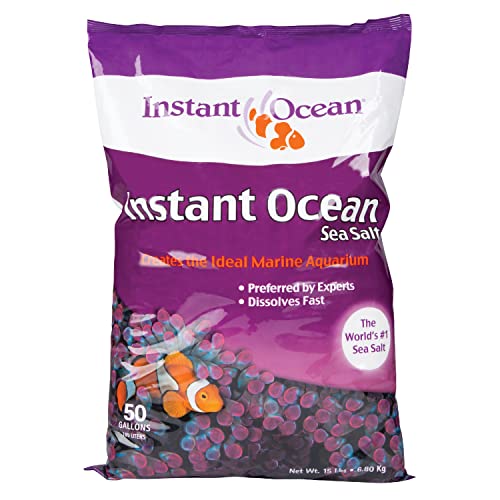
Best for standard marine tanks seeking reliable major, minor, and trace elements. This mix dissolves fast and creates a ready-to-use solution in minutes. It helps maintain a stable pH, with minimized nitrate and phosphate buildup. Ideal for hobbyists who want an economical, consistent marine salt for daily or weekly water changes. A limitation is that extremely sensitive reef systems may require higher calcium adjustments beyond standard mixes.
Imagitarium Pacific Ocean Water 5 Gallons

Best for low-maintenance setups that require zero mixing. This pre-filtered, sanitized, and pH-balanced ocean water is ready for immediate use, making it suitable for beginners or busy aquarists. It’s particularly helpful for users who want a quick way to establish a stable marine environment without measuring salts. A potential drawback is limited customization of mineral levels for specialized reef systems.
Instant Ocean Reef Crystals Reef Salt For 50 Gallons

Best for reef aquariums needing elevated calcium and trace elements. The formula emphasizes essential reef elements, designed to support stony coral and coralline algae growth. Choose this if your goal is to promote robust skeletal formation and vibrant coloration. A limitation is that the higher mineral load may require careful monitoring to prevent nutrient imbalances in ultra-low-nutrient systems.
Instant Ocean Reef Crystals Reef Salt For 160 Gallons

Best for larger or more demanding reef tanks. This enriched formulation provides extra calcium and trace elements, supporting long-term coral and algal growth. It’s better for users managing sizable systems or those seeking a bulk option with reef-oriented nutrients. Avoid this if you maintain a very low-nutrient regime and want minimal calcium fluctuations without testing.
Coralife BioCube Aquarium Salt 15 Gallon

Best for tanks needing reliable neutralization of chlorine and chloramine plus phosphate reduction. It’s suitable for both RO and tap water, with fine grind for rapid dissolution. This option is a practical choice for ready-made mixes in smaller systems. A limitation is that it may not provide the same reef-specific mineral emphasis as dedicated reef salts when used in larger or more demanding reef setups.
Red Sea Reef Salt Mix Small Bucket
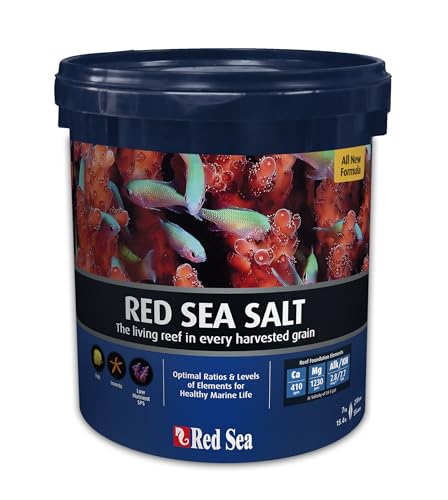
Best for advanced reef systems prioritizing balanced foundation elements. The mix targets mature, low-nutrient environments with a focus on stable water chemistry. Choose this if you need a dependable baseline that supports coral health and stability in tight nutrient control scenarios. A caveat is that adjustments may be necessary for specific coral mixes beyond standard reef expectations.
Buying Guide
What should I consider before choosing a salt mix?
Tank size, target coral types, and desired maintenance level should guide your choice. Reef-specific formulations typically provide higher calcium and trace elements, while general marine salts offer balanced elements suitable for many non-reef tanks.
Do I need a reef salt for a fish-only marine tank?
For fish-only tanks, a standard marine salt with balanced minerals generally suffices. Reef salts can be used if you plan future coral introductions or want higher mineral content upfront, but may require monitoring to avoid nutrient imbalances.
How important is calcium and alkalinity management?
Calcium and alkalinity are critical for coral growth and overall skeletal strength. If you plan to keep stony corals, choose a product with elevated calcium and designed for reef systems. Regular testing helps maintain target ranges.
What about ease of use and time savings?
Products like Imagitarium Pacific Ocean Water offer immediate use with zero mixing, which is ideal for busy setups or beginners. Others require dilution or dosing but provide more precise control over water chemistry for reef health.
How should I plan water changes?
Follow your tank’s maintenance schedule and the salt mix instructions. Water change frequency depends on tank size, bioload, and test results. Consistency supports stability in salinity, calcium, magnesium, and alkalinity.
How can I monitor tank chemistry effectively?
Regular testing for salinity, calcium, alkalinity, magnesium, nitrate, and phosphate helps you adjust dosing. Use a reputable test kit and track changes over time to identify the best salt mix for your system.
FAQ
- Is reef salt better than regular marine salt? Reef salts are formulated with higher calcium and additional trace elements for corals, making them preferable for reef tanks.
- Can I use pre-mixed ocean water for reef tanks? It depends on the system; pre-mixed water offers convenience but may limit customization for demanding corals.
- How often should I test water chemistry after a water change? Test within 24 hours of a water change and then regularly according to tank needs and coralline growth.
- What should I do if calcium is too high? Dilute by performing water changes with lower-calcium salt or using a calcium reduction protocol as recommended by your reef maintenance plan.
- Which salt mix is best for beginners? A ready-to-use option with minimal mixing, such as pre-balanced water, is ideal for beginners to minimize handling errors.
- Are there significant differences between 50-gallon and 160-gallon reef salts? Yes, larger quantities often offer bulk savings and higher calcium/trace element concentrations, which may affect dosing strategies in large tanks.