Finding the right salt water aquarium tank setup starts with selecting the best salt for your marine environment. This guide highlights top salt mixes and reef-friendly options used by hobbyists to support corals, fish, and invertebrates. We review five leading products, focusing on composition, dissolution, and suitability for reef and general marine tanks. Use this overview to compare salinity maintenance, calcium, and trace elements essential for a healthy marine ecosystem.
| Product | Brand | Type | Notes |
|---|---|---|---|
| Instant Ocean Sea Salt 50 Gallons | Instant Ocean | Sea Salt | Ideal for marine setups requiring reliable trace elements |
| Instant Ocean Sea Salt (160 gal) | Instant Ocean | Sea Salt | Large-volume option for reef and marine tanks |
| Instant Ocean Reef Crystals Reef Salt For 160 Gallons | Instant Ocean | Reef Salt | Higher calcium and trace elements for reef growth |
| Instant Ocean Reef Crystals Reef Salt For 50 Gallons | Instant Ocean | Reef Salt | Balanced reef formulation for smaller systems |
| API Aquarium Salt Freshwater Aquarium Salt 36-Ounce Box | API | Freshwater Aquarium Salt | For freshwater tanks; not recommended for marine setups |
Note: This article focuses on salt mixes used in marine and reef tanks. Always follow manufacturer dosing guidelines and test salinity, calcium, alkalinity, and magnesium levels regularly to maintain a stable marine environment.
Instant Ocean Sea Salt 50 Gallons
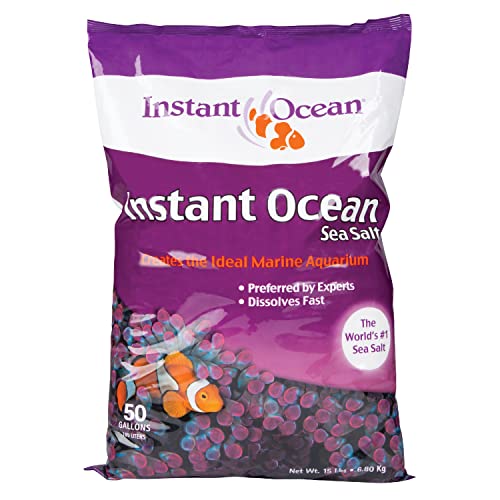
Instant Ocean Sea Salt is a widely used marine salt mix designed for reef and fish-only marine aquariums. It provides essential major, minor, and trace elements in concentrations suitable for many established setups. This 50-gallon option is convenient for mid-sized tanks and hobbyists building up a new reef ecosystem. Dissolution is typically straightforward with proper stirring and aeration, and it aims to support stable salinity and alkalinity management over time.
Instant Ocean Sea Salt (160 gal)

This large-volume sea salt is designed for marine environments, offering a balance of major components and trace elements suitable for reef and fish tanks. The 160-gallon format is cost-efficient for established reef systems or hobbyists planning long-term maintenance. Proper mixing and aeration are recommended to ensure a clear, ready-to-use solution for salinity control and stable water chemistry.
Instant Ocean Reef Crystals Reef Salt For 160 Gallons

Instant Ocean Reef Crystals is formulated for reef aquariums, delivering elevated calcium and trace elements to support stony corals, SPS/LPS, and coraline algae. The 160-gallon mix is designed for larger reef systems or multiple tanks, with a composition that emphasizes calcium and alkalinity balance to reduce the need for frequent supplementation. Regular testing of calcium, magnesium, and alkalinity is advised to maintain optimal coral growth.
Instant Ocean Reef Crystals Reef Salt For 50 Gallons

This 50-gallon Reef Crystals mix provides higher levels of calcium and trace elements compared to standard sea salt blends, supporting reef-building organisms in mid-sized tanks. It is well-suited for hobbyists who plan to keep corals and invertebrates that demand elevated mineral content. Consistent testing and careful dosing help maintain reef health and growth without stressing livestock.
API Aquarium Salt Freshwater Aquarium Salt 36-Ounce Box

API Aquarium Salt Freshwater is formulated for freshwater aquariums, adding electrolytes and balancing minerals for fish health. While it is not intended for marine tanks, some aquarists with mixed-species or transitional setups may use it under specific conditions. It is essential to follow product guidelines and avoid using freshwater salt mixes in established marine systems to prevent imbalances in salinity and trace element concentrations.
Buying Guide: Key Purchase Considerations
- Target reef vs. fish-only: Reef salts typically contain higher calcium and alkalinity to support corals and crustose algae, while standard sea salts are sufficient for many fish-only systems.
- Calcium, alkalinity, and magnesium: Check the product’s profile to ensure it aligns with your tank’s needs. Regular testing helps avoid rapid shifts that stress livestock.
- Volume and cost efficiency: Large-volume offerings reduce per-gallon costs but require longer-term storage and proper mixing. Plan for your tank size and maintenance cadence.
- Dissolution and clarity: Some blends dissolve quickly and produce clear solutions, reducing the risk of precipitates. Aeration during mixing helps speed this process.
- Compatibility with equipment: Consider your calcium reactors, dosing pumps, and nutrient management when selecting a salt mix to support stable chemistry.
- Test and monitor: Salinity, calcium, alkalinity, magnesium, and trace elements should be monitored regularly, with adjustments made based on test results and livestock needs.
- Freshwater salt vs. marine: Do not substitute freshwater salts in marine systems. Use marine-oriented blends to avoid harmful mineral imbalances.