Finding the right salt mix for a marine aquarium is essential for stable water chemistry and healthy coral and fish growth. This guide highlights five highly relevant options and explains who each is best for. Whether you maintain a reef tank, a nano tank, or a larger established system, the right mix supports calcium, alkalinity, magnesium, and trace elements essential to marine life.
Summary of selected products: a quick reference to help buyers compare at a glance.
| Product | Best For | Container Size | Key Benefit |
|---|---|---|---|
| Instant Ocean Sea Salt 50 Gallons | General marine tanks | 50 gallons | Fast dissolving, balanced trace elements |
| Instant Ocean Reef Crystals Reef Salt 160 Gallons | Large reef systems | 160 gallons | Higher calcium and trace elements for reef growth |
| Instant Ocean Reef Crystals Reef Salt For 50 Gallons | Small to mid reef setups | 50 gallons | Enriched formulation for corals |
| Red Sea Coral Pro Reef Salt Mix Large Bucket | Advanced reef tanks | 175 gallons equivalent | Optimal coral health and stability |
| Coralife BioCube 15 Gallon Salt | Small systems or nano tanks | 15 gallons | Easy dissolution with phosphate control |
Instant Ocean Sea Salt 50 Gallons For Marine Aquariums
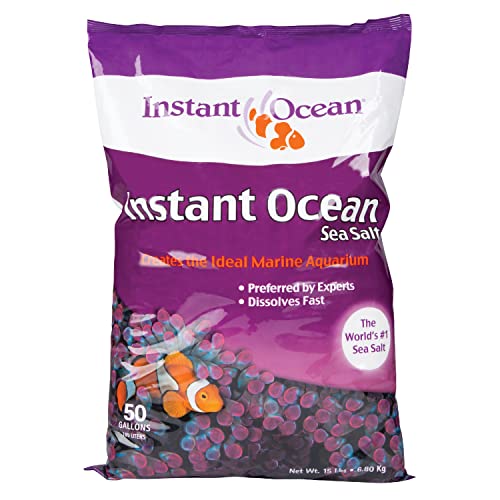
Brand: Instant Ocean. Key features include: formulated specifically for marine aquariums, dissolves fast, and helps maintain an ideal pH while remaining free of nitrate and phosphate. Best for general-purpose saltwater tanks, including beginners or setups focused on estuarine species that require stable trace element balancing. A limitation is that higher-demand reef systems may require enriched alternatives for calcium and trace minerals.
- Best for: New and standard marine tanks requiring quick readiness and balanced element profiles.
- Why chosen: Reliable, widely available, and easy to dissolve for maintenance routines.
Instant Ocean Reef Crystals Reef Salt For 160 Gallons

Brand: Instant Ocean. Features include higher concentrations of essential reef elements, extra calcium to support coral and coralline growth, and additional trace elements for vitality. Best for larger reef systems needing enriched chemistry and robust skeletal growth. Caution: reef tanks may require more careful monitoring of calcium and alkalinity to prevent imbalance as water changes occur.
- Best for: Large reef tanks with corals and calcareous organisms.
- Why chosen: Delivers enriched elements for sustained coral health and growth.
Instant Ocean Reef Crystals Reef Salt For 50 Gallons

Brand: Instant Ocean. This 50-gallon reef salt variant emphasizes essential reef elements with elevated calcium and trace nutrients. Best for compact reef setups or upgrade cycles where space and partial water changes are routine. Limitation: smaller volumes may necessitate more frequent water changes to maintain stability.
- Better for: Small-to-medium reef aquariums needing consistent calcium support.
- Why chosen: Efficient option for maintaining reef-critical chemistry in smaller tanks.
Instant Ocean Reef Crystals Reef Salt For 200 Gallons

Brand: Instant Ocean. This 200-gallon reef salt offers enriched elements and trace minerals designed for larger reef ecosystems. Best for established or expanding reef tanks with higher calcium and alkalinity needs. Caution: handling larger quantities requires careful measurement and storage to ensure soil-free mixing and avoidance of moisture clumping.
- Best for: Large reef systems needing consistent, enriched water chemistry.
- Why chosen: Scales up reliably for bigger tanks without frequent product changes.
Coralife BioCube Aquarium Salt For 15 Gallon Tanks

Brand: Coralife. Features include neutralizing chlorine and chloramines, reduction of phosphate to limit algae growth, compatibility with RO or tap water, and fine grind for rapid dissolution. Best for nano or small tanks seeking simple, stable water without extra chemical adjustments. Limitation: not all formulations guarantee the same trace element balance as reef-specific mixes.
- Best for: Small reef or mixed marine tanks where quick preparation matters.
- Why chosen: Easy to use with good algae control features in compact systems.
Instant Ocean Sea Salt For Marine Fish Tank Aquariums

Brand: Instant Ocean. This product is formulated specifically for marine aquariums, dissolves fast, and maintains an ideal pH. Best for general marine tanks with fish and invertebrates that require stable, nutrient-balanced water. Limitation: reef-optimized care might demand higher calcium and alkalinity management beyond this blend.
- Best for: Medium to large community tanks needing straightforward maintenance.
- Why chosen: Reliable, fast-dissolving salt suitable for routine water changes.
Red Sea Coral Pro Reef Salt Mix Large Bucket

Brand: Red Sea. This Coral Pro Reef Salt Mix is designed for reef tanks and aims to support accelerated coral growth and vitality by balancing major, minor, and trace elements. Best for advanced reef systems that demand stable calcium, magnesium, and carbonates. Caution: may require closer monitoring of alkalinity to avoid swings during water changes.
- Best for: Advanced reef tanks needing optimal coral health and growth.
- Why chosen: Strong formulation for coral vitality and stability in large setups.
Buying Guide: Key Purchase Considerations
What tank size and type should guide my salt choice?
For nano or small tanks (up to 20 gallons), consider a salt mix that dissolves quickly and provides balanced trace elements without excessive calcium. For larger or reef systems, look for enriched formulas with higher calcium and magnesium levels designed to support coral skeletons and coraline algae growth.
Should I pick reef-specific salts or general marine salts?
Reef-specific salts include elevated calcium, alkalinity, and trace elements ideal for corals and calcifying organisms. General marine salts work well for mixed tanks or fish-only setups and are often easier to maintain with standard dosing routines.
How important is alkalinity and calcium balance?
Maintaining stable alkalinity and calcium is critical for coral growth and skeletal formation. If your tank hosts SPS or LPS corals, prioritize salts with higher calcium content and consider regular testing and adjustments.
What about the speed of dissolution and water-change schedules?
Faster-dissolving salts streamline routine water changes and reduce the risk of undissolved powder causing localized chemistry shifts. If you perform frequent small water changes, quick-dissolve formulas can be advantageous.
Are there storage and handling considerations?
Store salt in a cool, dry place to prevent clumping. Large-volume buckets require proper resealing and moisture control to maintain consistency across batches.
What are common limitations to watch for?
Some salts may not balance every trace element identically across batches. Reef tanks may see fluctuations if testing reveals gaps in magnesium or calcium; in those cases, a targeted supplement plan can be necessary.
How should I approach testing and maintenance?
Regular water testing for pH, alkalinity, calcium, magnesium, nitrate, and phosphate helps determine whether your salt mix achieves your goals. Tie changes to a planned maintenance schedule to ensure consistent water parameters over time.
FAQ
- Q: Do reef salts require special dosing beyond water changes?
A: Yes, many reef salts contain higher calcium and trace minerals; verify your tank’s needs and test regularly to maintain balance. - Q: Can I use any salt mix for a fish-only tank?
A: General marine salts work well for fish-only systems, but reef-focused mixes are not usually necessary unless corals are present. - Q: How often should I test water parameters when using a new salt mix?
A: Test after every major water change for the first few cycles, then establish a routine (e.g., weekly or biweekly) based on stability. - Q: Is faster dissolution always better?
A: Generally yes for convenience, but ensure complete dissolution to prevent uneven chemistry during changes. - Q: Do I need to mix salt to a specific salinity before adding to the tank?
A: Yes, mix to your target salinity (often using a refractometer or API salinity test) according to product guidelines. - Q: What should I do if calcium and alkalinity drift after a water change?
A: Rebalance with your chosen salt mix, test, and adjust dosing or perform a partial water change if needed.