Direct answer: The top salinity testers for aquariums combine ease of use, reliable accuracy, and quick readings to help hobbyists maintain stable salinity levels. These picks are best for reef aquariums, marine tanks, and hydroponic setups where precise salinity and temperature tracking matter. Each product below is selected for specific user needs—whether you want a compact digital meter, a dual-scale refractometer, or a multi-parameter tester. The table at the end of the Introduction summarizes the five highlighted options to help you compare at a glance.
The following table highlights the five best salinity testers for aquariums, focusing on use case, measurement range, and notable strengths. Use this as a quick reference when choosing between digital meters and refractometers.
| Product | ||||
|---|---|---|---|---|
| Anbachi Digital Salinity Meter 3-in-1 | Digital Meter | Specific Gravity, Salinity, Temperature | Aquariums, Marine Tanks, Hydroponics | Requires battery; readings depend on ATC accuracy |
| Agriculture Solutions Salinity Refractometer | Refractometer | Salinity (0–100 PPT), Specific Gravity | Marine monitoring, seawater setups | Two scales may need user acclimation |
| hygger Salinity Tester | Hydrometer | Salinity, Specific Gravity | Simple, quick checks for marine tanks | Less precise than digital units for subtle changes |
| Hofun 5-in-1 Salinity, PH, Temp EC & TDS Meter | Multi-parameter Meter | Salinity, PH, Temperature, EC, TDS | All-in-one monitoring in pools and aquariums | Complex for first-time users |
| Hallocool Salinity Refractometer | Refractometer | Salinity (0–100 PPT), Specific Gravity | Aquarium and seawater monitoring | ATC may require calibration |
Digital Salinity Meter 3-in-1 Salinity Tester – Anbachi
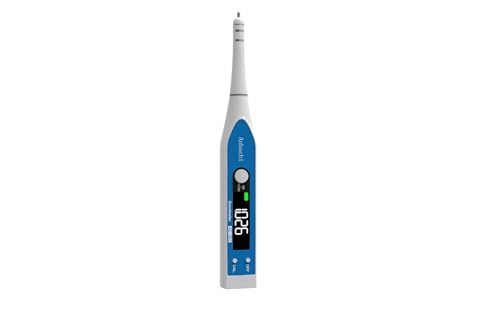
The Anbachi 3-in-1 meter measures Specific Gravity, Salinity, and Temperature with automatic temperature compensation and a backlit LCD for clear readings. It is best for hobbyists who want a compact, all-in-one digital option for quick checks in saltwater aquariums, reef tanks, hydroponics, and related setups. It supports a broad SG range (1.000–1.045), 0–55 ppt salinity, and 1–99 °C temperature. Readings are precise enough to detect small water quality changes, which helps keep delicate species thriving. A downside to consider: the device relies on battery power and may require occasional calibration checks to maintain accuracy.
Agriculture Solutions Salinity Refractometer

This refractometer is designed for salinity assessment in seawater and marine tanks, presenting measurements on two scales: Specific Gravity (D20/20) and PPT. Automatic temperature compensation helps deliver faster, easier readings. It is particularly suited for aquariums and marine monitoring where a quick, non-electronic method is preferred. Best for hobbyists who want a reliable, low-maintenance tool, but it requires careful use to avoid incorrect readings from smeared or improper samples. Keep in mind that two scales may require familiarity to interpret results consistently.
hygger Salinity Tester – Transparent Hydrometer

The hygger hydrometer provides a simple in-tank salinity check with a swing-arm display and a broad capability range for marine and freshwater use. It is easy to read and places the device on a level surface after submersion for accurate results. The model is temperature-corrected and claims a precision of +/-0.001 SG. It is a good choice for quick, visual confirmations and for users who prefer a mechanical reading. However, it may be less precise than digital meters when assessing small fluctuations in salinity, and may require periodical recalibration or replacement if the swing arm drifts.
Hofun 5-in-1 Digital Salinity, PH, Temp, EC & TDS Meter
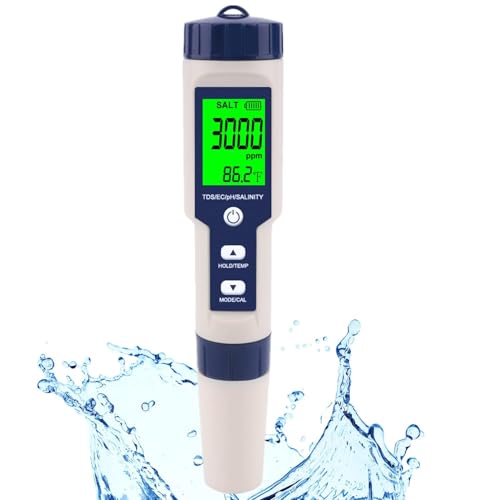
The Hofun meter offers a multi-parameter approach, measuring salinity, pH, temperature, EC, and TDS in one handheld unit. It is convenient for users who want an all-in-one solution for aquarium, pool, and hydroponic applications. This device supports multiple display formats (ppm, ppt, or percent) to adapt readings to different setups. A caution: the tool can be more complex to operate for beginners, and the interpretation of combined results may require practice to avoid confusion about unit conversions.
Hallocool Salinity Refractometer

The Hallocool refractometer provides two scales: 1.000–1.070 SG and 0–100 PPT, enabling dual-unit readouts in a single test. Wired for ease of use and rapid calibration, it is well suited for aquarium maintainers who want a compact, accurate refractometer without extra bells and whistles. Best for: hobbyists who primarily need precise salinity readings and a straightforward tool. Limitation: ATC is included, but calibration procedures should be followed to ensure ongoing accuracy over time.
Buying Guide: How To Choose The Right Salinity Tester
What type should you pick? Digital meters are generally the most precise and quickest to read, suitable for tanks where small salinity shifts matter. Refractometers provide a low-maintenance, budget-friendly option with clear scales but may require more careful handling and calibration. For multi-parameter needs, a 5-in-1 meter can save time but may be more complex to use poorly.
What ranges matter? Look for devices that cover the full salinity range of seawater (roughly 30–40 ppt) and/or specific gravity readings around typical reef tank targets (SG ~1.023–1.026). Temperature compensation is essential for consistent results, especially in environments with fluctuating temperatures.
How easy is it to read and maintain? Digital meters with backlit displays are user-friendly in low-light tanks. Refractometers require a clean sample drop and calibration. Consider whether you want a single-function tool or a multi-parameter device for convenience and space constraints.
How important are accuracy and calibration? High-precision readings (±0.001 SG or better) help detect subtle changes that affect corals and invertebrates. Regular calibration with standard solutions ensures reliability over time, particularly for refractometers and hydrometers.
FAQ
- What salinity should I target for a marine reef tank? Most reef tanks aim for a salinity around 34 ppt or a specific gravity near 1.025, but the exact target depends on the species kept.
- Do I need ATC on a salinity tester? Automatic Temperature Compensation helps improve accuracy when temperatures vary, which is common in home setups.
- Is a refractometer more accurate than a digital meter? Digital meters often provide quicker readings with easy interpretation, while refractometers can be very accurate with proper calibration and technique.
- How often should I calibrate? Calibrate per the manufacturer’s guidelines, typically before initial use and periodically during ongoing use, especially if readings drift.
- Can I use pool testers for aquariums? Pool testers can work for basic salinity checks but may lack aquarium-specific calibration and ATC features needed for precise reef maintenance.
- Which tool is best for beginners? A simple digital salinity meter or a basic hydrometer is often easiest for beginners to obtain quick, understandable readings.