Answer: For saltwater tanks, a high-quality RO/DI filtration unit ensures zero or near-zero total dissolved solids, protecting corals and marine life. The top picks here are suited for reef aquariums, with options sized for 50–150+ GPD and features like DI resin, TDS monitoring, and easy installation. Best for hobbyists building a stable saltwater system, best for reef tanks that demand ultra-pure water, and better for those needing reliable long-term maintenance.
The following table compares the five selected RO/DI systems to help you choose quickly.
| Product | Stage Count | GPD | Best For | Limitation |
|---|---|---|---|---|
| Max Water 6 Stage 100 GPD RO/DI | 6 | 100 | Medium reef tanks; general saltwater setups | DI may require replacement more often in very hard water areas |
| NU Aqua 4 Stage 100 GPD RO | 4 | 100 | Budget-friendly reef or mixed tanks | Post-DI polishing not included beyond inline carbon |
| Aquatic Life RO Buddie 3-Stage 100 GPD | 3 | 100 | Quick setups for small to medium tanks | DI not included; basic filtration size |
| LiquaGen 5 Stage 150 GPD RO/DI | 5 | 150 | Large or heavily stocked tanks needing high output | DI canisters may need attention for color-change resin |
| Oceanic Water Systems 4 Stage 150 GPD RO | 4 | 150 | Reef tanks demanding robust filtration | Pre-assembled; limited color/price variations |
Max Water 6 Stage 100 GPD RO/DI System

Key features include a six-stage filtration process that reduces impurities to a high degree, making the output suitable for sensitive saltwater inhabitants. Best for hobbyists who want a compact but capable unit for reef tanks with moderate water demands. The DI stage provides additional purification after the RO membrane, helping achieve near-0 TDS water. A potential limitation is that, in areas with particularly hard water, DI resin life may be shorter and require more frequent replacement.
NU Aqua RODI System 4 Stage 100 GPD

This four-stage RO/DI unit emphasizes efficient removal of sediments and dissolved solids, suitable for saltwater and mixed tanks. Best for reef setups that need reliable daily production without over-automation. The system’s four stages cover sediment filtration, carbon filtration, RO membrane filtration, and post-DI polishing for clean water. Limitation: no DI cartridge gauge is listed, so monitoring DI usage may require external checks.
Aquatic Life RO Buddie 3-Stage 50 GPD

Designed for compact spaces, this three-stage unit efficiently removes debris to deliver clean water for smaller tanks, fountains, or humidifiers. Best for hobbyists starting saltwater setups or those with limited space. The absence of a DI stage means it may require DI resin separately if ultra-pure water is required. Choose this if you value a small footprint and straightforward setup.
LiquaGen 5 Stage RO/DI 150 GPD

This 150 GPD system offers a full five-stage filtration stack, including a color-changing DI resin for easy monitoring of resin life. Best for reef tanks and coral systems that require substantial production and strict contaminant removal. Better for those who want a high-output unit with a guaranteed DI polishing stage. Limitation: the data notes a need for proper PSI/temperature to reach stated 150 GPD in practice, which may vary by installation.
Oceanic Water Systems RO/DI 4 Stage 150 GPD
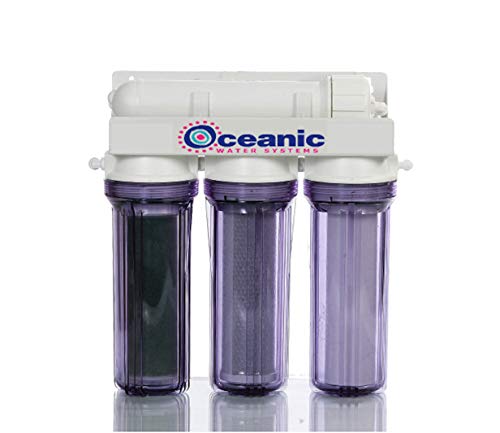
Pre-assembled and easy to install, this four-stage unit focuses on zero-ppm output ideal for reef tanks and saltwater setups. Best for hobbyists who want a quick onboarding experience and trustworthy performance for aquariums, labs, or other marine-focused uses. Limitation: four stages mean fewer polishing steps than a five- or six-stage unit, which could impact very demanding setups.
Buying Guide: Key Considerations For A Saltwater RODI System
What should you look for in an RODI unit for saltwater?
- Stage configuration: More stages (especially DI) typically yield purer water but may increase maintenance and cost.
- GPD rating: Pick a unit rated for your tank size and water demand to avoid frequent changes or stagnation.
- DI resin life indicators: Resin that changes color helps you know when to replace resin or cartridges.
- Footprint and installation: Consider space under your sink or in your cabinet and whether pre-assembled units fit your setup.
What is the trade-off between RO only vs RO/DI?
RO removes most suspended solids and larger dissolved substances; DI polishes water to near-zero TDS. For reef tanks with sensitive corals, RO/DI is generally preferred to minimize nutrient buildup and maintain stable salinity and alkalinity.
Maintenance and monitoring tips
- Replace pre-filters on a schedule to protect the RO membrane from clogging.
- Check TDS levels after the DI stage to ensure water purity meets reef-keeping standards.
- Keep spare DI resin and membrane replacement parts on hand for minimal downtime.
Installation and compatibility considerations
- Ensure your water pressure is adequate for the unit’s membrane performance.
- Verify that tubing fittings and valves match your faucet and storage options.
- Consider whether you need a storage tank and auto shut-off valve for continuous supply.
Summary of best fits by tank type
- Small to mid-sized reef tanks: Max Water 6 Stage 100 GPD and Aquatic Life 100 GPD RO Buddie are well-balanced options.
- Medium to large reef tanks needing higher throughput: LiquaGen 150 GPD and Oceanic Water Systems 150 GPD fit strongly.
- Budget-conscious or space-limited setups: NU Aqua 4 Stage 100 GPD offers reliable filtration with a smaller footprint.
FAQ
- What does RO/DI stand for?
RO stands for reverse osmosis, and DI stands for deionization. Together, RO/DI systems remove a broad spectrum of contaminants, delivering ultra-pure water for saltwater tanks.
- How often should I replace DI resin?
DI resin life varies with feedwater quality. Monitor resin color or TDS output to determine replacement timing.
- Is a 100 GPD system enough for a reef tank?
For many hobbyists, 100 GPD is adequate for small to medium reef tanks, with higher output available from 150 GPD units for busier setups.
- Do I need a TDS meter for reef keeping?
Yes. A TDS meter helps verify water purity, especially after DI polishing, and ensures consistent reef conditions.
- Can I install RO/DI systems myself?
Most systems are designed for DIY installation with standard fittings; follow included instructions and local water pressure guidelines.
- What is the main benefit of a pre-assembled unit?
Pre-assembled units save time and simplify installation, making them ideal for beginners or quick setups without custom plumbing.