Choosing the right RO/DI system is essential for maintaining optimal water quality in freshwater and saltwater aquariums. The following selection highlights five reliable, multi‑stage filtration units designed to reduce TDS, remove chemicals, and provide high-purity water for sensitive aquatic life. This guide covers system capabilities, installation considerations, and how to match a unit to your tank’s needs.
Summary of Selected Products
| Product | Brand | Approx. Output (GPD) | Key Benefit |
|---|---|---|---|
| Aquatic Life Twist‑In 4‑Stage RO System | Aquatic Life | 75 | Compact 4‑stage filtration for hobbyists with moderate water needs |
| Aquatic Life RO Buddie 4‑Stage RO System | Aquatic Life | 50 | Affordable, reliable 4‑stage filtration for smaller setups |
| Max Water 6 Stage 200 GPD RO/DI System | Max Water | 200 | High‑capacity solution with DI polishing for reef tanks |
| NU Aqua 4 Stage RO/DI System | NU Aqua | 100 | 4‑stage filtration with 100 GPD flow for versatile use |
| iSpring RCC1DP Tankless 5 Stage RO/DI | iSpring | 150 | Tankless design with 150 GPD and DI for robust performance |
Aquatic Life Twist‑In 4‑Stage RO System — 75 GPD
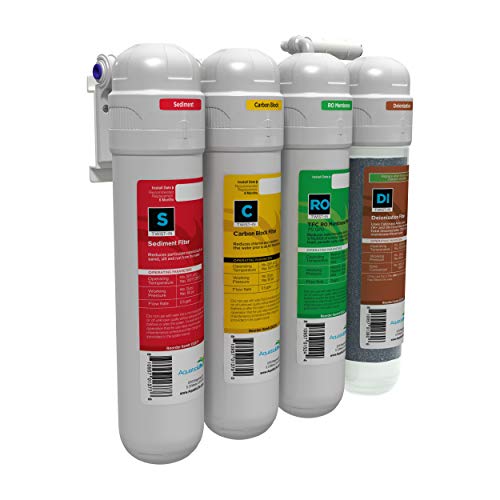
The Aquatic Life Twist‑In Unit is a compact, four‑stage RO system designed to deliver up to 75 gallons of filtered water per day. It features standard sediment removal and a RO membrane stage to significantly reduce Total Dissolved Solids (TDS). The unit’s design focuses on reliable filtration for typical hobbyist aquariums, making it a strong choice for those needing steady, clean water without taking up excessive space.
Key specifications include a robust RO membrane capable of reducing TDS to very low levels and effective sediment filtration to improve water clarity. The system is well-suited for reef tanks, freshwater displays, and mixed tanks where stabilized water parameters are important. Installation is straightforward, and the unit aligns with common hobbyist needs for dependable pre‑mixed water.
Aquatic Life RO Buddie 4‑Stage RO System — 50 GPD

The RO Buddie is a compact four‑stage RO/DI system designed for hobbyists with smaller setups or tighter spaces, producing up to 50 gallons per day. Like other Aquatic Life units, it emphasizes membrane filtration to reduce TDS, along with sediment filtration for improved water clarity. This model is ideal for users who want a dependable supply of purified water for freshwater tanks, nano reefs, or maintenance routines that require high‑quality source water without oversized equipment.
Max Water 6 Stage 200 GPD RO/DI System

Max Water’s 6‑stage RO/DI system offers a high output of 200 GPD and includes DI filtration to achieve very low TDS levels post‑DI. The multi‑stage approach reduces sediments, chemicals, and dissolved solids, making it suitable for reef tanks that require precise water parameters. The system is designed to be user‑friendly, with clear labeling and accessible service points to simplify maintenance and filter changes.
NU Aqua RODI System for Aquarium — 4 Stage, 100 GPD

NU Aqua’s Reef Series RODI system uses a four‑stage filtration approach with a 100 GPD capacity. The setup is designed for reef and freshwater tanks, delivering purified water with careful filtration to remove impurities. The unit carries a 120‑day trial and a three‑year warranty, underscoring its emphasis on reliability and customer support for aquarium keepers seeking long‑term performance.
iSpring RCC1DP Tankless 5 Stage RO/DI System

The iSpring RCC1DP is a tankless 5‑stage RO/DI system delivering up to 150 GPD. It features a pump‑assisted filtration approach to maintain performance in low‑pressure environments, making it suitable for varied applications—from aquariums to laboratories. The high‑flow membrane helps accelerate water purification, while the DI stage targets remaining ions for near‑zero TDS output, which is particularly valuable for sensitive reef tanks and high‑demand setups.
Buying Guide: Key Purchase Considerations For RO/DI Systems
When selecting an RO/DI system for an aquarium, several factors influence long‑term satisfaction and performance. Here are essential considerations from multiple viewpoints:
- Output capacity: GPD ratings indicate daily production. Reef tanks or large displays benefit from higher capacities (e.g., 150–200 GPD), while nano and smaller setups often do fine with 50–75 GPD.
- Stage configuration: More stages generally improve water purity. Four‑stage units are common for hobbyists; five or six stages add DI to reach near‑zero TDS, which is critical for sensitive animals and corals.
- DI filtration: Deionization polishing helps achieve very low TDS. If you rely on purified water for reef tanks or breeding, DI capability is highly valuable.
- Tankless vs. tanked designs: Tankless systems save space and reduce plastic, but may require more careful plumbing and flow considerations. Tanked units are simpler to install in conventional setups.
- Pressure and pump requirements: Some systems include built‑in pumps to maintain flow, especially in low‑water‑pressure homes. Ensure compatibility with your water supply.
- Warranty and support: A multi‑year warranty and accessible customer support are important, given the potential for membrane and filter replacements over time.
- Space and installation: Consider cabinet or stand space, as some units are compact while others are bulkier. Quick‑connect fittings and color‑coded lines can ease installation and maintenance.
- Water source variability: If your municipal water has high TDS or chloramines, a robust RO/DI system becomes more essential. For lower‑demand needs, a smaller unit may suffice.
Performance vs. practicality
High GPD systems deliver water quickly, but they may consume more space and cost more upfront. For reef aquariums or heavily stocked tanks, prioritizing DI capacity and stable output can justify a larger system. For hobbyists with modest needs, a compact 50–75 GPD unit often balances performance and budget effectively.
Maintenance considerations
Regular filter and membrane replacements are necessary to maintain water quality. DI resin cartridges require monitoring for breakthrough, and sediment/carbon prefilters should be changed on a schedule to avoid clogging and pressure loss. Keep a spare set of filters and a TDS meter for ongoing checks, especially in tanks sensitive to water quality fluctuations.
Installation scenario planning
Before purchasing, map out your plumbing and space. Tankless systems work well near sinks or utility areas where drainage is convenient. Tanked systems may be easier to mount under a stand or in a dedicated filtration area. Ensure that your water supply pressure is compatible with the unit’s requirements and that you have a suitable drain line for wastewater disposal.