Clearing your tap water of contaminants is essential for a thriving aquarium. This guide highlights top reverse osmosis (RO) systems that deliver purified water for fish tanks, fountains, and other aquatic displays. Each pick suits different setups—from small desktop tanks to larger systems requiring higher daily output. The products below are selected for reliability, ease of use, and clear filtration stages. Use the quick summary table to compare at a glance and then read detailed notes to determine which model fits your needs.
- Best for small to medium tanks with steady water changes
- Best for versatile setups including fountains and humidifiers
- Better for delicate species and plants requiring very low TDS
- Good all-around option with high daily output
- Best for high-demand tanks or lab-like needs with strong filtration
| Product | Type / Stages | Max GPD | Best For | Notes |
|---|---|---|---|---|
| Aquatic Life RO Buddie 4-Stage | 4-stage RO/DI | 50 | Small to mid tanks | Includes sediment, carbon, RO membrane, and DI resin stages |
| Aquatic Life Twist-In 4-Stage | 4-stage RO/DI | 75 | Mid-sized setups needing higher output | DI resin available; complete 4-stage filtration |
| Aquatic Life RO Buddie 3-Stage | 3-stage RO | 50 | Simple, reliable filtration | Three-stage system with sediment and carbon plus RO |
| Aquatic Life 4-Stage RO/DI 100 GPD | 4-stage RO/DI | 100 | Larger tanks or high-output needs | Color-changing DI cartridge; robust filtration |
| iSpring RCC1DP Tankless RO/DI | 5-stage RO/DI with pump | 150 | High-demand systems, labs, or advanced setups | Tankless design for flexible placement |
Aquatic Life RO Buddie 4-Stage
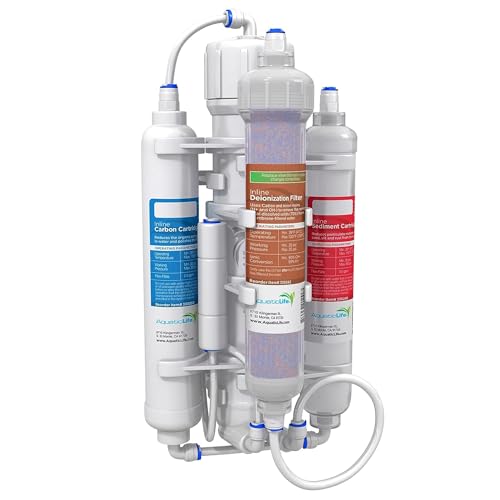
The Aquatic Life RO Buddie 4-Stage RO/DI system uses reverse osmosis to remove debris from tap water, delivering clean water suitable for fish tanks, humidifiers, and fountains. It includes a sediment filter that catches dirt like sand and silt, helping maintain water clarity, and a carbon block filter that removes chlorine and odors. Note: it does not remove chloramines. Best for small to mid-sized tanks that require reliable filtration without complex setup.
Best for: hobbyists seeking a compact, straightforward filtration solution. Limitation: chloramines are not removed, so pre-treatment may be needed in areas with chloraminated water.
Aquatic Life Twist-In 4-Stage RO/DI
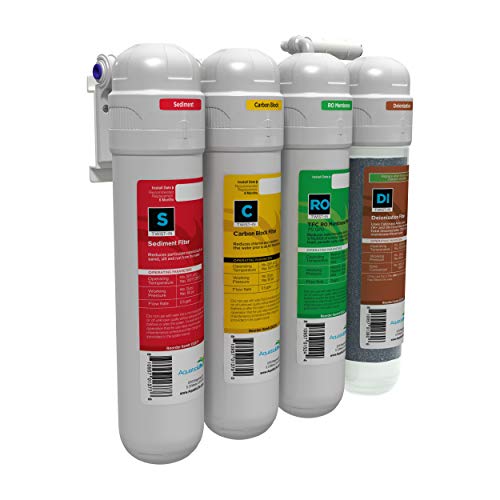
The Twist-In 4-Stage RO/DI system combines sediment, carbon, RO membrane, and DI resin stages to produce up to 75 gallons per day of purified water. It effectively removes dirt and chlorine to prevent clouding and stress on fish, though it does not remove chloramines. This option is better for mid-sized aquariums needing higher daily output than a basic two- or three-stage unit.
Best for: aquariums that require higher daily output and clearer water. Limitation: does not remove chloramines; ensure tap water planning accordingly.
Aquatic Life RO Buddie 3-Stage

The 3-Stage Aquatic Life RO Buddie provides essential filtration to remove debris from tap water. It reduces impurities quickly, delivering simpler clean water for houses with moderate aquarium needs. Best for: beginners or small setups that want reliable filtration with fewer components. Caution: fewer stages mean less comprehensive removal than 4-stage systems.
4-Stage Aquarium RO/DI with Flushing Valve
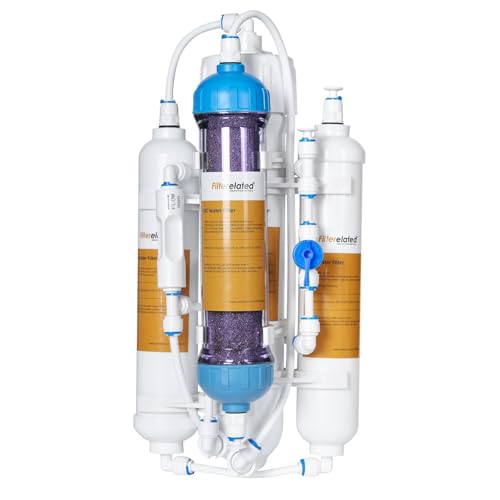
This four-stage system uses PP cotton, activated carbon, RO membrane, and DI resin to bring water down to near 0 ppm TDS. It includes a flushing valve and quick connections for easy cartridge replacement. Best for: aquariums demanding very low TDS and adjustable flushing. Limitation: complex setup may require careful maintenance to maximize DI effectiveness.
Aquatic Life 4-Stage 100 GPD RO/DI
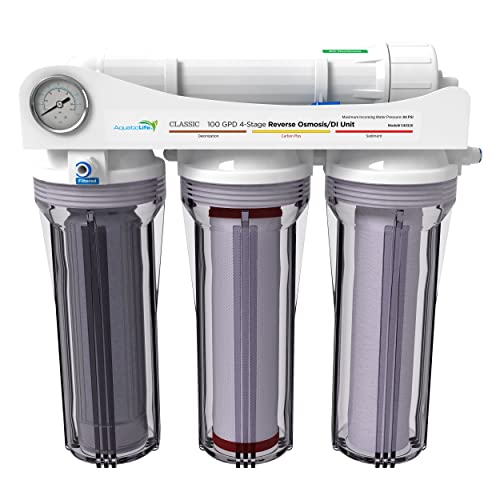
The 100 GPD system offers a complete four-stage filtration including a DI resin cartridge and a color-changing stage to monitor DI saturation. The combination reduces a wide range of contaminants, producing water suitable for sensitive aquatic life. Best for: larger tanks or setups needing high daily output with robust filtration. Caution: monitor DI resin color to know when to replace.
iSpring RCC1DP Tankless RO/DI

The iSpring RCC1DP tankless RO/DI system uses pump-assisted filtration and a 150 GPD membrane for rapid output. It addresses more than 1,000 pollutants, including lead, chlorine, and fluoride, achieving very low TDS in water. Best for: high-demand environments such as large tanks or labs. Limitation: higher complexity and potential installation considerations due to pump and tankless design.
Buying Guide
- What size RO capacity do I need? Match GPD to your tank size and water-change frequency. Larger tanks or frequent changes benefit from higher GPD options like 100–150 GPD.
- Do I need DI resin? DI resin further reduces TDS to near 0 ppm, which is beneficial for sensitive fish and planted tanks. DI is particularly useful if your source water has high TDS.
- Are chloramines a concern? Some systems remove chlorine but not chloramines. If your tap water contains chloramines, look for RO/DI units that explicitly address them or plan pre-treatment options.
- What about space and installation? Tankless and compact units offer flexible placement but may require more plumbing work. Consider available space under the sink or in a utility area.
- Maintenance and replacement parts? Choose models with clearly accessible filter cartridges and readily available DI resin replacements. DI color-change indicators help track resin saturation.
- Water quality goals: If you want near-zero TDS for prized corals or delicate invertebrates, prioritize units with DI stages and high-quality RO membranes.
FAQ
What does GPD indicate for RO systems?
GPD stands for gallons per day and reflects the system’s maximum filtration rate under standard conditions. Higher GPD means faster production of purified water.
Do all RO systems remove chloramines?
No. Some filters remove chlorine but not chloramines. If you have chloraminated tap water, choose a system that explicitly mentions chloramines removal or use a pre-treatment.
Is DI resin always necessary?
Not always. DI resin is beneficial when you require very low TDS, especially for reef tanks or sensitive species. It adds a final polishing stage after RO filtration.
How often should filters be replaced?
Replacement frequency depends on usage and water quality. DI resin life varies with TDS; watch the color change indicator and follow manufacturer guidelines.
Can I install an RO/DI unit myself?
Many units are designed for DIY installation, but some require plumbing and tools. Check the product’s installation instructions and local regulations.
What is the advantage of a tankless RO/DI system?
Tankless designs free up storage space and allow flexible placement, delivering high output without a large reservoir. They may require more complex setup.