Answering the need for reliably purified water, these reverse osmosis (RO) systems are designed for fish tanks and related uses. This guide highlights options best suited for hobbyists and professionals who want consistent, contaminant-free water for aquariums, fountains, and hydroponics. The top picks emphasize ease of use, removal efficiency, and compatibility with common aquarium setups. Whether you need simple 50 GPD units or higher-capacity models, there’s a choice tailored to your tank size and filtration goals.
Buyer profile summary (selected products at a glance):
- Aquatic Life RO Buddie 4-Stage – Ideal for small-to-medium tanks and hobbyists seeking reliable four-stage filtration with RO/DI options.
- Aquatic Life Twist-In 4-Stage – Best for quick maintenance and compact spaces; features a straightforward 4-stage path with DI resin for very pure water.
- Aquatic Life RO Buddie 3-Stage – Good for budget-conscious users needing solid RO filtration with a straightforward setup.
- iSpring RCC1DP Tankless 5-Stage – Best for users wanting high flow and pump-assisted performance in low-pressure environments.
- iSpring RCC1D Tankless 5-Stage – Choose this for space-saving, high-purity output with DI filtration and no traditional tank.
Aquatic Life RO Buddie 4-Stage RO/DI System
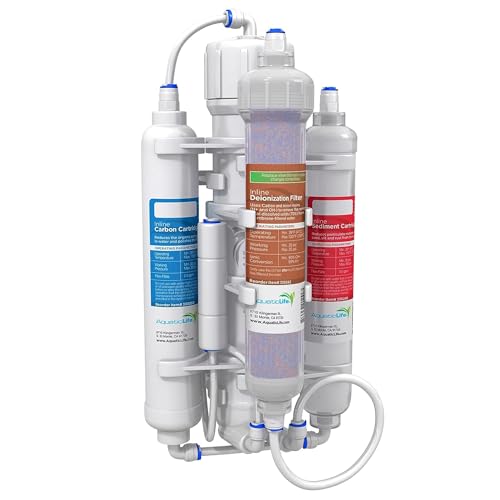
The Aquatic Life RO Buddie 4-Stage RO/DI system uses a four-stage filtration path to remove debris and odors from tap water. It’s designed for aquariums, fountains, and humidifiers, delivering filtered water suitable for modest to mid-sized tanks. Best for hobbyists who want a dependable setup with clear DI options. Note: Chloramines are not removed by this model’s filtration stages.
Best for: Small to medium aquariums where a compact, reliable RO/DI workflow is desired. Limitations include chloramine handling, which may require an additional pre-treatment step.
Aquatic Life Twist-In 4-Stage RO/DI System
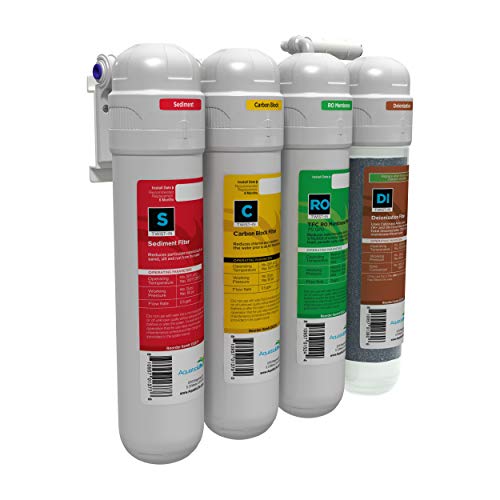
This system features a complete 4-stage filtration setup, including Sediment, Carbon, RO Membrane, and Color-Changing DI Resin. It produces up to 75 GPD and emphasizes high-efficiency removal of dissolved solids. Best for aquarists who need very pure water for sensitive species and prefer a DI resin stage to push toward zero TDS. Note: It does not remove chloramines, so plan chloramine management accordingly.
Best for: Aquariums requiring very pure water with a DI stage for ultra-low TDS. Better for: setups where chloramines are already mitigated by other filtration steps.
Aquatic Life RO Buddie 3-Stage System

The 3-stage Aquatic Life RO Buddie provides efficient filtration by removing debris and reducing dissolved solids, ensuring clean water for fish tanks and humidifiers. It’s suitable for hobbyists who want dependable filtration without extra stages. Caution: It may not remove chloramines, depending on the filtration stages selected.
Best for: Budget-conscious hobbyists who want straightforward RO filtration for smaller tanks. Choose this if you prioritize cost and simplicity over maximum TDS reduction.
Max Water 6-Stage RO/DI System

The Max Water unit provides a six-stage filtration path, combining RO and DI stages with color-changing indicators and simplified color-coded Quick Connect fittings. It targets thorough impurity removal, including odors and metals, and is positioned for users who want robust water purification for aquariums and hydroponics. Caution: The system’s six stages may require more maintenance and monitoring to keep DI resin fresh.
Best for: Enthusiasts needing thorough filtration and DI depth. For tighter budgets, consider if six stages match your maintenance capacity.
iSpring RCC1DP Tankless RO/DI System

The RCC1DP provides a 5-stage de-ionization process with a pump-assisted, tankless design and a 150 GPD RO membrane. It emphasizes high impurity reduction (>1,000 pollutants) and robust performance even at low water pressure. Best for: aquariums requiring fast purification and reliable supply where space is a concern. Limitation: Tankless design may demand careful installation and monitoring to ensure consistent output in some setups.
iSpring RCC1D Tankless RO/DI System

The RCC1D system combines five stages with a DI filter in a tankless design, featuring a 150 GPD membrane and a DI stage to push water purity toward very low TDS. Best for: users who want a compact, high-purity system without an external tank and who value steady output in varied applications. Caution: The tankless design requires precise installation to maximize flow and purity.
Aquatic Life 4-Stage RO/DI Filter System
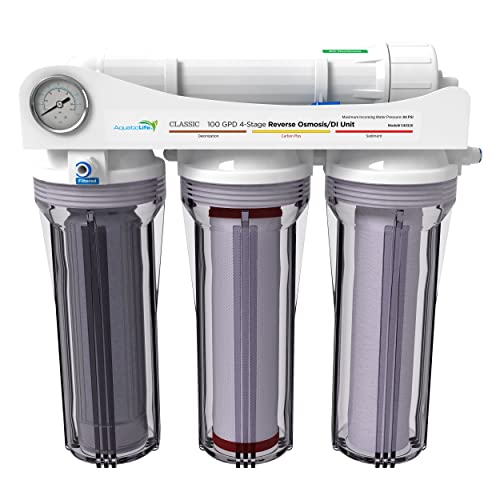
This four-stage RO/DI filtration unit features a sediment cartridge, Carbon Plus cartridge, 100 GPD membrane, and a color-changing DI resin cartridge for easy monitoring. Best for: aquarists who want a complete RO/DI package in one compact system. Limitation: The Carbons are designed for chloramines removal, but performance can vary with local water chemistry.
Geekpure 3-Stage Portable RO System

The Geekpure 3-stage RO system offers 100 GPD capacity with a compact design and 0.0001-micron filtration. It’s designed for aquarium use or residential roles like baby formula preparation and crystal-clear ice. Best for: users needing portable filtration with strong contaminant reduction. Caution: The ratio of pure water to waste water is about 1:2; plan disposal accordingly.
Buying Guide: Key Considerations For Your RO System
- Water purity goals: Decide if you need to reach very low TDS with DI stages or if standard RO filtration suffices for your fish and plants.
- Flow rate vs. storage: Tankless designs save space but may require pump or pressure support. Traditional storage tanks can soften supply fluctuations for larger tanks.
- Chlorine, chloramines handling: Some systems remove chlorine but not chloramines. If your tap water contains chloramines, choose a unit designed to address them or add a compatible pre-treatment.
- Stage configuration: More stages generally improve purification but require more maintenance. Consider 3-6 stage configurations based on your needs and maintenance capacity.
- Ease of maintenance: Look for color-changing DI resin, quick-connect fittings, and clear replacement part availability for long-term upkeep.
- Space and installation: Tankless models save space but may need more precise plumbing. Freestanding units should fit your cabinet or utility area without blocking access.
- Application breadth: If you also use water for hydroponics or humidification, ensure the system’s output meets those needs without compromising aquarium safety.
Frequently Asked Questions
- What is GPD and why does it matter? GPD stands for gallons per day and indicates how much purified water the system can produce. Higher GPD suits larger tanks or higher usage, while lower GPD is suitable for smaller setups.
- Do these systems remove chloramines? Some do not; chloramines may require additional filtration or a separate cartridge. Check the product’s filtration stages and notes.
- Is a tankless RO system better than a traditional RO? Tankless designs save space and provide continuous flow, but installation clarity is essential to maintain steady output in varied water pressures.
- What maintenance is involved? Regular filter cartridge replacement, DI resin care (if used), and sanitizing connections keep the system performing well.
- Can these systems be used for hydroponics? Yes, many RO/DI systems produce water suitable for hydroponics, but confirm the system’s mineral content adjustments if needed for plant health.
- Should I buy extra DI resin or replacement membranes? DI resin may extend water purity, especially in DI stages. Replacement membranes depend on water quality and GPD demand; plan ahead for replacements.