If you need reliable, clean water for fish tanks, fountains, or humidifiers, a reverse osmosis (RO) system is a smart investment. This guide highlights five top RO/DI units that deliver consistent purified water for hobbyist and professional aquarists alike. Each option is explained with ideal buyers in mind, including capacity, filtration stages, and practical limitations. Use this overview to compare suitability for freshwater or saltwater setups, small tanks, or larger installations.
| Product | Stages | GPD | Best For |
|---|---|---|---|
| Aquatic Life RO Buddie 4-Stage | 4-Stage | 50 | Smaller tanks; hobbyists on a budget |
| Aquatic Life Twist-In 4-Stage | 4-Stage | 75 | Moderate setups; easy DI integration |
| Geekpure 4 Stage Portable RO | 4-Stage + DI | 100 | Apartment or travel-friendly; higher purity |
| Aquatic Life RO Buddie 3-Stage | 3-Stage | 50 | Budget-conscious beginners |
| iSpring RCC1DP Tankless RO/DI | 5-Stage | 150 | High-demand tanks; lab-grade needs |
Introduction to buyers: If you’re new to RO systems, look for systems with clear cartridge replacement guidance, integrated shutoff valves, and a straightforward setup. If you keep multiple tanks or require very low TDS (total dissolved solids), consider models offering DI resin stages and higher GPD. The following sections detail five well-rounded options to help you decide which RO/DI unit aligns with your aquarium type, space, and maintenance preferences.
Aquatic Life RO Buddie 4-Stage RO/DI System
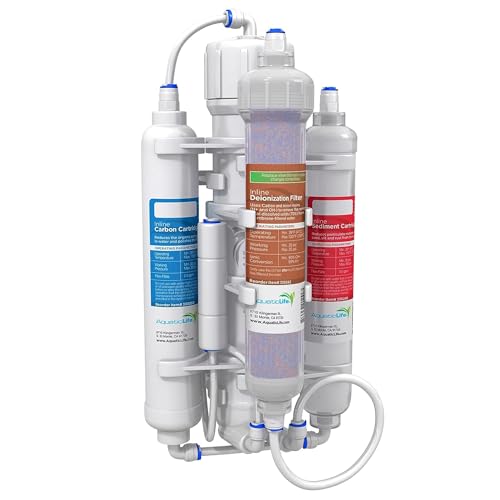
The Aquatic Life RO Buddie 4-Stage is designed to deliver clean, filtered water for aquariums, fountains, and other water features. It uses a sediment filter to remove dirt like sand and silt and a carbon block filter to reduce chlorine and odors. This unit is best for hobbyists who want reliable RO water without a lot of added complexity. A limitation to note: chloramines are not removed, so systems with chloraminated tap water may require an additional treatment step.
Best for: Small to medium fresh or saltwater tanks, beginner to intermediate hobbyists seeking straightforward RO/DI filtration.
Aquatic Life Twist-In 4-Stage RO/DI System
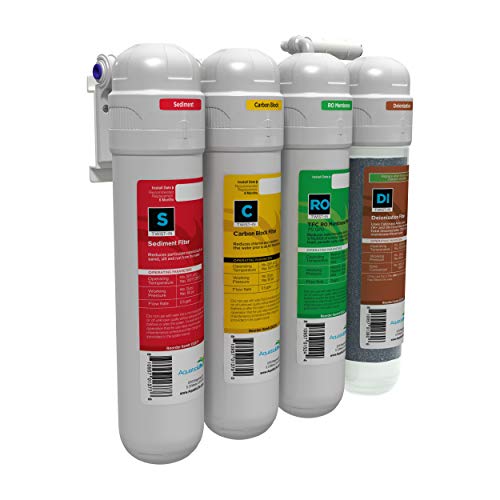
This 4-stage system combines sediment, carbon, RO membrane, and a DI resin with a color-changing indicator to monitor resin saturation. It produces up to 75 GPD and emphasizes removing dirt, rust, and chlorine to create very clear water. Note: it does not remove chloramines, so applicants with chloraminated water should plan an additional treatment step.
Best for: Medium-sized tanks and users who value easy DI monitoring and many stages for high-purity water.
Geekpure 4 Stage Portable RO System

Geekpure’s portable 4-stage RO system emphasizes versatility, with a DI resin stage to drive TDS to near zero. It’s pitched as suitable for apartments, RVs, boats, and other mobile setups. It includes NSF/ANSI-compliant components and a rapid filter replacement design. A limitation: some users may need space for the waste water line and proper drainage.
Best for: Small living spaces, travel or temporary installations, and users who want near-zero TDS for sensitive aquariums.
Aquatic Life RO Buddie 3-Stage System
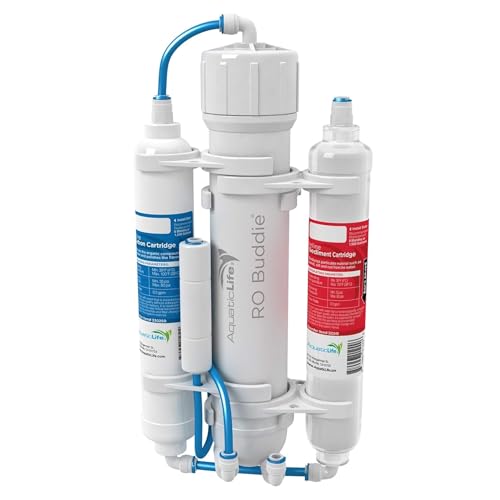
This 3-stage RO unit focuses on removing up to 98% of total dissolved solids from tap water, delivering clean water quickly for aquariums and water features. The sediment stage screens out dirt that can cloud water. Best for those monitoring cost and who need consistent RO water for smaller setups. A caution: fewer stages mean lower pre-filtration for contaminants that a DI resin might address in higher-end units.
Best for: Entry-level users prioritizing affordability and quick, reliable RO water for modest tanks.
iSpring RCC1DP Tankless RO/DI System

The iSpring RCC1DP is a 5-stage, tankless RO/DI system rated up to 150 GPD. It emphasizes high impurity reduction across a broad spectrum of contaminants, including lead and fluoride, with a pump-assisted design to maintain performance in low-pressure settings. It’s suited for high-demand tanks or facilities needing robust output. A potential drawback is the complexity of installation and maintenance for first-time buyers.
Best for: Large tanks, high-output needs, or environments requiring aggressive contaminant removal and consistent flow.
Buying Guide
What should you consider when choosing an RO/DI system?
- Filtration stages: More stages generally mean purer water. 4- or 5-stage configurations with DI resin offer lower TDS levels, but check your water source and whether you need DI for near-zero TDS.
- GPD (gallons per day): Match capacity to your tank size and water usage. Higher GPD reduces wait time for purified water but may increase waste water or require more space.
- Chlorine vs. chloramines: Some filters remove chlorine but not chloramines. If your city uses chloramines, ensure your system includes a suitable stage or plan a separate treatment.
- DI resin monitoring: Color-changing DI resins help you know when to replace resin. This improves reliability for very low-TDS needs.
- Space and installation: Tankless or portable units offer flexibility but may require more careful plumbing. Consider under-sink or countertop setups based on space.
- Maintenance and replacement parts: Look for systems with readily available replacement cartridges and clear replacement intervals to minimize downtime.
Which features matter most for aquarium use?
- Low TDS output: Critical for sensitive species and reef tanks; DI stages help reach near-zero TDS.
- Sediment and carbon pre-filters: Preserve RO membrane by removing particulates and chlorine before they reach the membrane.
- Flushing valve: A flushing valve helps clear contaminants and extend membrane life; consider models with this feature.
- Water waste management: Some systems produce a significant amount of waste water; plan drainage and space accordingly.
How to plan installation and ongoing care?
- Locate near a cold water supply for best performance and energy efficiency.
- Prepare for regular cartridge changes per the manufacturer’s schedule and your water quality.
- Keep spare DI resin or cartridges, especially if you maintain multiple tanks with differing water requirements.
FAQ
- What does GPD mean and why does it matter for my aquarium?
GPD stands for gallons per day. It indicates how quickly the unit can produce purified water. Choose a higher GPD if you need rapid changes or frequent water production for large tanks. - Is RO water suitable for all fish and plants?
RO water is free of most dissolved minerals. Some aquariums require remineralization to stabilize pH and mineral levels; plan supplementation if needed for particular species. - Do all systems remove chloramines?
No. Many systems remove chlorine but not chloramines. Check the product features or add a chloramine-removal stage if your tap water includes chloramines. - What is a DI resin and when should I replace it?
DI resin removes ions to bring water to near-zero TDS. DI resin color indicators help determine replacement timing based on usage and water quality. - Can I install an RO/DI system myself?
Many systems are designed for DIY installation under sinks or on counters, but follow the user manual carefully. Some parts may require professional assistance, especially for high-output or tankless setups.