Facing hard water or unclear taste? A well-chosen RO DI water unit under your sink can deliver consistently pure, great-tasting water. This guide highlights five dependable under-sink systems suited for American homes, from mineral-remineralizing options to advanced 75–75 GPD models. Each selection targets common needs: high filtration accuracy, user-friendly installation, and reliable performance. Best for households seeking strong contaminant reduction, best for small families, or best for aquarists pairing with RO/DI filtration. The table below compares key choices at a glance.
| Product | Best For | Key Benefit |
|---|---|---|
| iSpring RCC7AK | Families wanting mineral-rich final water | pH+ remineralization with clear filter housing |
| Express Water RO5DX | Budget-conscious homes seeking strong impurity reduction | High impurity removal, quick install |
| APEC ROES-PH75X | Alkaline boost with calcium for taste | Six-stage filtration with calcium minerals |
| iSpring RCC7 | Compact, leak-safe under-sink RO | Low maintenance, top-mounted faucet design |
| FS-TFC 5-Stage | Homes needing ultra-high contaminant reduction | 99.999% removal across 1000+ contaminants |
iSpring RCC7AK 6-Stage RO System With Mineral Boost

This system uses a 6-stage design with a patent-pending AK mineral stage that adds essential minerals and balances pH for a refreshing finish. The top-mounted faucet installation simplifies setup, especially for countertop access, and the transparent first-stage housing makes filter status easy to monitor. Best for households that want enhanced taste and minerals without manual post-filtration steps. Limitations include ongoing filter changes and occasional calibration to maintain pH balance.
Express Water RO5DX 5-Stage Under Sink RO System

Express Water offers a 5-stage filter setup designed to reduce up to 99.99% of impurities, including lead, chlorine, fluoride, PFAs/PFOs, arsenic, and more. The system emphasizes straightforward installation and clear instruction sets, ideal for DIY homeowners. Best for homes seeking strong contaminant removal without complex assembly. A potential limitation is that some households may want a remineralization stage for taste, which this model does not include by default.
APEC Water ROES-PH75X 6-Stage Alkaline RO System

APEC’s model adds a calcium-enriched remineralization stage to a robust 6-stage filtration, delivering up to 75 GPD with high impurity removal. The system is designed for long-term filtration integrity, including a high-capacity pre-filter set. Best for households wanting significantly purer water with improved alkalinity and taste. Caution: max Total Dissolved Solids and feed pressure ranges should be matched to this unit’s requirements for optimal performance.
iSpring RCC7 – High Capacity 5-Stage RO System

This 5-stage system emphasizes broad contaminant reduction, including PFAS, chlorine, fluoride, and heavy metals, with a noticeable 80–90% reduction in total dissolved solids. It’s NSF/ANSI 58 certified and features a transparent first-stage housing and leak-prevention design. Best for families seeking a proven, reliable under-sink RO with a straightforward maintenance routine. Limitation: no remineralization stage means water may be flatter in taste without post-treatment options.
FS-TFC 5-Stage RO System with Extra Filters
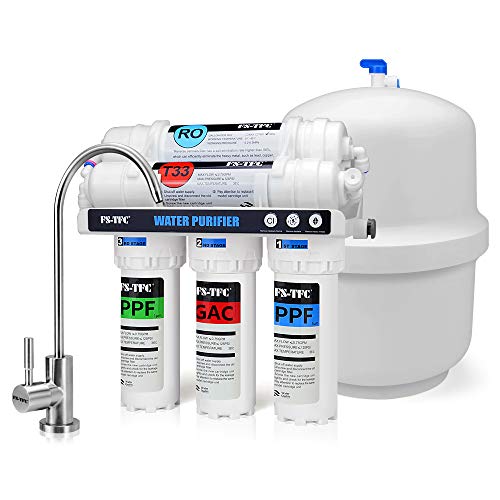
FS-TFC markets a compact 5-stage RO with a high 99.999% removal rate for more than 1,000 contaminants. It’s designed for space-saving under-sink installation and includes a 18 L/H full-flow rate. Best for users needing ultra-high contaminant reduction in homes with limited space. A potential limitation is that some users may require additional remineralization for taste preferences despite the high purity level.
Buying Guide: Key Considerations for Your RO DI Unit
- Filtration stages: More stages generally translate to higher contaminant removal and the option to add remineralization. Choose 4–6 stages based on your water quality goals.
- Ph balance and minerals: If you prefer mineral-rich water, select models with a remineralization or alkaline stage (e.g., AK stage or calcium-enriched filters).
- Water quality goals: Target high removal rates for contaminants like chlorine, lead, fluoride, PFAS, and arsenic. Check NSF/ANSI certifications where possible.
- Installation: Consider top-mounted faucets, transparent housings for visibility, and DIY-friendly setup. Undersink installs are common, but fit your cabinet space.
- Maintenance: Evaluate filter replacement frequency, ease of filter changes, and cost of replacement cartridges over time.
- Capacity needs: GPD ratings matter if you use large amounts of purified water or have multiple faucets in the home.
Frequently Asked Questions
- What is RO DI water, and why choose it?
RO DI combines reverse osmosis with deionization to remove a broad spectrum of contaminants, delivering highly purified water suitable for drinking and sensitive applications.
- Do these systems require electricity?
Most under-sink RO systems do not require electricity; they rely on water pressure to push water through membranes.
- Can RO water taste flat?
Some systems remove minerals that contribute to taste. Look for models with remineralization or consider post-filter mineral cartridges if taste matters.
- How often should I replace filters?
Replacement intervals vary by model, water usage, and water quality. Follow manufacturer recommendations and monitor filter housing for changes.
- Are these systems safe for households with well water?
Yes, but well water often contains higher contaminant levels. Choose a system with robust impurity reduction and consider pre-filtration for sediment-heavy sources.
- Is professional installation required?
Most units are designed for DIY setup, but some homes with complex plumbing may benefit from professional installation.