Answering the question “Which reef water test kit should I choose?” this guide highlights five well-rounded options that help reef hobbyists monitor essential water parameters. Suitable buyers include reefkeepers seeking reliable, multi-parameter testing, beginners needing straightforward kits, and those transitioning from strips to liquid tests. Below, you’ll find concise reasons to choose each product, plus practical cautions and a quick buying guide to compare key features side-by-side.
Summary of chosen products:
| Product | |||
|---|---|---|---|
| API Reef Master Test Kit | Reef hobbyists needing Calcium, dKH, Phosphate, Nitrate | Calcium, carbonate hardness (KH), phosphate, nitrate | |
| API Saltwater Master Test Kit | Saltwater beginners and mixed reef setups | High-range pH, ammonia, nitrite, nitrate | |
| Salifert Master Reef Testing Combo Kit | Marine aquariums needing core parameter coverage | Calcium, nitrate, phosphate, pH, alkalinity, magnesium | |
| DROPLYTIX Digital 10-in-1 Test Strips | All-in-one digital readings for reef and mixed tanks | Ammonia, nitrate, nitrite, pH, GH/KH, chlorine, more | |
| Pawfly 5 in 1 Aquarium Master Test Kit | Freshwater and saltwater tanks needing 5 key tests | pH, nitrite, nitrate, ammonia, phosphate |
API Reef Master Test Kit Reef Aquarium Water Test Kit
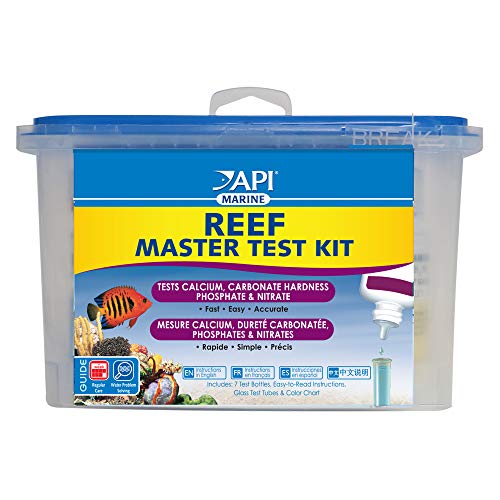
The API Reef Master Test Kit focuses on four vital reef parameters: calcium, carbonate hardness, phosphate, and nitrate. It includes seven bottles of testing solutions, two color cards, and four test tubes with caps. This kit is best for reef aquarists who want a compact, reliable option specifically tuned for monitoring calcium and alkalinity balance—critical for coral growth and skeletal structure. If you maintain a reef system with corals that demand stable calcium and phosphate control, this kit offers a straightforward testing workflow. A potential limitation is that it emphasizes four parameters, so users needing broader tests might supplement with additional kits.
API Saltwater Master Test Kit
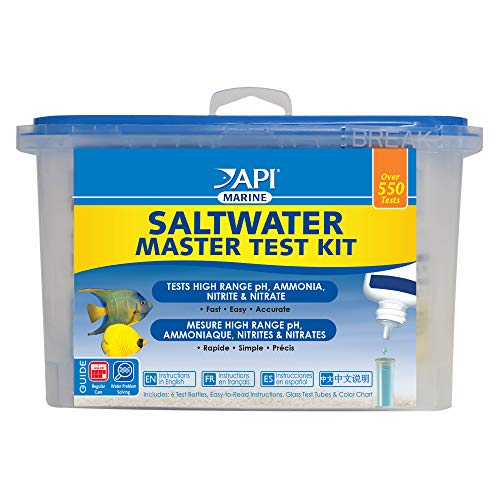
This kit provides 550 tests and covers high-range pH, ammonia, nitrite, and nitrate, making it a solid choice for saltwater setups that may experience dynamic parameters. Best for reef tanks that require frequent monitoring of nitrogen species and pH, especially during unstable periods or new tank cycles. The kit’s larger test count helps reduce cost per test for ongoing maintenance. A caveat is that it centers primarily on nitrogen compounds, pH, and related high-range metrics; you may want additional tests for calcium and alkalinity in more demanding reefs.
Salifert Master Reef Testing Combo Kit

The Salifert combo kit includes separate tests for calcium, nitrate, phosphate, pH, alkalinity, and magnesium. It targets core reef parameters and is widely respected for precision and accuracy in laboratory-style testing. This option is best for experienced reefkeepers who want comprehensive parameter coverage without relying on multi-parameter strips. A potential limitation is that it requires managing multiple test kits rather than a single all-in-one kit, which could be less convenient for quick checks throughout the week.
DROPLYTIX Digital 10-in-1 Aquarium Test Strips

This app-enabled, 10-in-1 kit uses digital strip readings to avoid color-guessing and provides rapid results via a smartphone app. It supports freshwater, saltwater, reef setups, and other tank types, making it a flexible option for mixed tanks. Best for hobbyists who prefer digital readouts and real-time tracking. A limitation is that app compatibility or data interpretation can vary by device and app version, so confirm compatibility before purchase.
Pawfly 5 in 1 Aquarium Master Test Kit

The Pawfly 5-in-1 kit covers pH, nitrite, nitrate, ammonia, and phosphate. It is suitable for both freshwater and saltwater environments and comes with color-matching charts for quick, at-a-glance results. Best for hobbyists who want a concise five-parameter overview in a single kit. A limitation is that it may not include calcium or alkalinity, which reef keepers may monitor separately for coral growth and skeletal integrity.
Buying Guide: Reef Water Test Kit Essentials
What should I test first in a reef tank?
Calcium and alkalinity (carbonate hardness) are foundational for coral growth. Nitrate and phosphate levels affect algae control and coral health. Depending on your setup, you may also monitor pH, magnesium, and ammonia during cycling or if you notice trouble.
Liquid tests vs. test strips vs. digital tests
Liquid tests offer precise readings for many parameters but require more handling steps. Test strips are quick but may sacrifice some accuracy. Digital tests (or app-enabled strips) provide convenient data logging and easier interpretation, which can help with consistent reef maintenance.
How many tests per week should I perform?
A typical reef keeper checks ammonia, nitrite, nitrate, pH, calcium, and alkalinity multiple times per week during cycling or when parameters are unstable. After stabilization, many hobbyists perform weekly checks for core parameters or during water changes and dosing adjustments.
Which kit should I choose for a beginner reef tank?
A balanced choice is a starter kit that covers calcium, alkalinity, nitrate, phosphate, and pH, with an option to add magnesium later. Consider a kit that provides clear color charts and straightforward instructions to reduce interpretation errors.
What are common limitations to watch for?
Some kits emphasize only a subset of parameters, so you may need additional tests to get a complete picture. Others rely on color judgment, which can vary with lighting and perception. Digital options can mitigate some of these issues but may depend on device compatibility and app updates.
Tips for accurate results
- Follow the kit instructions carefully, especially timing and storage.
- Rinse test tubes before use to avoid cross-contamination.
- Test water after an equal period of dosing or changes to compare trends accurately.
FAQ
- Q: How often should I test a new reef tank? A: Test more frequently during the first 4–6 weeks to monitor cycling, then adjust frequency based on stability and maintenance routine.
- Q: Which parameters are most critical for reef health? A: Calcium, alkalinity (KH), pH, nitrate, and phosphate are commonly prioritized, with magnesium as needed for stability.
- Q: Can I rely on test strips for reef tanks? A: Strips are convenient but may be less precise; many reefkeepers supplement with liquid or digital tests for key parameters.
- Q: Is a single kit enough for reef monitoring? A: A comprehensive approach may require multiple kits or a multi-parameter system to cover core and secondary parameters.
- Q: Do digital tests replace color charts? A: Digital readings reduce color interpretation errors but may require occasional cross-checks with traditional methods to confirm accuracy.