Answering the needs of reef hobbyists, this guide highlights the best reef tank water change system options to maintain stable salinity and clean water. The top picks range from automatic top-off (ATO) devices to complete RO/DI filtration units and efficient gravel cleaners. This article targets reef keepers, nano tanks, and larger systems seeking reliable water changes with minimal hassle. Each product section explains who it’s best for, why it was selected, and any practical limits to watch for when planning maintenance.
Summary table of selected products:
- Useek Auto Top Off for Saltwater Aquarium Water ATO System for Both Reef and Fresh Tank – Blue — Best for automatic salinity stabilization in reef and mixed tanks.
- enomol Gravel Vacuum for Aquarium Water Changer — Best for hands-off gravel cleaning and water changes in mid to large tanks.
- Aquatic Life Twist-in 4-Stage RO/DI System — Best for high-quality purified water on moderate to larger setups.
- LiquaGen 5 Stage RO/DI System — Best for pre-assembled, space-efficient ultra-pure water for reef systems.
- Aquatic Life 4-Stage RO/DI System with Carbon Plus — Best value for reliable filtration and chloramine/chlorine reduction.
Best Reef-Ready ATO For Stable Salinity

The Useek Auto Top Off (ATO) system helps reef and freshwater tanks maintain water level and stable salinity as evaporation occurs. It continuously refills to prevent salinity spikes, making it ideal for small to medium reef setups and rimmed or rimless tanks. It includes real-time protection features to avoid overfilling and dry running. Best for hobbyists seeking automated water level control with compact design.
Best for: reef tanks that require steady salinity and minimal manual top-offs; nano to small-to-mid sized systems where space is limited. Caution: ensure compatible sump or tank dimensions to fit the compact 0.7-inch diameter footprint.
Gravel Vacuum for Efficient Water Changes

This gravel vacuum enables quick water changes with two valves and a long hose, driven by tap water pressure. It is well-suited for medium to large tanks and reduces the need for repeated bucket cleanups. It also includes a built-in filter for gravel cleaning, helping remove debris without disturbing fish. Best for: hobbyists who want a reliable, no-fuss water change tool with gravel agitation capabilities.
Best for: larger tanks or setups where gravel debris is common. Caution: operation relies on tap water pressure and may need temporary water routing in smaller systems.
RO/DI Filtration: Aquatic Life Twist-In Unit
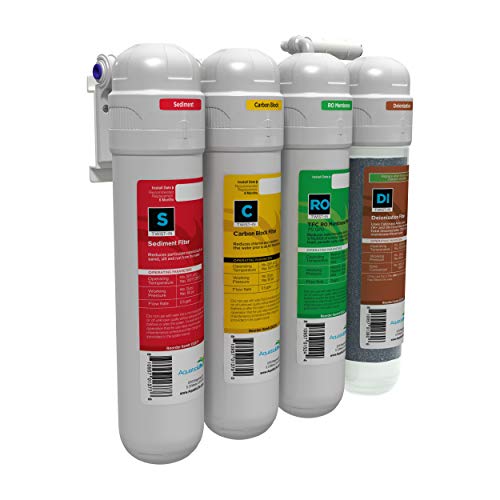
This 4-stage RO/DI system produces up to 75 GPD of filtered water, featuring a sediment filter, carbon stages, RO membrane, and an inline DI cartridge. It reduces contaminants and offers effective sediment removal. Best for: reef or fish tanks that require clean, RO water with reliable filtration. Caution: may require space for installation and plumbing connections.
LiquaGen 5-Stage RO/DI System

This compact five-stage system combines sediment filtration, carbon media, RO membranes, and DI canisters to remove chlorine, chloramines, and other impurities. It is described as space-efficient and suitable for reef and freshwater applications, including live rock and plants. Best for: reef keepers seeking a pre-assembled, space-saving unit with robust filtration. Caution: check compatibility with a storage tank and auto shut-off if needed.
Aquatic Life 4-Stage RO/DI System with Carbon Plus
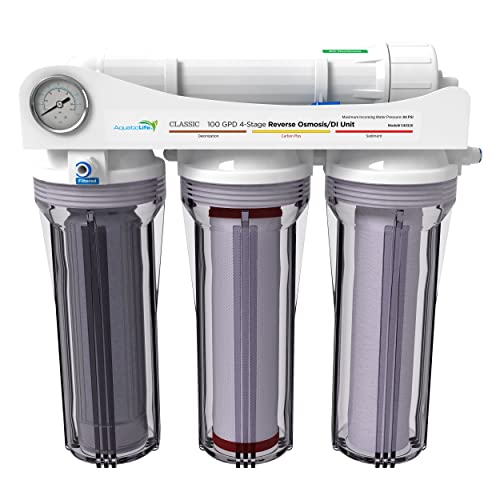
This 4-stage RO/DI filtration unit offers a dedicated Carbon Plus cartridge designed to remove up to 98% of chloramines and 99% of chlorine, ensuring high-quality purified water for reef environments. It supports up to 100 GPD and includes a color-changing resin cartridge for easy resin life monitoring. Best for: reef tanks needing reliable chemical reduction and straightforward resin monitoring. Caution: ensure adequate space for installation and tubing routing.
Buying Guide
What type of water change system do you need? Consider automatic top-off (ATO) for salinity stability, gravel cleaners for debris management, and RO/DI systems for pure water. Reef tanks benefit from stable salinity, clean water, and minimal maintenance, so combining an ATO with a high-quality RO/DI unit often yields the best results.
Key questions to guide your choice:
- What tank size and shape do you have? Smaller tanks may benefit from compact ATOs and space-efficient RO/DI units.
- How often do you perform water changes? Automated systems reduce routine labor, while manual tools fit smaller or budget-focused setups.
- Is salinity stability the top priority? If so, prioritize a reliable ATO and a filtration system that delivers consistent water quality.
- What is your water source? If your tap water contains chlorine or chloramines, a DI/RO solution is essential before reef aquarist use.
- Do you have enough space for equipment? Consider footprint, tubing routing, and ease of installation when choosing units.
Comparison at a Glance
- ATO: Best for automatic salinity control and reduced maintenance in reef setups.
- Gravel vacuum: Best for quick, hands-free water changes with gravel cleaning.
- RO/DI systems: Best for high-quality water; essential for sensitive corals and invertebrates.
- All-in-one RO/DI: Best for space-saving filtration with straightforward resin monitoring.
FAQ
- What does RO/DI stand for? Reverse Osmosis and Deionization, a filtration method that removes contaminants and ions for ultra-pure water.
- Do I need an ATO for a reef tank? An ATO helps maintain stable salinity and water level as evaporation occurs, which is common in reef systems.
- How often should I change RO/DI resin? Resin color change indicates it’s time for replacement; monitor using the inline color-changing resin cartridges.
- Can I use RO water directly for reef tanks? Yes, but ensure trace elements and reef-ready salinity are managed; RO water minimizes undesired contaminants.
- Is it better to use a single system or multiple devices? A combination often yields the best results: ATO for salinity stability and RO/DI for water purity.
- What safety features should I look for in an ATO? Features like auto shut-off, dry-run protection, and sensor-based alerts help prevent overfilling and equipment damage.