If you’re seeking a reliable pressurized UV pond filter, you’re looking for clear water, strong filtration, and easy maintenance. This guide highlights five top options suited for koi and ornamental ponds, plus landscape pools. Each product is described for who it’s best for, with practical reasons to help you compare. The included buying guide answers common questions to help you choose the right flow rate, filtration stages, and UV features for your setup.
Buyer Summary Table
| Product | Best For | Throughput | ||
|---|---|---|---|---|
| VIVOHOME Pressurized Filter (1580 GPH) | Koi ponds up to 800 gal; ornamental up to 1600 gal | 1580 GPH | 13W UV lamp | Backflush and modular design |
| VIVOGROW Bio Pressure Filter (1580 GPH) | Koi ponds up to 800 gal; landscape pools up to 1600 gal | 1580 GPH | 13W UV-C | 4 replaceable sponges |
| TotalPond Complete Filter with UV | Ponds up to 1200 gal; easy integration with existing pump | Depends on pump | UV clarifier | Bio-balls promote beneficial bacteria |
| VIVOGROW Bio Pressure Filter (1050 GPH) | Ponds 260–1050 gal; decorative ponds | 1050 GPH | UV lamp | 3 replaceable sponges |
| IRONMAX Pond Filter (2630 GPH) | Decorative and koi ponds 1300–2600 gal | 2630 GPH | 13W UV light | Backflush function |
VIVOHOME Pressurized Biological Pond Filter with 13W Light
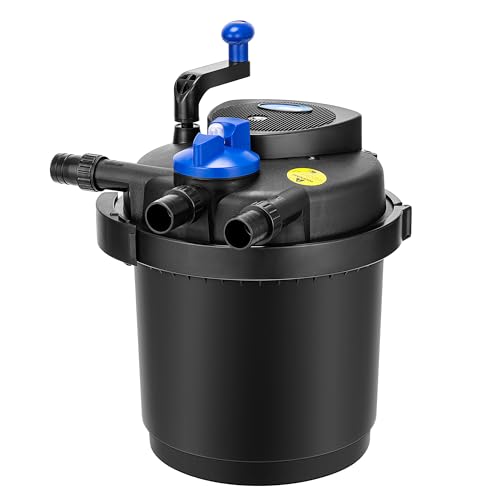
This filter delivers up to 1580 GPH and supports ornamental ponds up to 1600 gallons or koi ponds up to 800 gallons. It uses a reusable coarse and fine sponge system with two blue 20 PPI sponges and two yellow 25 PPI sponges, plus a 13W clarifying lamp for clearer water. Best for steady, reliable bio-mechanical filtration in medium-sized ponds. The backflush operation and modular lid facilitate maintenance. Caution: ensure your pump head and plumbing are compatible with the 1580 GPH performance to avoid short cycling.
VIVOGROW Bio Pressure Pond Filter with 13W UV-C Light

This model provides a strong 1840 GPH throughflow, suitable for koi ponds up to 1000 gallons or landscape pools up to 2100 gallons. Built with high-quality ABS and four replaceable filter sponges, it helps maintain water clarity over longer periods. A top lid turbidity indicator alerts when cleaning is needed, and a built-in UV lamp purifies water as it passes through. Better for larger decorative features or ponds needing robust filtration with visible maintenance indicators. Choose this if you want a larger flow and replaceable sponge set.
TotalPond Complete Pond Filter with UV Clarifier
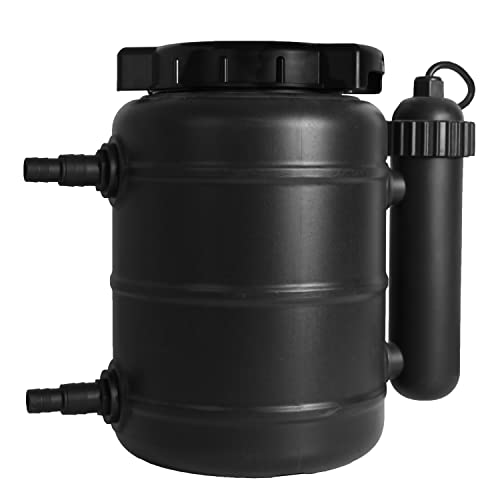
The Complete Pressurized Pond Filter with UV Clarifier is designed for ponds up to 1200 gallons. It works with your existing pump to provide mechanical cleaning, while bio-balls promote beneficial bacteria growth. The UV clarifier helps reduce green water. This option is best for straightforward setups seeking integrated UV clarification without an elaborate filter stack. Limitation: system performance depends on your pump compatibility and head loss; verify pump flow to meet the filter’s throughput needs.
VIVOGROW Bio Pressure Pond Filter, 1050 GPH

With a maximum flow of 1050 GPH, this model suits decorative ponds and smaller koi setups under about 500 gallons. It uses three replaceable sponges and a built-in UV lamp for water clarity. The lid turbidity indicator helps signal when cleaning is needed. This is a practical pick for petite ponds where energy efficiency and compact footprint matter. Best for small-to-medium ornamental ponds; avoid if you need higher throughput for larger ponds.
IRONMAX Pond Filter with 13W Light and Backflush, 2630 GPH

This backflush-enabled filter delivers up to 2630 GPH, suitable for decorative ponds up to 2600 gallons and koi ponds up to 1300 gallons. It features a 13W lamp, multiple filter stages with sponges, and bio-balls for enhanced biological filtration. It is well-suited for larger or more demanding pond environments. Caution: its higher throughput may require a larger pump and careful plumbing to prevent excessive head pressure.
Buying Guide
How to choose a pressurized UV pond filter
- Throughput vs. pond size: Match GPH to pond volume and desired turnover. Larger ponds benefit from higher GPH to maintain clean water and prevent stagnation.
- Filtration stages: Look for a system combining mechanical filtration (sponges or pads) and biological media (bio-balls). This supports healthy bacteria and clearer water.
- UV light strength: A built-in UV clarifier helps reduce algae; consider the wattage relative to pond size. Check lamp replacement intervals and compatibility with your maintenance routine.
- Maintenance features: Backflush capability and modular lids save time. Replaceable sponges simplify upkeep and extend filter life.
- Durability and materials: ABS plastic with good insulation and weather resistance improves longevity for outdoor use.
Comparative Questions To Ask Before Buying
- Is the filter capacity adequate for my pond’s volume and desired water turnover?
- Does the unit include a UV clarifier, and is the lamp accessible for replacement?
- Are there replaceable sponge stages, and how easy is backflushing?
- What pump compatibility is required for the intended GPH flow?
- How does the filter perform in varying weather conditions and sun exposure?
Common Pitfalls And How To Avoid Them
- Overestimating pond size: Choose a filter with a capacity higher than your current pond volume to accommodate future growth.
- Ignoring maintenance needs: Prioritize systems with clear indicators and simple access to sponges and UV components.
- neglecting pump compatibility: Ensure the pump head and flow align with the filter’s maximum throughput to prevent inefficiency.
FAQ
- What is a pressurized pond filter? A pressurized filter uses a sealed chamber to filter water with an external pump, often including UV clarification for algae control.
- Do I need UV light for pond clarity? UV helps reduce algae and keeps water clearer, especially in sunny or nutrient-rich ponds.
- How often should I backflush a pressurized filter? In general, backflush when the water runs clear during the cleaning cycle or when a turbidity indicator shows it’s needed.
- Can these filters handle koi ponds? Yes, several models are designed for koi ponds up to around 800–1600 gallons, depending on the unit.
- Is replacement sponge maintenance necessary? Yes; replacing or cleaning sponges maintains effective filtration and reduces clogs.
- What maintenance schedule is recommended? Regular inspection weekly, backflush as needed, and periodic replacement of UV lamps per manufacturer guidance.