If you’re looking to protect pond fish during cold weather, a pond heater or de-icer is essential. This guide highlights five reliable options and explains who each is best for, so you can pick the right heater for your pond size, fish type, and climate. The top picks cover outdoor pond deicers and submersible aquarium heaters, with clear notes on when to choose one over another.
| Product | Best For |
|---|---|
| HITOP Outdoor Pond Heater (150W / 300W / 600W) | Small to mid-sized outdoor ponds that need localized ice melt and safe breathing holes for fish |
| HiTauing Aquarium Heater (50W–500W) | Medium to large freshwater or saltwater tanks needing automatic safety shutoff and precise temp control |
| hygger Aquarium Heater (800W) | Larger tanks or mixed-species setups requiring strong heating with digital control |
| MantaMaze Aquarium Heater (300W–1000W) | Mid-to-large tanks with reliable overheat and leaving-water protections |
| K&H Pet Products Pond Heater (250W) | Outdoor ponds with a need for thermostatic control and flexible floating/submersible use |
HITOP Outdoor Pond Heater 150W/300W/600W

This HITOP heater is designed to heat surrounding water enough to prevent pond freezing, creating a breathing hole for fish without warming the entire pond. Best for small to mid-sized outdoor ponds that need targeted ice melt. It is floatable and aims to keep the bottom clear of mud, reducing sediment contact. The temperature tends to stay around a steady 68–72°F in the heated area.
Who it’s best for: owners of 80–320 gallon outdoor ponds seeking a simple, automatic solution to prevent thin ice and support gas exchange during winter. Caution: avoid use in plastic ponds, as design guidance suggests compatibility concerns with certain liners.
HiTauing Aquarium Heater 50W–500W
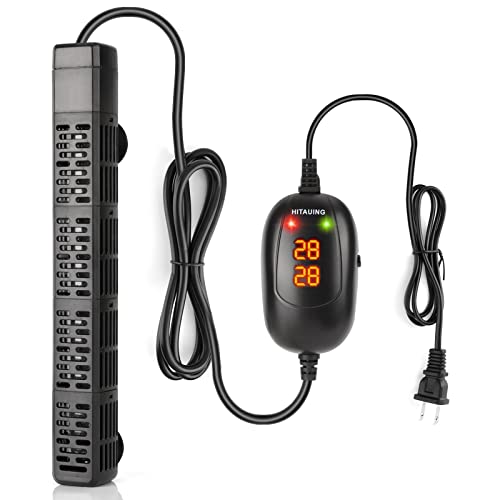
HiTauing’s heater line offers rapid heating and a two-temperature control system with an adjustable range of 63–94°F (17–34°C). It includes an intelligent water sensor that stops heating when water is low or the heater is out of water, protecting fish and equipment. Construction features explosion-proof quartz glass and a durable ABS shell for safety.
Who it’s best for: hobbyists and hobbyist-grade aquariums needing precise temperature control and reliable auto shutoff. Better for: larger or deeper tanks than a basic heater can manage. Limitation: limited to the posted wattage options; ensure you select the correct size for your tank volume.
hygger Aquarium Heater 800W

The hygger 800W heater is designed for large tanks and provides a digital LED controller with an adjustable 59–93°F range and ±1°F accuracy. It features automatic cutoffs for overheating and for water level issues, with an alert system to help maintain safe operation. The heating element uses nickel-chromium wire with quartz glass protection.
Who it’s best for: aquarists needing precise temperature management in big tanks (80–220 gallons). Choose this if you require robust protection against overheat and low-water scenarios and want a clear LED readout. Caution: ensure the tank size matches the heater’s wattage recommendation to avoid under- or over-heating.
MantaMaze Aquarium Heater 300W–1000W

MantaMaze offers multiple wattages (300–1000W) for mid-to-large aquariums with intelligent leaving-water stop heating and overheating protections. An external digital controller displays current temperature and preset settings, with indicators showing active heating or completion. The heater features explosion-proof quartz glass tubes and a flame-retardant shell for safety.
Who it’s best for: fishkeepers managing larger tanks or saltwater setups that require reliable control and multiple wattage options. Better for: environments where a robust, externally controlled heater is preferred. Limitation: higher wattage models require adequate power supply and space in the stand or cabinet.
K&H Pet Products Pond Heater (250W)

The K&H deluxe pond heater is thermostatically controlled, designed to keep outdoor ponds from freezing and support winter oxygen exchange. It’s marketed as both floating and submersible, offering flexible installation. The device is available in wattages suitable for a variety of pond sizes and climate zones, with energy-saving operation through thermostatic control.
Who it’s best for: outdoor pond owners focusing on thermostat-based de-icing across seasons. Best for: ponds where flexible placement (floating or submersible) is desirable. Caution: verify zone suitability and installation specifics for your pond’s liner type and size.
Buying Guide: Key Considerations For Pond And Aquarium Heating
- Water volume and pond/tank type: Match wattage and heater design to your system’s size and whether it’s outdoor or indoor.
- Temperature control: Look for thermostatic control, clear temperature readouts, or easy-to-set ranges to maintain safe levels for fish.
- Safety protections: Automatic shutoffs for low water, overheating, or out-of-water conditions reduce risk to fish and equipment.
- Installation flexibility: Floating vs. submersible options adapt to liner types, pond shapes, and deck or shore placements.
- Durability and materials: Explosion-proof glass, corrosion resistance, and robust housings aid long-term reliability in harsh environments.
- Energy usage: Consider models with energy-saving features and appropriate wattage to avoid wasteful operation.
- Maintenance and monitoring: External controllers, alarms, and simple diagnostics help maintain consistent performance.
FAQ
- What size heater do I need for a small pond? Answer: Choose a lower-wattage deicer designed for outdoor ponds and confirm the volume you need to treat for ice holes rather than heating the entire body of water.
- Is a submersible heater safe for outdoor ponds? Answer: Submersible heaters can be used in outdoor ponds, but ensure the unit is rated for outdoor use and appropriate for the pond’s liner and temperature conditions.
- Should I use multiple heaters in one pond? Answer: For larger ponds, multiple small units can offer even heating and redundancy, though ensure proper distribution and electrical safety.
- Can these heaters cause overheating or harm fish? Answer: Models with automatic shutoffs and leaving-water protection minimize risk, but always monitor for signs of distress and maintain proper installation.
- Do heaters work in both fresh and saltwater tanks? Answer: Many listed models are suitable for both freshwater and saltwater setups; check the product page for any limitations or specific instructions.