This guide helps you choose the right live pods and related invertebrate foods for saltwater tanks. The top picks below are best for mandarins, wrasses, clownfish, pipefish, corals, and other finicky inverts. Each product section explains who it’s best for, why it was selected, and any limitations to consider. A quick buying table at the start highlights core strengths of each option.
| Product | Best For | Why It Stands Out |
|---|---|---|
| AlgaeBarn 5280 Pods (10,560+ Pods) | Big tanks, mixed reef enthusiasts | Three copepod species for broad dietary coverage |
| AlgaeBarn Poseidon’s Feast (16oz) | Mandarin dragonets, finicky fish | Mixed juvenile to adult copepods for variable needs |
| AlgaeBarn Live Copepods & Phytoplankton Combo (16oz) | Mixed tanks needing both pods and phytoplankton | Four strains of live phytoplankton with copepods |
| AlgaeBarn Tig Pods (3,000+ Pods) | Copepod basics for smaller setups | Specifically Tigriopus californicus strains |
| FloridaPets Live Amphipods (Over 50 Pods) | Alternative clean-up crew and variety | Wild-caught nutrition diversity |
AlgaeBarn 5280 Pods :: Three Pod Species

Best for large tanks needing a robust copepod mix. This product contains Tigriopus, Tisbe, and Apocyclops, offering a broad food source for mandarins, wrasses, clownfish, and many invertebrates. It serves as a “copepod clean-up crew” to help maintain tank cleanliness while supplying a varied diet for finicky or juvenile fish. The three-species blend supports coral-dominated systems by providing different sizes and feeding modes. A potential limitation is the higher pod count, which may require careful dosing to avoid overgrowth in very small systems.
AlgaeBarn 5280 Pods :: Three Pod Species (10,560+)
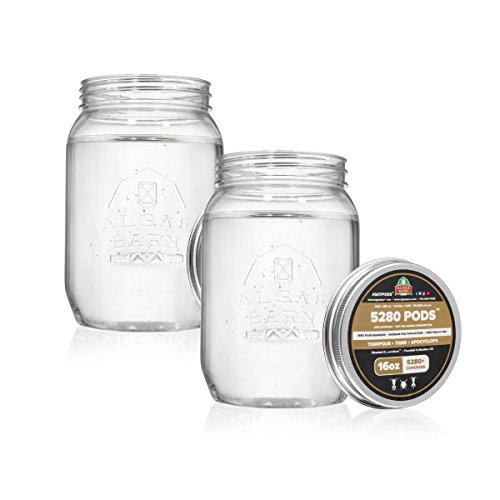
Best for larger setups needing an abundant copepod population. The same three species provide resilient feeding for mandarins, cohabitating fish, and a diversified coral environment. This option is ideal for repeatable seedings or faster population growth in bigger tanks. One limitation is the amount of live food required to sustain continuous feeding in very large displays or heavily stocked systems.
AlgaeBarn Poseidon’s Feast

Best for Mandarin dragonets and other finicky fish requiring a steady supply of varied copepods. Poseidon’s Feast offers juveniles to adults, ensuring continuous nutrition as fish grow. It supports a premium live food experience for LPS, SPS, and NPS corals, and a broad range of fish. A caution: supervision is advised to avoid uneaten pods accumulating in very small tanks, and results depend on proper husbandry and micronutrient balance.
AlgaeBarn Live Copepods & Phytoplankton Combo

Best for tanks needing both pods and phytoplankton for sustained feeding. This combo contains Tigriopus and Tisbe copepods along with four strains of live phytoplankton, expanding nutritional options for mandarins, pipefish, and various corals. It’s well-suited for hobbyists who want a compact, mixed food source in one package. Limitation: the inclusion of multiple live cultures can require careful storage and handling to maintain viability.
Live Saltwater Gracilaria Pom Pom Red Macro Algae

Best for adding macroalgae to display tanks and offering a forage area for herbivorous invertebrates. This Pom Pom Gracilaria is slow-growing and non-invasive, providing visual appeal while giving pods a natural habitat within the reef. It’s a good companion to live foods, but growth rate is slower than some macroalgae varieties, so plan for ongoing maintenance and pruning.
FloridaPets Live Amphipods Aquarium Fish Food

Best for an alternative clean-up crew and nutritionally varied feeding. Amphipods provide a different feeding option and can complement copepod-centric diets for a broader range of species. A potential limitation is that amphipods may not proliferate as quickly in smaller tanks, so ongoing replenishment could be needed to sustain populations.
Buying Guide: Key Purchase Considerations
- Tank size and stocking level: Larger tanks support bigger and more diverse pod populations; smaller tanks may require more conservative dosing.
- Target species: Mandarin dragonets and certain wrasses benefit from diverse copepods; clowns and pipefish also rely on copepods as a staple food source.
- Copepod diversity: A mix of Tigriopus, Tisbe, and Apocyclops provides different sizes and feeding behaviors, improving uptake by various species.
- Live phytoplankton inclusion: Phytoplankton complements copepods by sustaining a broader prey base within the tank ecosystem.
- Storage and handling: Live foods require proper refrigeration and timely use to maximize viability; plan for replenishment cycles that fit your maintenance routine.
- Macroalgae as habitat: Macroalgae like Gracilaria provide refuge and grazing surfaces for pods and invertebrates, enhancing tank health.
- Feeding strategy: Best results come from scheduled feeding that mirrors natural prey availability to avoid overgrowth or nutrient spikes.
FAQ
- What are copepods and why are they important for saltwater tanks? They are small crustaceans that serve as a natural food source for many fish and invertebrates, helping maintain a balanced ecosystem.
- Which product is best for mandarins? Poseidon’s Feast and the 10,560+ pod options are strong choices due to their broad copepod mix and available population size.
- Is phytoplankton necessary with copepods? It can be helpful, as it supports the broader microgreenery in the tank and provides an additional food source for early instars.
- Can I use these pods in a nano tank? Yes, but dosing should be conservative to avoid overpopulation and water quality issues in smaller volumes.
- How often should I replenish copepods? Replenishment frequency depends on tank bioload and feeding needs; monitor pod density and observe feeding behavior of target species.
- Are amphipods a replacement for copepods? They complement copepods by offering a different prey size and type; many tanks benefit from both.