Direct answer: When selecting phosphate control products for reef tanks, choose options that balance rapid phosphate reduction with stable water chemistry, compatibility with corals and invertebrates, and clear dosing guidance. For many hobbyists, a mix of liquid removers, solid media, and targeted treatments offers the best results. The following five products are particularly well-suited for reef and marine setups, each serving different tank sizes and maintenance preferences.
| Product | Best For |
|---|---|
| Brightwell Aquatics Phosphat-E Liquid Phosphate Remover (4.2 fl oz) | Small to medium reef tanks needing quick, controllable phosphate reductions |
| Brightwell Aquatics Phosphāt-E Phosphate Remover (250 ml) | Medium tanks and ongoing maintenance with steady dosing |
| Continuum Aquatics Phos Correx – Advanced Phosphate Remover (125 ml) | Active media for canister filters and high-flow systems |
| Aqua Algae Phos-Resolve Phosphate Remover (8 oz) | Higher-demand systems using lanthanum-based chemistry |
| Brightwell Extrax Phos Spherical Media (3.2 kg) | Powerful media for large or planted systems with high nutrient loads |
Brightwell Aquatics Phosphat-E Liquid Phosphate Remover (4.2 fl oz)
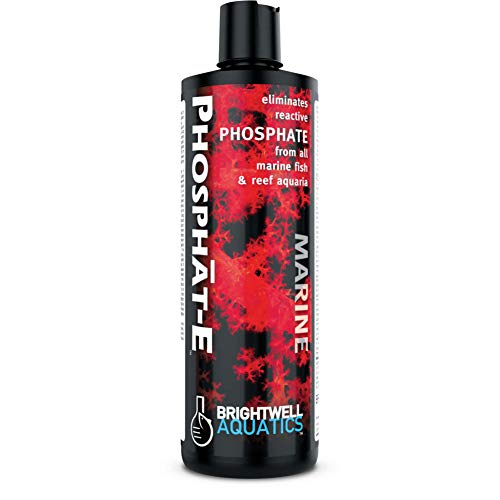
How it works: Phosphat-E Liquid removes reactive phosphate from reef and marine-fish-only aquariums, providing a quick, targeted reduction. It is designed for ongoing use to maintain lower phosphate levels. This option is best for small-to-medium systems that want precise dosing without introducing solid media into the filtration path.
Best for: Hobbyists wanting a fast-acting, easy-to-dose solution for ongoing phosphate control. Suitable for reef tanks with sensitive corals where abrupt nutrient shifts could be problematic.
Why selected: It offers rapid phosphate elimination with clear instructions and compatibility with typical reef inhabitants. It is ideal when you need a controllable approach and minimal disruption to existing filtration. Caution: test kits may show false positives after treatment, and a brief, temporary cloudiness can occur as the product acts in the water column.
Brightwell Aquatics Phosphāt-E Phosphate Remover (250 ml)

How it works: This medium-volume remover provides enhanced phosphate elimination with a focus on reef and marine-fish-only environments. It eliminates reactive phosphate promptly and can be used as part of a continuous reduction process for ongoing control.
Best for: Medium-sized aquariums that require a steady, measured approach to phosphate reduction without frequent product changes. It is a steady-state option for maintaining low phosphate levels over time.
Why selected: It complements liquid removers by offering a solid alternative that continues to reduce phosphate in a controlled manner. Caution: the aquarium may appear cloudy briefly after dosing, which is temporary and does not indicate a problem with the product.
Continuum Aquatics Phos Correx – Advanced Phosphate Remover (125 ml)

How it works: Phos Correx rapidly binds excess phosphate to maintain a cleaner, healthier aquarium. It enhances water clarity by actively removing phosphate buildup and supports a balanced environment for fish, corals, and plants.
Best for: Reef tanks needing improved water clarity and reliable phosphate control. Particularly useful in systems with high bioload or frequent feeding that elevates phosphate levels.
Why selected: The product emphasizes both phosphate reduction and water clarity, making it a good, space-efficient option for canister or compartment filter setups. Caution: ensure compatibility with your filtration flow path to minimize channeling and maximize contact efficiency.
Aqua Algae Phos-Resolve Phosphate Remover (8 oz)

How it works: Phos-Resolve uses a 15% Lanthanum Chloride formulation to bind dissolved inorganic phosphates. It is designed for larger systems and nano tanks alike, offering rapid phosphate removal and improved water clarity as excess nutrients precipitate out.
Best for: Larger reef systems or setups with higher phosphate loading where a high-capacity binder is advantageous. Ideal when quick, noticeable phosphate reduction is needed for corals that rely on stable nutrient levels.
Why selected: It provides a high-concentration option with a dedicated dosing approach and filtration guidance. Caution: manage dosing carefully to avoid sudden shifts in alkalinity or pH, and follow gradual introduction into the filtration loop for best results.
Brightwell Extrax Phos Spherical Media (3.2 kg)

How it works: Extrax Phos Spherical Media provides fast-acting phosphate and silicate removal with a spherical structure that maximizes surface area and minimizes channeling. It is designed for use in canister filters or filter bags across marine, reef, and planted tanks.
Best for: Large or heavily stocked systems where a robust media option is needed to support ongoing phosphate removal with high flow rates. It works well in conjunction with other phosphate-limiting strategies.
Why selected: Its high porosity and efficient contact reduce nutrient buildup in diverse setups. Caution: monitor flow and ensure the media is properly contained to avoid clogging or flow restrictions in the filter.
Buying Guide: Phosphate Control In Reef Aquariums
- What type of remover should I choose? Liquid removers are fast-acting and easy to dose for small-to-medium tanks. Solid media can provide ongoing reduction in canister or sump setups, often with less frequent dosing.
- How do I size and dose? Follow product-specific dosing instructions and test phosphate levels regularly. Start with a conservative dose and monitor calcium, alkalinity, and pH to avoid rapid shifts that stress corals.
- Liquid vs solid: When should I use each? Use liquids for quick fixes or when you need precise, adjustable control. Use solid media for continuous removal in compatible filtration systems where you want low-maintenance operation.
- Impact on water chemistry: Can phosphate removers affect alkalinity or calcium? Some products may influence test readings or temporarily cloud water. Plan on testing after dosing and be prepared for minor, temporary changes.
- What about compatibility with corals and invertebrates? Choose products labeled safe for reef inhabitants and follow gradual introduction to minimize stress on delicate corals.
- Tank size and bioload: Larger systems with higher bioload demand stronger or multiple-remover strategies. Always align product choice with tank volume and nutrient load.
FAQ
- How quickly will phosphate levels drop after using a remover? Effects vary by product and dosage; some show reductions within hours to days while maintaining steady levels with ongoing dosing.
- Can phosphate removers cause cloudy water? Temporary cloudiness can occur after dosing, which is typically normal and resolves as the product engages with nutrients.
- Should I test for phosphate after each dose? Yes, regular testing helps prevent overshoot and ensures consistent control aligned with corals’ needs.
- Is it okay to combine different phosphate removal products? It’s generally best to avoid mixing products unless recommended by the manufacturer to prevent unintended chemical interactions.
- Do removers affect beneficial bacteria or other nutrients? Most optimally designed products target phosphate with minimal impact on beneficial bacteria; still, monitor overall water parameters after initiating a new regimen.
- What is the advantage of using a media like Extrax in a larger setup? It provides high capacity and stable contact, useful for systems with heavy nutrient loads and continuous filtration.