Answering your search for reliable pH stabilizers, this guide highlights five effective aquarium pH stabilizers ideal for different setups. Whether you keep freshwater setups without live plants, or you manage mixed–species tanks, these products help maintain stable pH levels and healthier water. Best for beginners: simple, ready-to-use stabilizers. Best for hands-on hobbyists: test-and-adjust kits for precise control. Best for planted tanks: optimized options to avoid sweeping pH swings. The table below summarizes the top picks and their primary use cases.
| Product | Best For | Key Benefit |
|---|---|---|
| API PROPER pH 7.0 Freshwater Stabilizer | Neutral, fish-only freshwater tanks | Sets pH to neutral; reduces toxic tap water compounds |
| Tetra Correct pH Tablets | Maintaining stable pH over weeks | Easy to use; supports stress reduction in fish |
| API pH Test & Adjuster Kit | Precise pH monitoring and adjustment | Includes testing and two pH adjusters; reads pH 6.0–7.6 |
| API PROPER pH 7.5 Freshwater Stabilizer | Non-plant tanks seeking pH 7.5 | Stabilizes pH to 7.5; safe for fish health and color |
| Seachem Neutral Regulator | Quick neutral pH adjustments | Adjusts to pH 7.0; softens water and removes residual chemicals |
API PROPER pH 7.0 Freshwater pH Stabilizer

Best for: freshwater, fish-only tanks needing neutral pH. The product sets and stabilizes water pH to neutral, helping keep fish healthy and colorful. It also removes toxic compounds from tap water to make it safe for fish. Use this in aquariums that do not contain live plants for best results. This is a straightforward option when you want a consistent pH baseline without ongoing plant interactions. A potential limitation is that pH stability can still be influenced by CO2, feeding, and waste in larger systems.
Tetra Correct pH Tablets 8 Count

Best for: hobbyists who want an easy, long-lasting pH hold for several weeks. These tablets help maintain neutral pH, which reduces fish stress and supports overall health. They are simple to apply and can be more convenient for busy aquarists. Limitation: tablets require periodic replacement to maintain the target pH level, especially if you have a higher waste load or fluctuating water chemistry.
API pH Test & Adjuster Kit 250-Test
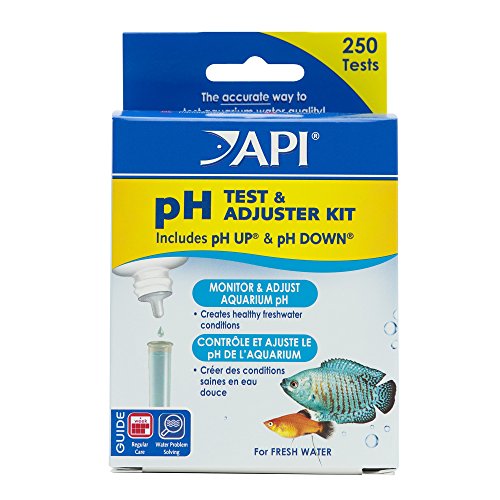
Best for: aquarists who want to actively monitor and adjust pH. This kit includes testing solutions, two pH adjusters, a color card, and a test tube with cap. It covers pH 6.0–7.6 and includes pH Up and pH Down to achieve the proper level. Use this kit when precision matters, such as in mixed-species tanks or setups with sensitive fish. A limitation is that it requires regular testing to maintain target pH, which demands time and attention.
API PROPER pH 7.5 Freshwater Stabilizer

Best for: freshwater tanks without live plants that aim for a stable pH around 7.5. It sets and stabilizes water pH to 7.5, helping keep fish healthy and colorful, while removing toxic compounds from tap water. Consider this option if you prefer a pH level slightly above neutral. A limitation is that drastic changes in water hardness or CO2 can still influence pH over time.
Seachem Stability Fish Tank Stabilizer

Best for: new tanks needing rapid establishment of a healthy biofilter. Stability introduces a synergistic blend of bacteria to help break down waste, ammonia, nitrite, and nitrate, supporting a stable environment. It’s particularly useful in freshwater and marine systems to prevent “new tank syndrome.” A limitation is that it does not directly set a specific pH, but it supports overall stability that benefits pH maintenance indirectly.
Seachem Neutral Regulator 500 ml

Best for: aquariums needing a quick, reliable neutral pH adjustment. Neutral Regulator adjusts pH to neutral (pH 7.0) and softens water by precipitating calcium and magnesium. It also helps remove chlorine, chloramine, or ammonia. Choose this if you want a straightforward, one-step correction to neutral pH. Limitation: it changes water chemistry broadly, so test to confirm other parameters remain within desired ranges.
Buying Guide: Key Considerations For Choosing a pH Stabilizer
- Scope of use: Determine if you need a simple pH stabilizer, a monitoring kit, or a combination product that both tests and adjusts pH.
- Tank type: Freshwater fish-only tanks often benefit from neutral or slightly elevated pH stabilizers, while tanks with sensitive species may require precise control and gradual adjustments.
- Plant presence: If your aquarium contains live plants, some stabilizers are formulated for plant-friendly pH ranges; others are best for plant-free setups.
- Maintenance routine: Consider how often you will test water and apply stabilizers. Kits with test strips or glass tests encourage regular monitoring.
- Ease of use: For beginners, pre-mixed stabilizers or tablets can be more forgiving, while advanced hobbyists may prefer adjustable solutions with testing guidance.
Frequently Asked Questions
- What does a pH stabilizer do in an aquarium?
It helps maintain a stable pH level to create a safer, less stressful environment for fish and other inhabitants. - Can I use multiple pH stabilizers at once?
Avoid mixing products unless the manufacturer explicitly allows it; inconsistent chemistry can harm fish. - How often should I test pH in a new tank?
Test at least weekly during the first month, then monitor and test as needed based on changes in water source and feeding. - Which pH level is best for most freshwater fish?
Most freshwater fish prefer a neutral range around pH 6.8–7.5, but research your species’ specific needs. - Is neutral Regulator appropriate for all tanks?
Useful for quick neutralization, but it may alter other minerals; test water parameters after use. - Do these products affect hardness or alkalinity?
Some products can influence general hardness and carbonate levels; monitor these parameters when adjusting pH.