Answering the needs of hobbyists seeking reliable aeration, this guide highlights five aquarium air pumps that optimize oxygenation, reduce noise, and fit common tank sizes. Best for small to medium tanks, these units balance energy use with steady airflow. Each product section explains who benefits most, why it’s chosen, and a practical limitation to consider. A concise buying guide and FAQ follow to help you compare options quickly.
| Product | Best For | Airflow (GPH) | Tank Size Range |
|---|---|---|---|
| Uniclife 64 GPH | Medium freshwater/marine tanks | 64 | 10–100 gal |
| Pawfly 50 GPH | Small to medium tanks, quiet operation | 50 | 10–60 gal |
| AQQA 3.5W Dual Outlet | Higher flexibility for multiple tanks | ≈3.5 L/min (~75 GPH equivalent) | Up to 160 gal |
| Novique 3W Quiet | Quiet, compact setups | 50 GPH | 3–20 gal |
| Hygger 4W Quiet | Large tanks with strong aeration | Up to 95 GPH (per unit) with dual outlets | Up to 120 gal |
Uniclife 64 GPH Aquarium Air Pump with Dual Outlets
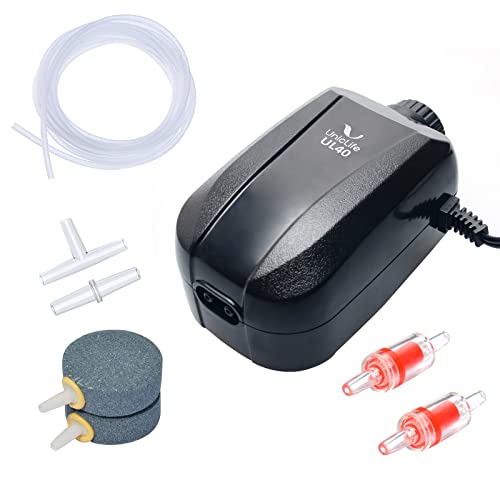
The Uniclife unit delivers a steady 64 GPH airflow with adjustable dual outlets, ideal for 10–100 gallon tanks. It uses a small power draw (4 W) and offers a rotary control to fine-tune aeration. Best for hobbyists wanting customizable oxygenation without high energy consumption. A potential limitation is that air volume can drop if intake is blocked; routine maintenance is required to keep performance consistent.
Best for: moderate to larger aquariums that need flexible aeration across two outlets. Why selected: balanced airflow, adjustable outputs, and low noise in typical home settings.
Notes: Regularly check the air intake cotton and replace if airflow declines. Quiet operation is rated around 25–45 dB depending on flow setting.
Pawfly Aquarium Air Pump 50 GPH

The Pawfly model provides a stable 50 GPH airflow with a low power draw (around 1.25 W) and a compact footprint. It’s suitable for tanks up to 60 gallons and includes a top knob for manual airflow adjustment. Built-in rubber feet reduce vibration, keeping noise under 30 dB. Best for: space-conscious setups where gentle, consistent aeration is needed. Caution: minimal airflow may not suffice for heavily planted or densely stocked tanks at higher temperatures.
AQQA Aquarium Air Pump Dual Outlet
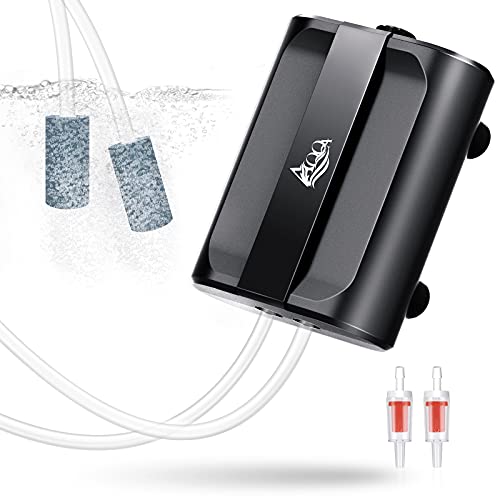
Designed with two outlets and adjustable flow, this AQQA model supports up to 160 gallons and includes two air stones and multiple connectors. It uses a compact 3.5W to 3W class motor and provides flexible oxygenation for larger setups through the adjustable valve. Best for: users who want dual outlets and compatibility with two stones. Limitation: actual airflow may vary with tank height and stone resistance; verify setup for your tank depth.
Novique Quiet Aquarium Air Pump

Novique offers a 3W power model delivering up to about 50 GPH with a noise floor around 35 dB. The unit promises low-vibration operation and a compact design suitable for small freshwater or saltwater tanks up to 20 gallons. Best for: quiet, compact installations where space and acoustic comfort matter. Caution: the smaller size may be insufficient for larger or heavily oxygen-demanding tanks.
hygger Aquarium Air Pump 4W

The hygger 4W unit pushes up to 95 GPH (per unit) with dual stainless steel outlets and up to 120 gallons supported. It emphasizes energy efficiency and a quiet operation under 35 dB, aided by anti-vibration design. Best for: larger or heavily oxygen-demanding tanks that still require low noise. Choose this if you need robust airflow with quiet performance. Limitation: higher airflow may require appropriate stone sizing and tubing to prevent over-aeration in small tanks.
Buying Guide
What size tank do you need to aerate? Match air pumps to tank volume and stocking level. Larger aquariums typically benefit from higher GPH or dual outlets for even distribution.
How quiet should the unit be? Consider dB ratings and mounting options (rubber feet, dampening materials). If you sleep nearby or share a bedroom, prioritize models advertised as quiet or silent.
Is energy efficiency important? Look for wattage and flow curves. Lower wattage devices with stable output lower ongoing electricity use without compromising oxygenation.
Are multiple outlets beneficial? Dual outlets allow you to split air to different zones or use more air stones, improving surface agitation and oxygen transfer.
What accessories matter? Air stones, tubing, connectors, and check valves extend pump life and simplify setup. Some pumps include these, others require separate purchases.
Frequently Asked Questions
- What is a good airflow for a 20-gallon tank? A steady airflow of about 20–40 GPH is often sufficient, depending on stocking and plant load.
- Do I need a check valve with an air pump? A check valve helps prevent backflow in case of a power outage, protecting the tank.
- Can I use a pond air pump for an aquarium? Pond pumps are generally not ideal due to design differences; choose aquarium-rated pumps for better flow control and suitability.
- Why is my air pump loud? Noise often comes from loose fittings, insufficient isolation from surfaces, or clogged intakes that increase strain on the motor.
- How often should I replace air pump components? Regular maintenance, including cleaning and inspecting tubing and stones, helps sustain performance and reduces noise over time.
- Is dual-outlet better for oxygenation? Dual outlets can improve distribution and surface agitation, especially in larger tanks or those with multiple decor zones.