Choosing the right aquarium air pump matters for fish health, water quality, and overall tank stability. The following selections emphasize quiet operation, dependable airflow, and compatibility with 10 to 100+ gallon setups. Each option offers adjustable output, dual outlets, and included accessories to simplify installation and ongoing use. Below is a quick overview to help you compare features and suitability for your tank size and species.
| Product | Tank Range | Outlets | Key Benefit |
|---|---|---|---|
| HITOP Dual Outlet Aquarium Air Pump | 10–100 gallons | 2 | Ultra-quiet, adjustable via manual control |
| Pawfly Aquarium 15-40 GPH Compact Pump | 5–20 gallons | 1 | Compact, very low noise, strong for small tanks |
| AQQA Aquarium Air Pump 3W/6W/10W | Up to 200 gallons | 2 | Sturdy stainless steel dual outlets, ultra-quiet |
| Pawfly 50 GPH Aquarium Air Pump | Up to 60 gallons | 2 | Steady output, adjustable, under 30 dB |
| Uniclife 64 GPH Aquarium Air Pump | 10–100 gallons | 2 | Quiet operation, adjustable flow, durable |
Note: This article presents objective product information to aid purchase decisions. It avoids price references and focuses on performance features, compatibility, and user benefits for American freshwater and tropical setups.
HITOP Dual Outlet Aquarium Air Pump

HITOP’s dual-outlet design supports simultaneous oxygenation and filtration accessories in larger tanks. The device uses thick ABS engineering plastics to reduce vibration and is built for a long service life with manual adjustment of air volume. Its 3W power rating makes it suitable for aquariums ranging from 10 to 100 gallons, with a focus on quiet operation and stable airflow. The pump includes two outlets and is designed to minimize disturbances in the water column, promoting consistent gas exchange for fish and beneficial bacteria.
Pawfly Compact Air Pump For Small Tanks
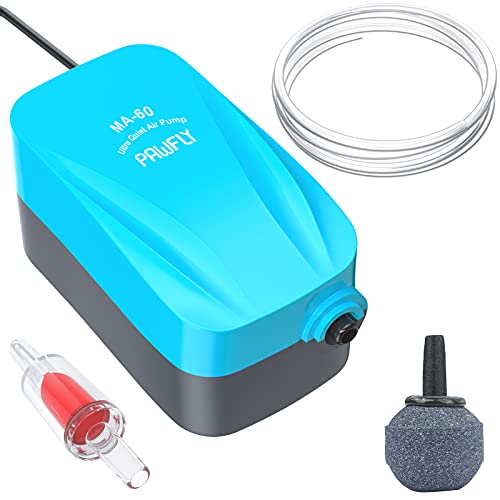
Pawfly’s compact air pump is designed for tight spaces and small tanks, suitable for 5–20 gallon setups. It delivers a steady 30 GPH with a low startup power of 2 W and a quiet noise profile under 45 dB. Features include a single outlet and compatibility with air stones and tubing. Its compact form factor makes discreet placement easy, minimizing visual impact while maintaining reliable aeration for small freshwater or lightly stocked tanks.
AQQA Aquarium Air Pump 3W/6W/10W With Dual Outlet

AQQA offers higher capacity with 3W/6W/10W variants and a stainless steel dual outlet design. Capable of supporting up to 200 gallons, it delivers up to 100 GPH with a maximum pressure around 18 kPa. The unit emphasizes ultra-quiet operation through a double-layered housing and rubber feet to dampen vibration, along with durable dual outlets for multi-tank or multi-aquarium setups. This model is suitable for larger freshwater and marine tanks where steady oxygenation is critical during extended operation.
Pawfly 50 GPH Quiet Air Pump

Pawfly’s 50 GPH pump is designed for mid-sized tanks up to 60 gallons, featuring dual outlets and adjustable air flow. It emphasizes very quiet operation (less than 30 dB) and a steady air supply with a small power footprint (about 1.25 W). The unit is well-suited for hobbyists running multiple small tanks or wanting flexible aeration options in a single system or bucket setups. Included accessories typically cover tubing, check valves, and air stones for immediate use.
Uniclife 64 GPH Dual Outlet Air Pump
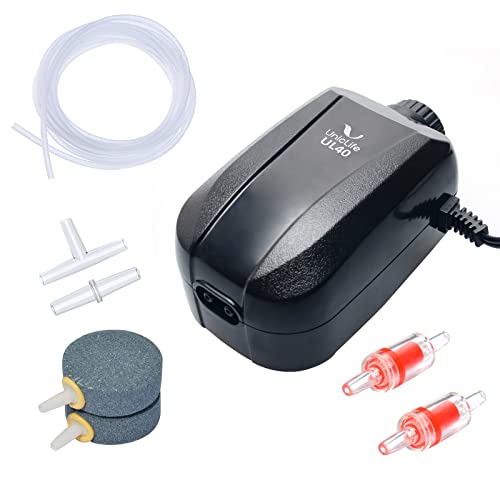
Uniclife provides a robust 64 GPH output with two outlets and adjustable flow for tanks in the 10–100 gallon range. It operates quietly, with measurements indicating as low as 25 dB on low settings and up to around 45 dB at higher flows. The pump design supports both fresh and marine aquariums, and the rotary knob allows precise control of aeration to meet daytime and nighttime oxygen needs, promoting healthier fish and more stable biological filtration.
Buying Guide: Key Purchase Considerations And Comparisons
Air pumps vary in output capacity, noise, and build quality. When selecting the right unit, consider tank size, stocking level, and whether you plan to run air stones, reactors, or other accessories. Here are important factors to weigh:
- Tank size and aeration needs: Larger tanks benefit from pumps with higher GPH (gallons per hour) and dual outlets to feed multiple devices. Match the pump’s maximum air volume to the tank volume, avoiding under- or over-oxygenation.
- Noise and vibration: Quiet pumps reduce stress for fish and neighbors. Look for models with soft feet, rubber dampers, and double-layer housings for quieter operation.
- Reliability and durability: Pumps built with robust plastics or metal housings, and components designed for long life, help minimize maintenance and replacement cycles.
- Adjustability: Rotary knobs or manual controls allow you to fine-tune airflow as fish activity and plant uptake change throughout the day.
- Outlets and compatibility: Dual-outlet pumps enable running air stones, sponge filters, or small reactors separately, improving oxygen distribution and filtration.
- Power consumption: Even small differences in wattage can affect running costs over time, particularly for continuous operation.
- Maintenance and accessories: Many pumps ship with tubing, air stones, and check valves. Ensure you have the right tubing diameter and compatible filter components for easy setup.
- Corrosion resistance and saltwater suitability: If you keep marine tanks, select models rated for saltwater exposure or designed with corrosion-resistant materials.
In summary, the best oxygen solution depends on tank size, quietness preference, and whether you require multiple air outlets. Larger tanks benefit from higher-output, durable units like the AQQA options or Uniclife, while compact tanks may thrive with the Pawfly and similar small-form-factor pumps. Always verify the included accessories and the availability of replacement parts to extend pump life.